
Long before Pete Townsend showed up, people have been asking the simple question: “Who are you?”
The 1978 song by The Who was one of the band’s biggest hits and went on to become the theme for “CSI: Crime Scene Investigation.” A parody version has been showing up in Walmart TV commercials.
But human beings have been devising methods to recognize each other for centuries.
Ancient Egyptians identified trustworthy traders by their physical descriptions, while merchants in Babylon used fingerprints to record business transactions on clay tablets dating back to 500 BCE.
The science is called biometrics, and it is defined as the automated recognition of individuals by means of unique physical characteristics, such as fingerprints, voice, facial features or typing patterns.
Biometrics offers such advantages as faster access to secure places, reduced costs, streamlined processes — like using facial recognition at airports to speed travelers to their flights — and border-control efforts.
However, the privacy concerns associated with biometrics are sharp: sensitive data being immutable, the risk of identity theft if biometric data are compromised, high costs to implement these systems, and the potential for system errors like false positives and negatives.
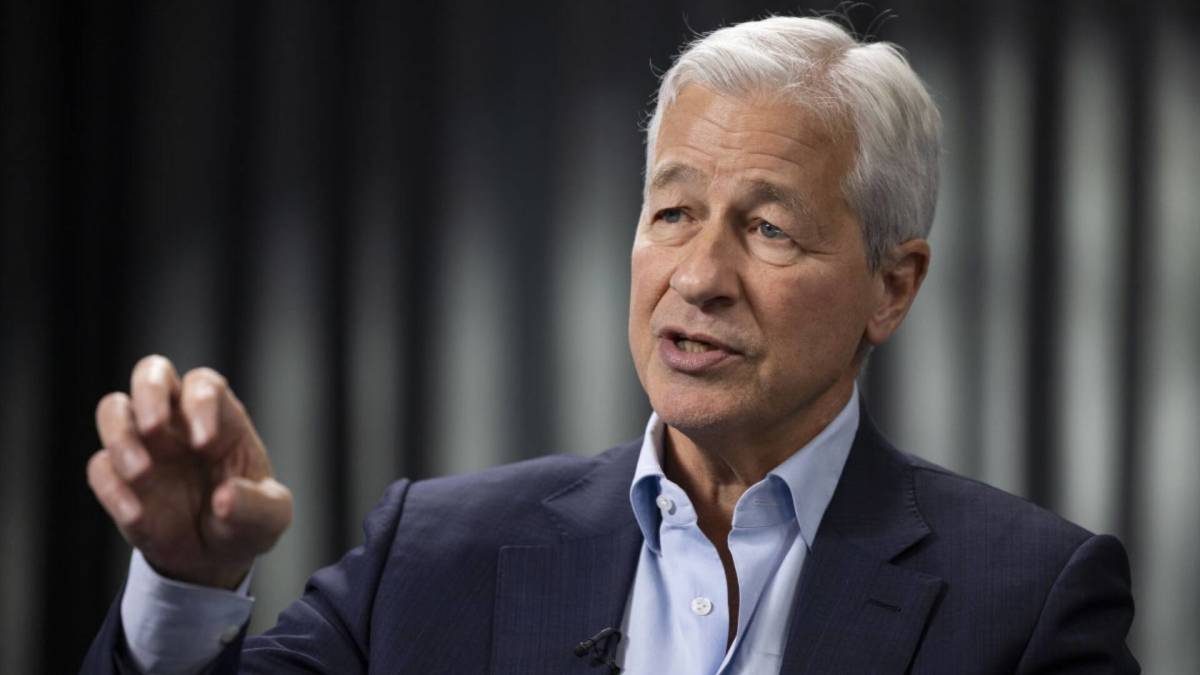
Image source: Alden/Bloomberg via Getty Images
JPMorgan joins companies using biometrics“Most often we think of biometrics as confirming identity (e.g. fingerprints) and as these measures are increasingly computerized, confirmation of identity can be automated,” said Pauline Kim, the Daniel Noyes Kirby professor of law at Washington University in St. Louis and director of the Center for Empirical Research in the Law.
“Biometrics could also be used in other ways, for example, to try to determine or predict disease, medical conditions, mood, etc. by analyzing digitally captured biometric information.”More Tech Stocks:
The stock market laughed, then Palantir redefined the fight
Musk’s Netflix boycott could actually hurt the streamer
OpenAI’s deal with AMD proves AI race has just begun
Goldman Sachs tweaks Nvidia’s stock price target with a twist
A PwC survey last year found that 57% of companies surveyed use biometrics for authentication.The global biometrics market is projected to generate around $53.2 billion in revenue this year, a figure expected to grow roughly 59% to $84.5 billion by 2029.
Biometrics made headlines recently following reports that JP Morgan Chase JPM recently told its staff moving into its new headquarters in New York that they must share their biometric data to access the building, The Guardian reported.
The investment bank had planned to make employee registration of biometric data at its new Manhattan skyscraper voluntary. But employees of the U.S.’s biggest bank who have started work at the headquarters since August have received emails saying that biometric access was required, according to communications seen by the Financial Times.
The bank’s headquarters, which cost a reported $3 billion to build, will eventually be a base for 10,000 employees once it is fully occupied later this year.
“Companies can now accrue stunning amounts of intimate data about their employees’ bodies,” the Harvard Business Review said in a May 29 article. “Some might collect biometric data such as fingerprints and retina scans as part of efforts to improve security.”
The report said that companies might even go as far as collecting health data, given incentive to do so by the desire to improve the workforce’s health and get discounts on premiums from health insurers.
Big name companies using biometrics
The big-name companies incorporating biometrics include Apple APPL, which uses fingerprint and facial recognition for secure transactions with Apple Pay, and Disney DIS, which uses fingerprint biometrics for park guests to provide flexible access and prevent ticket fraud.
Related: Big questions surround 3rd-quarter earnings
Last year, a U.S. Senate investigation accused Amazon AMZN of manipulating workplace injury data to portray its warehouses as safer than they actually were, while promoting speed over workplace safety.The e-commerce giant said the report was “wrong on the facts, and features selective, outdated information that lacks context and isn’t grounded in reality.”
“There are a number of privacy concerns about these technologies, including data security, surveillance, and inferences regarding sensitive personal information,” Washington University’s Kim said. “A lot depends upon what kind of biometric data is being collected, what it is used for, how long it is retained, and what data security measures are used.”She added that several states have legally restricted the collection and use of biometric data, including by employers, and legislation has been proposed in other states to create similar protections.
Illinois, Texas and Washington have specific biometric privacy laws; other states, including Colorado, Maryland, and New York, have biometric protections under broader privacy laws or other legislation.“People have shown a remarkable willingness to trade privacy for mere convenience,” said Kevin John, associate professor at Brigham Young University’s School of Communications.
“We see this with social media — messaging apps that allow us to stay in touch but also access microphones and other features on our phones” and “navigation apps that capture our location every second to help us get around but then use this data to target local advertisements to us,” he noted.
“As a society, we have shown ourselves willing to sacrifice privacy for convenience,” John added.
He said the pace of technological progress in capturing biometric data was going so fast that the law was struggling to catch up.“For now, legal ramifications for the collection of biometrics data may be slim — unless the argument can be steered toward framing biometrics data in a medical capacity,” John added. “Then there may be an argument, but that is still an uphill battle.”
Related: Oracle’s AI empire runs on Nvidia, but the numbers don’t add up