
Blue Owl Capital (OWL)’s BDC, Blue Owl Credit Income Corp, raised new capital through a private share sale while pursuing its public multi billion dollar fundraising effort according to a March SEC Filing.
The asset manager sold 2.27 million unregistered Class I shares for around $20.7 million at the beginning of March, according to an 8-K filing.
Since launch, the firm has raised over $22 billion across private offerings and multiple share classes.
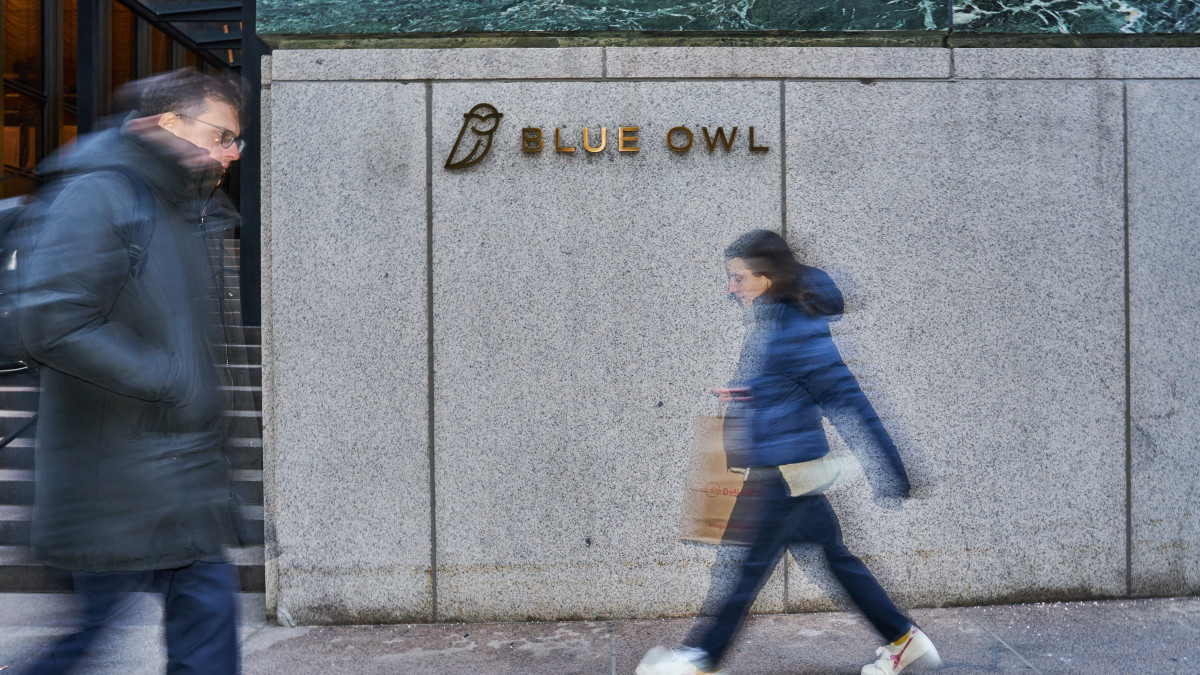
Photographer: Bing Guan/Bloomberg via Getty Images
Blue Owl raises new capital as its private credit fund expands its lending portfolio.
Blue Owl said the unregistered shares were purchased by feeder vehicles whose primary investments are in the fund’s Class I shares, which yielded $20.7 million in fresh capital.
While the private offering is separate from the fund’s continuous public offering, it allows the firm to sell shares at prices tied to (NAV) on an ongoing basis.
Related: Blue Owl Capital liquidity trap or shadow bank misinformation wave?
The fund issued more than 2.36 billion shares and raised approximately $22.2 billion across its public and private offerings.
The shares are sold at $9.11 to $9.13 per share by the end of February, based on the fund’s net asset value per share and the share class.
As of Feb.28, the portfolio had debt investments in 347 companies with a total par value of $34.2 billion, and about 87.8% of the portfolio was first-lien debt, which is the most senior debt in a company’s capital structure, while all the 98.2% of the other loans pay floating interest rates.
Some of the largest industry exposures include healthcare providers and services, internet software and services, financial services, and insurance services.
Leverage, floating-rate debt, and liquidity are key to the private credit model.
Blue Owl has around $16.7 billion of outstanding debt and a 0.80x debt-to-equity ratio, much of which is secured and floating-rate, meaning borrowing costs move with interest rates.
The fund also reported holding about $3.9B in level 2 liquid assets and around $780 million in cash, which provides liquidity to operations and investor activity.
Related: Deutsche Bank signals $30B risk to private credit
The combination of investor capital, borrowed money, and floating-rate loans is central to how private credit funds generate income. Floating-rate loans can produce higher income when interest rates are elevated, while leverage can increase returns, but also increases risk if loan performance deteriorates.
Private credit woes, fundraising, and growth
Despite the recent halt in redemptions in major private credit funds, Blue Owl’s continued issuance of shares through private and public offerings indicates the fund is actively in growth mode, seeking capital to expand its loan portfolio.
The continuous fundraising efforts are not unusual for non-traded private credit funds, which on the contrary to a traditional IPO, raises money in a more stable manner.