
BMW has revealed the all-new X5 SUV, which will be the first BMW in history to be offered with five distinct powertrain types.
EV demand has fluctuated significantly in recent years and varies by region, which is why BMW (BMWYY) is adopting powertrain diversity as a new strategy.
Instead of committing to gas or electric power exclusively, the BMW SUV will also be available in diesel and hydrogen fuel-cell forms, as well as plug-in hybrid, Autoblog notes. Availability of these variants will differ by market.
By offering multiple technologies for one of its best-selling models, the brand will be strongly positioned to adapt as customer preferences evolve.
BMW prepares for every kind of customer
Since originally launching in 1999, this will be the first time the X5 arrives with a fully electric version. It’s the second of BMW’s Neue Klasse SUVs after the iX3, but the X5 goes a step further by boasting a much broader range of powertrains.
Gas-powered variants of the high-profit SUV will still be widely available, with gradually growing demand expected for the electric iX5, which will be the first EV built at the brand’s plant in Spartanburg, South Carolina, reports Automotive News.
More Automotive:
- BMW’s biggest market is becoming its biggest headache
- BMW doubles down on humanoid robots after a U.S. test run
- EV target takes unexpected turn in one of the world’s top markets
The iX5 Hydrogen will come later and will be the brand’s first hydrogen-powered production vehicle.
BMW is one of the few automakers to invest in hydrogen technology, along with Toyota.
Ultimately, different markets require different powertrain solutions. The diesel, for instance, will find favor in Europe but is unlikely to make it to the United States, where diesel demand is far lower.
When the new X5 SUV arrives, BMW will be one of the few brands among rivals to offer a single vehicle with so many powertrain types. The new Audi Q7, a key X5 rival, does not have electric or hydrogen fuel-cell options.
Instead of developing separate gas and electric SUVs, BMW has a common platform supporting multiple powertrains. It’s a solution that could reduce production costs and complexity, while allowing the company to respond quickly as demand shifts.
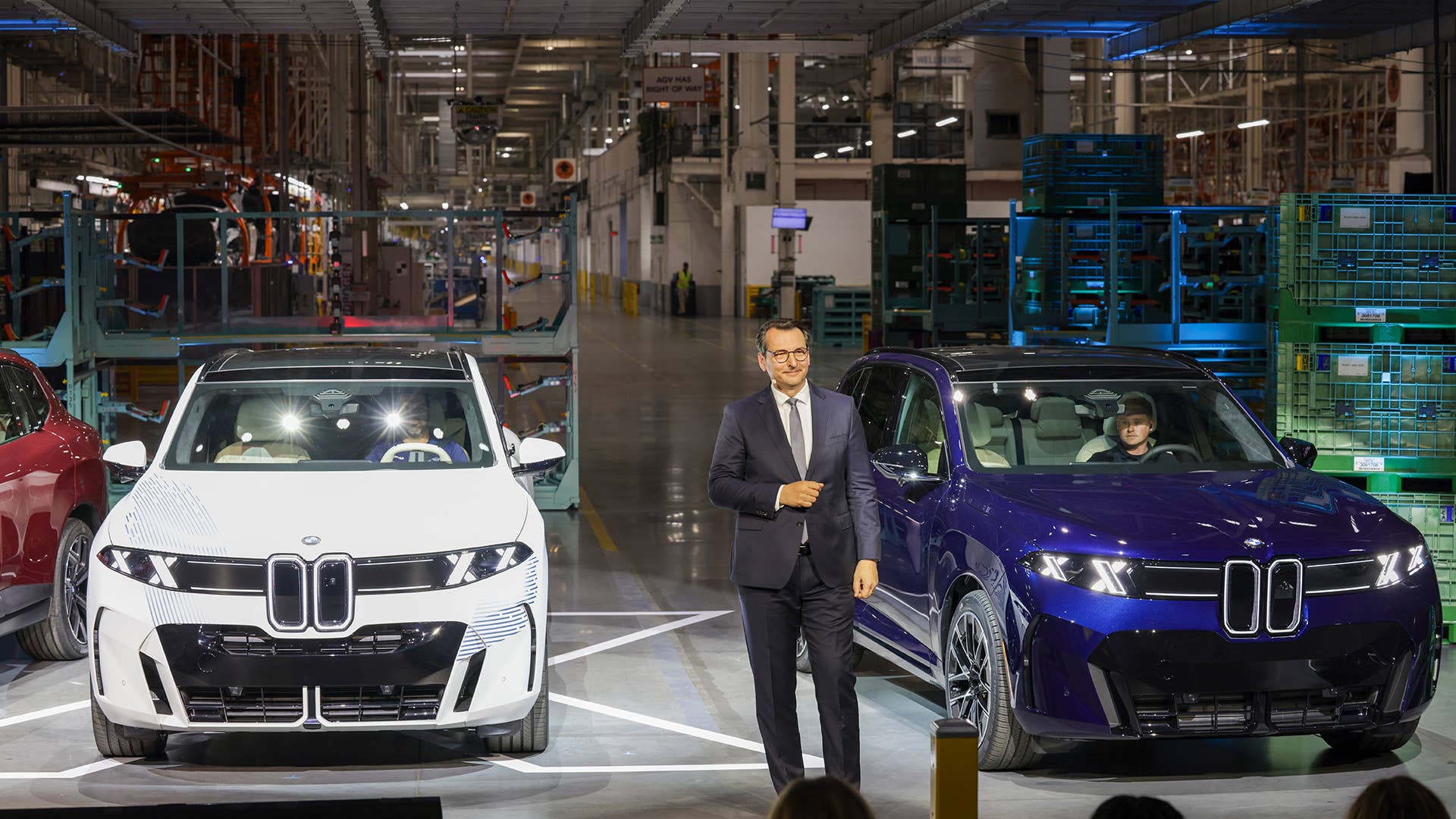 BMW diesel options will find favor in Europe but are unlikely to make it to the United States.
BMW
Why BMW’s powertrain strategy matters
Although EV demand has slowed in several major markets, hybrid sales have increased, and gas-powered vehicles have stayed resilient. BMW has also spoken of its struggles in the increasingly competitive Chinese market, where legacy brands are under pressure from domestic brands.
For BMW, flexibility lowers risk. If EV demand cools, gas and hybrid versions of the X5 can continue producing profits.
Related: BMW CEO has blunt new message on Trump’s tariff threat
This unique strategy is especially important for a volume seller like the X5. In the U.S. in Q1 2026, the X5 was the brand’s best-selling model, despite a starting price of nearly $70,000.
Expensive options and top performance trims push the cost of this SUV close to six figures, making it a particularly lucrative model for the automaker.
Sales of the new-generation model will begin later this year, which will put BMW’s new powertrain strategy to the test.
What BMW’s fresh approach means for buyers and investors
Buyers in the popular midsize SUV segment will benefit from the X5’s new lineup by being able to choose between proven gas powertrains, emerging technologies like hydrogen, and everything in between.
For BMW’s long-term financial stability and growth, the multi-powertrain strategy reduces the dependence on any single technology. Many automakers have overcommitted to EVs, leading to costly strategy reversals and shorter product cycles.
It’s challenging to know precisely when EVs or even hydrogen vehicles will take the lead over gas cars on a global scale. Rather than attempt to predict when this shift will occur, BMW has designed a crucial model around the market’s uncertainty.
If the X5 strategy succeeds, BMW may replicate this approach for other new-generation vehicles across its lineup, leaving it with a competitive edge over rivals that invested in a more singular powertrain strategy.
Related: Honda CEO withstands investor backlash after $9B EV misstep
