
Breakfast cereal was once one of the easiest meals to sell in America.
It was quick, cheap, colorful, and familiar. For generations, boxes of Corn Flakes, Froot Loops, Rice Krispies, Frosted Flakes, Raisin Bran, and Special K became staples in kitchen cabinets and grocery aisles.
But American breakfast habits are undergoing a fundamental shift.
Consumers are shifting toward more protein-heavy and less processed foods. Parents are also paying closer attention to added sugars and artificial colors, especially in foods marketed to children.
That pressure is no longer just coming from shoppers. Federal nutrition guidance is also shifting to whole, nutrient-dense foods while urging consumers to limit highly processed foods, added sugars, refined carbohydrates, and certain artificial additives.
The FDA has also been pushing food companies to move away from petroleum-based synthetic dyes, a change that has already started reshaping the cereal aisle.
Target said it would stop selling cereals with certified synthetic food colors by the end of May, TheStreet reported.
Cold cereal sales have been declining for decades, except for a brief pandemic boost when more people were eating breakfast at home, according to the Associated Press.
Americans bought nearly 2.5 billion boxes of cereal in the 52 weeks ending July 3, 2021, but that dropped more than 13% to 2.1 billion boxes in the comparable period in 2025.
Now, the broader cereal reset is showing up at a WK Kellogg Co. plant.
WK Kellogg Co. is moving ahead with the permanent closure of its Omaha, Nebraska, cereal facility, with hundreds of employees expected to lose their jobs in phases this summer.
The closure was first announced in 2024 as part of a broader supply-chain modernization plan. But a new WARN notice gives a clearer timeline for the job losses and the plant’s final shutdown.
WK Kellogg to close Omaha cereal plant
WK Kellogg filed a Worker Adjustment and Retraining Notification (WARN) notice with the Nebraska Department of Labor, stating its plan to lay off amid the plant closure.
The notice says the company plans to implement a phased reduction-in-force, followed by the permanent closure of its Omaha plant at 9601 F Street.
The closure will eliminate 451 positions, according to the job title list attached to the WARN filing.
- Initial job cuts to begin in July 2026.
- The plant is expected to permanently cease operations in August 2026.
More Retail:
- Another mall retailer quietly closed over 150 locations
- Ultra wealthy shoppers flock to this 63-year-old rugged retailer
- 72-year-old mall retailers to close more stores in 2026
The job cuts are expected to happen in phases.
- Phase 1: About 100 employees are expected to lose their jobs during the 14-day period from July 20 to August 3.
- Phase 2: 350 employees are expected to be let go during the 14-day period from August 4 through August 18.
The layoffs are permanent, and the company will provide severance payments to affected employees.
Affected workers include both union-represented and non-represented employees. The union representative for bargaining-unit employees is the Bakery, Confectionery, Tobacco Workers and Grain Millers, and its Local 50-G.
The WARN filing shows the Omaha shutdown will affect a wide range of plant roles.
The largest affected job classification is packing machine operator, with 60 roles listed.
Other large groups include 50 transitional employees, 28 process operators, 27 Omaha general mechanics, 27 tractor operator checkers, 22 packing room labor and supply workers, and 20 process labor employees.
The filing also lists cuts to mechanics, sanitation workers, supervisors, plant operations managers, warehouse workers, engineers, finance roles, HR roles, labor relations roles, and quality and food safety positions.
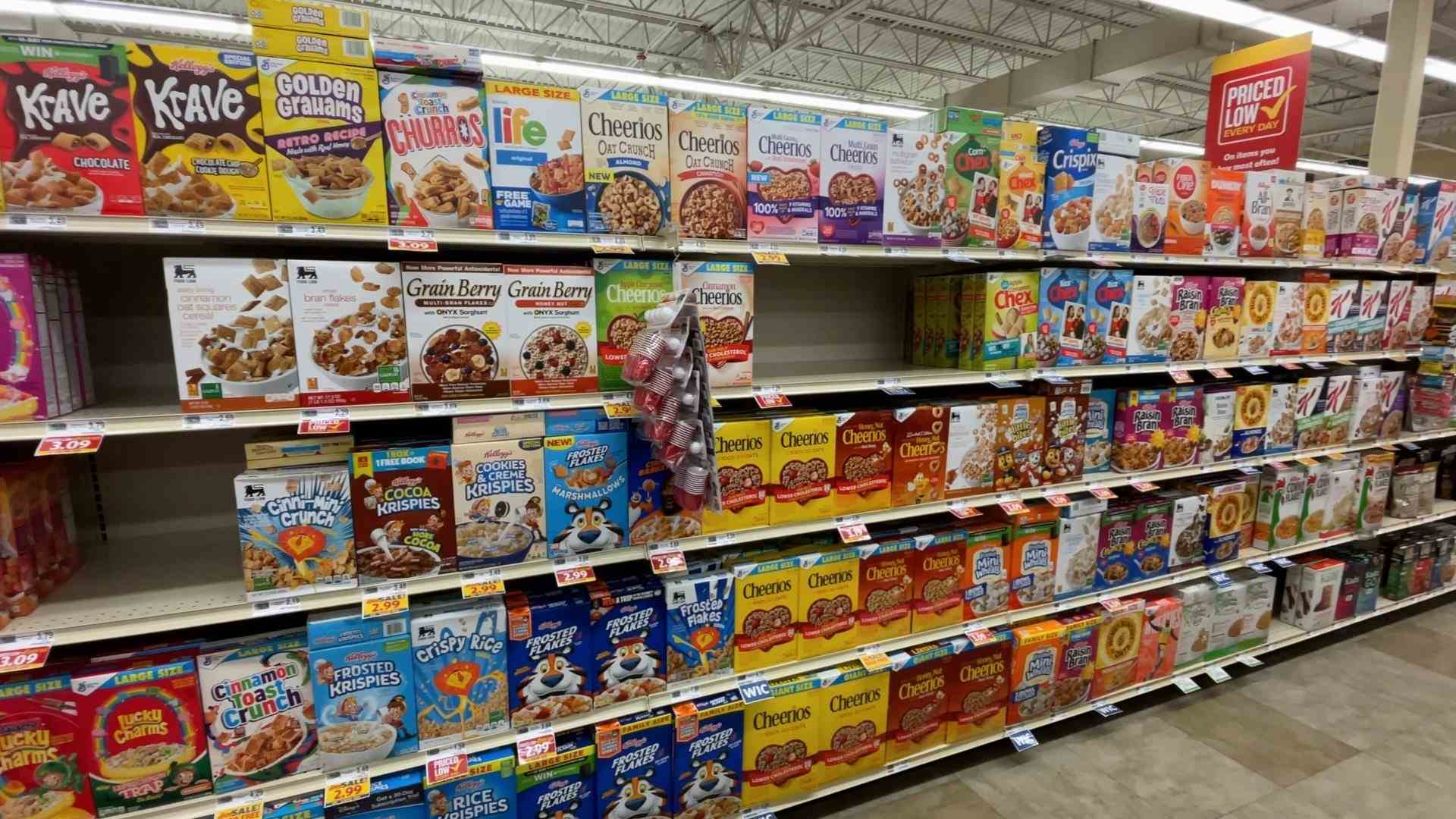 The American breakfast staple, cereals, has lost favor among consumers over the past five years.
Shutterstock
WK Kellogg says production is shifting
The Omaha closure is part of a broader plan WK Kellogg announced in August 2024 to modernize its supply chain.
On the company’s second-quarter 2024 earnings call, then-CEO Gary Pilnick said WK Kellogg planned to close one of its oldest facilities, citing aging infrastructure, older platforms, and an inefficient building configuration.
The company said it planned to invest $450 million to $500 million in its manufacturing network, including up to $390 million for new equipment and infrastructure at newer, more efficient plants.
WK Kellogg also expected about $110 million in cash one-time costs tied to the initiative, including startup costs, new lines, severance, and other expenses.
The company has not said the Omaha closure will eliminate specific cereal brands from store shelves. Instead, WK Kellogg described the move as a production shift from older facilities to newer and more efficient plants.
Pilnick told analysts in 2024 that the company was shifting production from older facilities to more efficient facilities and from more rigid platforms to newer, more agile technologies. He said WK Kellogg expected to have the capacity needed to supply customers as it executed the project.
The transcript gave one product-related detail. WK Kellogg said it no longer makes the rice for Rice Krispies Treats following its spinoff from Kellanova. The company said that the change contributed to reduced production at another facility as it consolidated rice production.
That does not mean Rice Krispies Treats are disappearing. It means WK Kellogg no longer makes the rice used for the product after the spinoff.
Ferrero now owns WK Kellogg
In September 2025, Ferrero, the Italian sweet-packaged company of the famed Nutella, completed the acquisition of WK Kellogg’s, adding its cereal portfolio across the U.S., Canada, and the Caribbean to its broader food and confectionery business.
The closure also comes under new leadership. In February 2026, the company said Jean-Baptiste Santoul had joined as chief operating officer and would lead WK Kellogg.
The Omaha shutdown is now unfolding under Ferrero ownership, even though the plant closure plan was announced before the acquisition closed.
For consumers, the closure may not immediately change what they see on grocery shelves. WK Kellogg has said it is shifting production to more efficient facilities and expects to maintain the capacity needed to meet customer demand.
Related: Kroger forced to make costly store fix after federal lawsuit