
While proximity and a long shared border once guaranteed a strong stream of tourism between the United States and Canada, President Donald Trump’s approach to geopolitics has led to a dropoff that has now lasted well beyond what many initially predicted to be a temporary ebb.
Amid President Trump’s implementation of tariffs and past references to Canada as “the 51st state,” the monthly number of Canadians coming home from trips to the U.S. has remained down by double digits in August. The number of car trips was down a particularly steep 33.9% from 2024.
Some Canadians are actively protesting the current administration’s stance toward their country, while others fear the anti-immigrant crackdown that in certain cases led to the mistaken detention of tourists.
Canada’s latest U.S. travel advisory issues warning
Back in June, the Canadian government updated its travel advisory for the United States to explicitly state that travelers need to “comply and be forthcoming in all interactions with border authorities” because those denied entry “could be detained while awaiting deportation.”
Both countries have continued to keep each other at the level one “take normal precautions” travel rating typically assigned to the safest countries for tourists.
Related: US ambassador to Canada makes threat over falling tourist numbers
The update, which the Canadian government made on Sept. 29, focuses on LGBTQ+ plus travelers and those who may have the X non-binary designation on their passport.
“Federal systems in the U.S. are changing to no longer accept markers of gender identity,” the advisory reads, in reference to the president’s effort to ban the use of nonbinary sex markers on passports that was later blocked by a judge. “Sex assigned at birth may now be requested by federal forms and processes.”
“Laws also vary by state and municipality”: Canadian government on U.S. travel
The advisory then goes on to warn travelers who may have a marker other than male or female in their passport that both laws and enforcement may “also vary by state and municipality.”
Travelers with a minority gender identity are advised to be especially cautious when traveling in states with fewer anti-discrimination protections.
“Some states have enacted laws affecting 2SLGBTQI+ [the more inclusive term used for LGBTQ people used by the Canadian government] persons,” the advisory reads further.
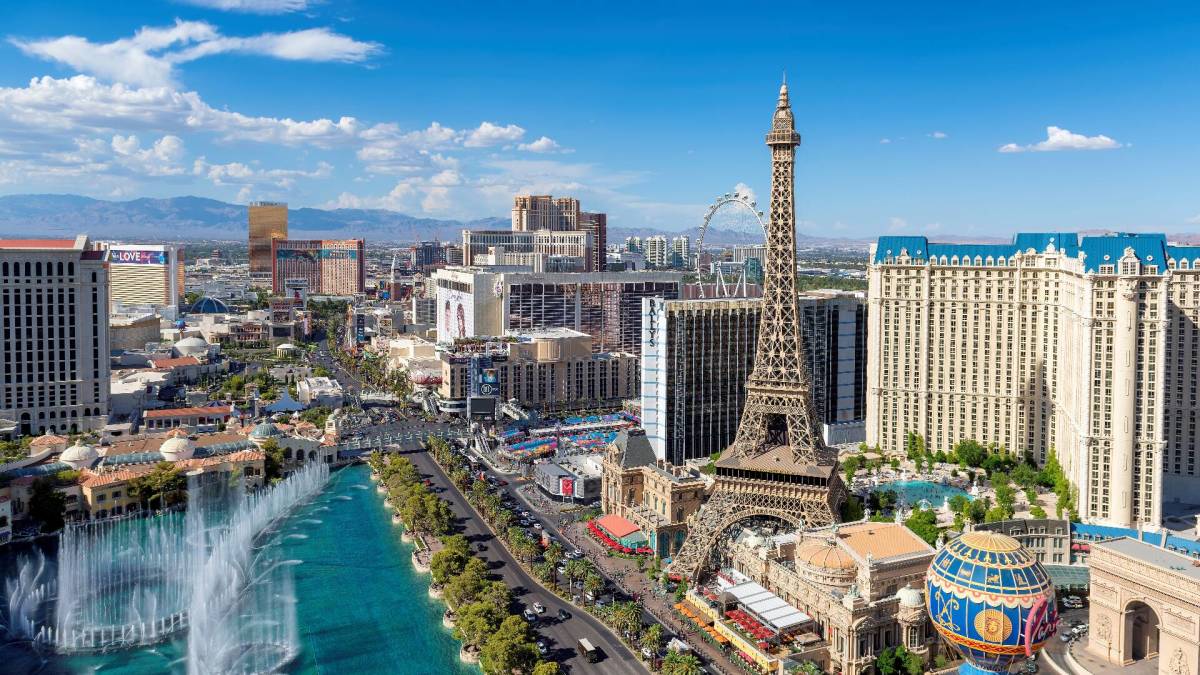 Las Vegas has been particularly affected by the dropoff in Canadian tourism.
Image source: LuckyPhotographer/Shutterstock
“Authorities may request proof of legal status in the U.S. at any time”
The Canadian government advisory has also been updated to include a new line stating that “laws may vary greatly from state to state” and that travelers should “consult the website of the state you wish to visit prior to arrival.”
“Authorities may request proof of legal status in the U.S. at any time,” the update also states. “Be prepared to show evidence of your legal presence in the U.S.”
More on travel:
- United Airlines CEO gives stark warning on Olympic Games
- Another regional airline cancels all flights, no refunds
- US government issues sudden warning on Switzerland travel
- Another country just issued a new visa requirement for visitors
Amid high-profile cases like one in which Canadian Jasmine Mooney spent 12 days in ICE detention after trying to cross the border to San Diego from Mexico back in March, the Canadian government had made several tweaks to strengthen the tone around border crossing and immigration enforcement in the U.S. since the start of the year.
The changes did not please U.S. Ambassador to Canada Pete Hoekstra. He previously criticized the focus on being detained as alarmist and “not a well-founded fear,” given that most travelers cross the border from Canada without issue daily.
Related: American Airlines is betting big on US-Canada travel