
While the number of Canadian travelers to the U.S. has dropped off dramatically since the start of the year amid President Donald Trump’s references to the country as a “51st state,” Canada’s government has been periodically issuing and updating its travel advisories.
An advisory issued in June referenced explicitly tells travelers to “comply and be forthcoming in all interactions with border authorities” amid the current administration’s anti-immigration focus and border crackdown.
On Sept. 29, the Canadian government similarly warned LGBTQ+ travelers of President Trump’s ongoing efforts to ban the use of nonbinary sex markers on passports and the fact that passports may not be accepted if they show a gender marker different from one’s sex assigned at birth.
“Some states have enacted laws affecting 2SLGBTQI+ [the more inclusive term used by the Canadian government] persons,” the advisory warns further.
Less than a week after this advisory update, the Canadian government made another advisory update geared toward Canadian citizens who may be living long-term in the U.S.
U.S. visas “can be terminated for various reasons,” Canadian government warns citizens
While Canadians who come into the U.S. for short stretches of tourism do not require more than their passport, the updated warning tells citizens living in the country on temporary or permanent visas that this status “can be terminated” at any time by an administration that has been more hostile toward foreigners.
The section of the warning previously stating that Canadians traveling to the U.S. for tourism can stay for a maximum period of six months now reads: “If you do need a visa, U.S. authorities may review already-issued visas and visas can be terminated for various reasons, such as violations of admission terms or a reassessment of eligibility, including because of past criminal convictions.”
Related: Canada is once again strengthening its travel advisory for the US
Last spring, the new administration also started requiring Canadian visitors who enter the country by land and stay for more than 30 days to register online on the U.S. Citizens and Immigration Services website.
Since those who come into the country through an airport are automatically registered, the change sowed widespread confusion about which travelers were affected.
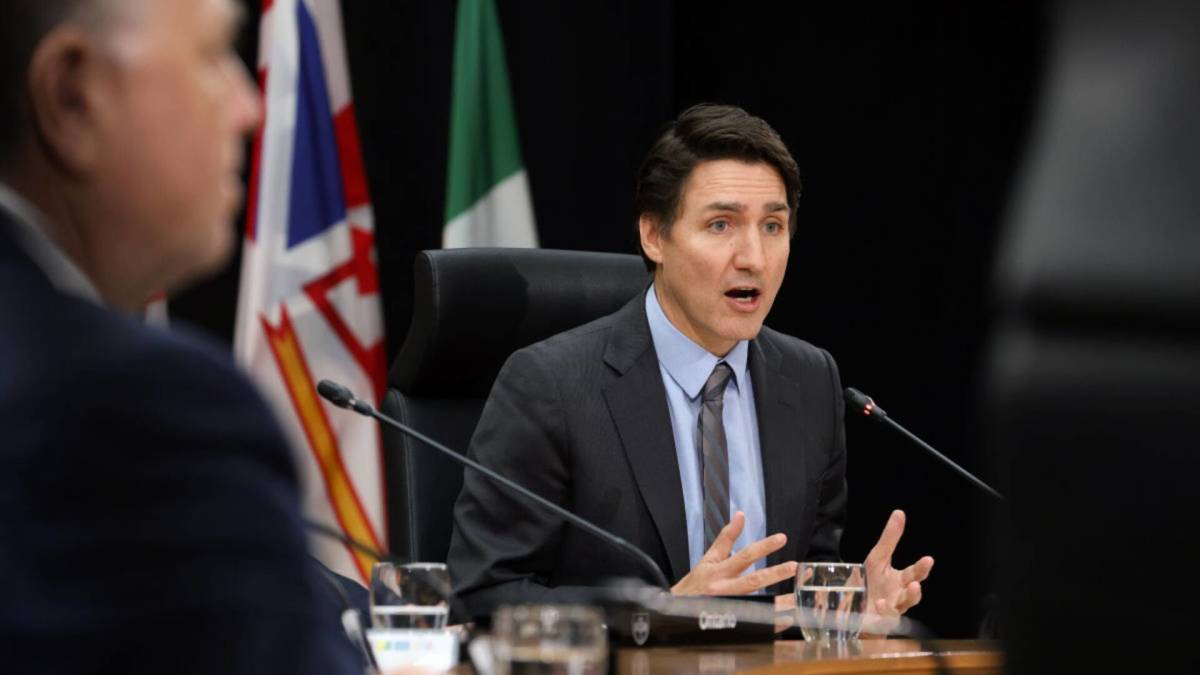 The escalation in U.S.-Canada relations began after President Donald Trump made repeated jabs at former Prime Minister Justin Trudeau.
Image source: Getty Images
The U.S. ambassador considers all these advisories too harsh: Are they really?
Amid multiple travel advisories issued over the last nine months, U.S. ambassador to Canada Pete Hoekstra has also repeatedly expressed his displeasure over what he considers to be their unnecessarily alarmist tone.
“If a Canadian has had a disappointing experience coming into the United States, I’m not denying that it happened, but I’m saying it’s an isolated event and it is not a pattern,” Hoekstra told the Canadian Press back in June 2025. “Searching devices and all of that is not a well-founded fear. We don’t do that. America is a welcoming place.”
More on travel:
- United Airlines CEO gives stark warning on Olympic Games
- Another regional airline cancels all flights, no refunds
- US government issues sudden warning on Switzerland travel
- Another country just issued a new visa requirement for visitors
A few months later on September 25, Hoekstra nonetheless referenced lower tourist numbers to the U.S. to imply that the customs preclearance used at Canadian airports for faster crossing could be cut if they do not improve.
Several other speakers at the forum on cross-border relations interpreted the statement as a threat.
Former Canadian diplomat and forum moderator Colin Robertson told Hoekstra that making it more difficult to visit as a response to poor visitor numbers was like “cut[ting] off your nose to spite your face.”
Related: US ambassador to Canada makes threat over falling tourist numbers