
Shares of Caterpillar (CAT) fell roughly 3% on Tuesday, March 15, after news broke that the industrial equipment company acquired a venture-backed startup focused on electric and autonomous off-road vehicles.
Here’s what Caterpillar’s acquisition could mean for the business and CAT stock moving forward.
Caterpillar buys “a data platform on wheels”
Caterpillar acquired Monarch Tractor, a California startup founded in 2018 that raised roughly $251 million to build electric and autonomous off-road vehicles, Bloomberg reported Tuesday, April 14. The financial terms and purchase price of the deal have not yet been disclosed.
The key point here is that Caterpillar likely bought the company for its technology, not to sell more tractors.
Monarch had already begun shifting away from full-scale vehicle manufacturing and toward licensing its technology, meaning Caterpillar is primarily acquiring software, intellectual property, and engineering talent rather than a stand-alone manufacturing business.
More Caterpillar:
- This Dow 30 dividend stock is up 100% in the past year
- History of Caterpillar: Company timeline & facts
- 100-year-old Dow stock is surprising AI play
That matters because it lowers the execution risk significantly. Caterpillar is not taking on the expensive challenge of scaling production, building distribution, or absorbing manufacturing losses in an unproven market.
Instead, it gets autonomous driving, telematics, and electric drivetrain technology that can potentially be layered into Caterpillar’s existing equipment lineup.
Monarch previously described its MK-V platform as “a data platform on wheels,” as Forbes reported, highlighting where management sees the value.
For a company as large as Caterpillar, which generated roughly $67.6 billion in fiscal 2025 revenue, software-enabled upgrades could improve its product mix and support higher-margin aftermarket and service revenue over time.
Weak venture market created a buying opportunity
The timing of the deal also appears favorable for Caterpillar.
Monarch sold itself during a much weaker funding environment for agricultural clean-tech startups, according to Bloomberg. Global venture capital investment in the space reportedly fell to $1.3 billion in 2025, down to roughly one-third of 2022 levels.
Equity financing totaled just $141 million in the first quarter of 2026, which was down 50% from the rolling four-quarter average.
That creates opportunities for larger incumbents such as Caterpillar to acquire proven technology after venture investors fund much of the early development work, but before the business reaches full commercial scale.
Caterpillar also had ample flexibility to make the move. The company ended fiscal 2025 with roughly $9.9 billion in cash while generating about $7.5 billion in free cash flow for the full year.
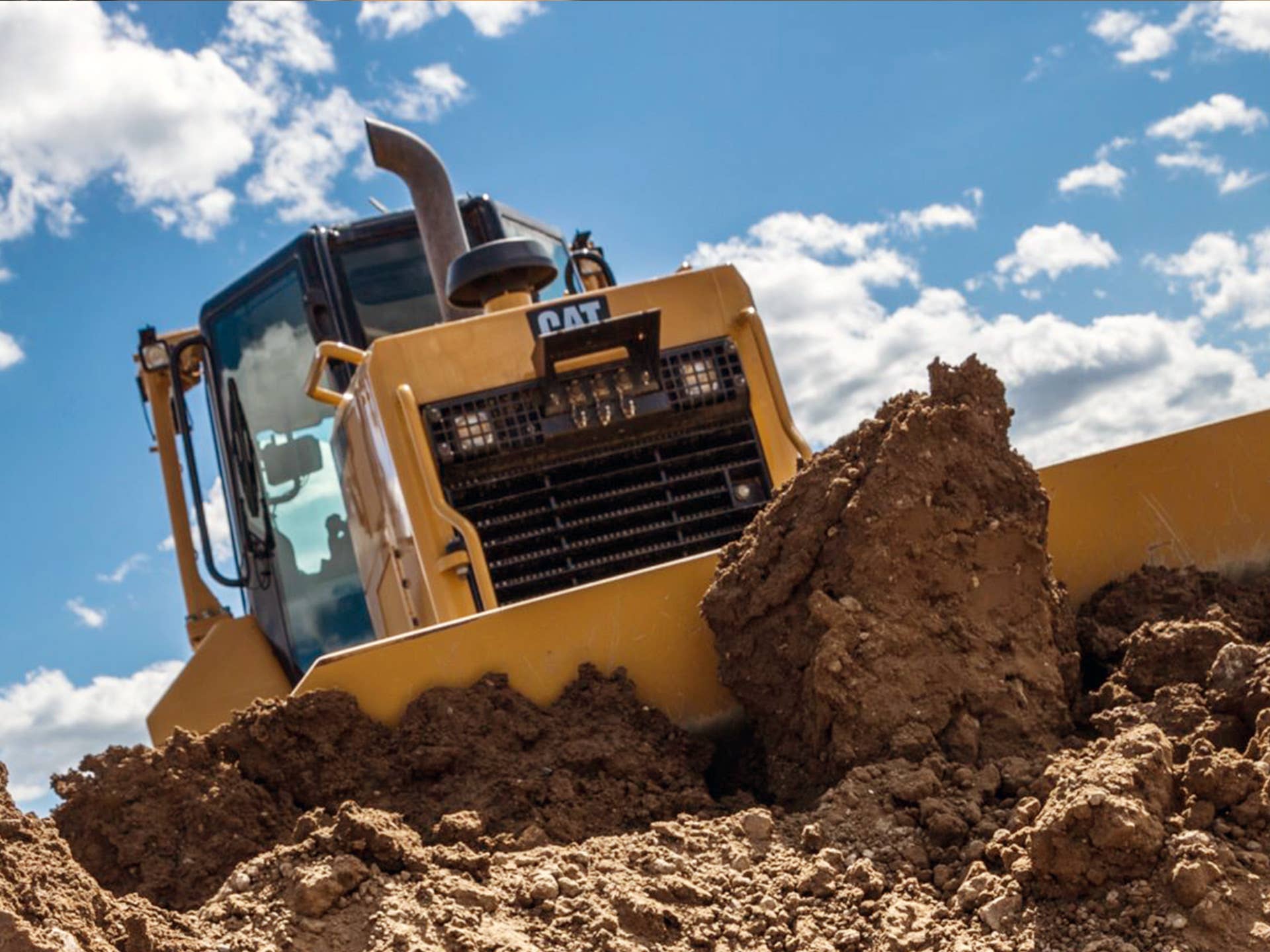 Tariffs add notable increases in input costs for Caterpillar.
Caterpillar
Tariffs remain Caterpillar’s biggest near-term challenge
While Caterpillar’s Monarch acquisition may support the long-term strategy, management made clear that tariffs remain the company’s largest near-term headwind.
At the end of the fourth quarter, CEO Joe Creed said Caterpillar faced “net incremental tariff headwinds of $1.7 billion” in 2025, while CFO Andrew Bonfield noted that fourth-quarter margins were pressured by “higher manufacturing costs driven by tariffs.”
Looking ahead, Caterpillar expects tariff costs to worsen before they improve. Management guided for approximately $2.6 billion of incremental tariff costs in 2026, up about $800 million from 2025, with first-quarter tariff costs expected to remain elevated at roughly $800 million.
Those rising input costs are weighing directly on profitability. In Construction Industries alone, Caterpillar said tariffs reduced fourth-quarter margins by roughly 600 basis points (6%), while Resource Industries saw an approximately 490-basis-point (4.9%) impact.
Importantly, demand itself remains healthy.
Management said Caterpillar entered 2026 with a record $51 billion backlog, up 71% year over year, and Creed stated the company is seeing “strong momentum” across all three primary business segments.
That suggests Caterpillar’s near-term challenge is not weak end-market demand, but protecting margins while absorbing elevated tariffs and manufacturing costs.
For investors, that means Caterpillar’s ability to offset rising costs through pricing, sourcing changes, and internal efficiencies may matter more in 2026 than strategic acquisitions like Monarch.
CAT is up 166% in the past year: here’s what could drive shares higher
- Monarch’s autonomy software could help Caterpillar raise pricing by adding premium features without materially increasing hardware costs.
- Electric drivetrain technology may accelerate lower-emission equipment launches as sustainability regulations tighten globally.
- Monarch’s telematics and data capabilities support Caterpillar’s push into higher-margin connected services and recurring software revenue.
- Automation features may strengthen Caterpillar’s competitive positioning with labor-constrained customers, supporting pricing power and market share gains.
- If autonomy upgrades are sold through Caterpillar’s dealer network, they could boost aftermarket revenue and deepen customer relationships over time.
What could weigh on CAT shares
- Tariffs on steel, aluminum, and imported components could pressure margins if Caterpillar cannot fully offset costs with price increases, according to Construction Dive.
- Weak construction and resource demand could reduce equipment orders and overshadow any strategic benefits from the Monarch acquisition.
- Dealer inventory normalization may continue weighing on shipments and factory utilization in the near term.
- Monarch’s technology may take longer than expected to integrate and commercialize, delaying returns on the acquisition.
- Adoption risk remains if autonomous and electric heavy equipment stays limited to niche use cases rather than scaling broadly.
Key takeaways for Caterpillar investors
Caterpillar’s acquisition of Monarch looks strategically smart and could strengthen the company’s automation and electrification capabilities over time.
However, the deal is unlikely to meaningfully impact near-term earnings, and investors remain far more focused on tariffs, construction demand, and Caterpillar’s upcoming earnings report.
For now, Monarch may improve Caterpillar’s long-term story, but the stock’s near-term direction will still depend largely on how management navigates macroeconomic pressures in its core business.