
Al Dunlap was never big on people-pleasing.
“You’re not in business to be liked,” said the executive dubbed “Chainsaw Al” due to his penchant for mass layoffs. “If you want a friend, get a dog.”
Dunlap, also known as “Rambo in pinstripes”, eventually ran afoul of the Securities and Exchange Commission, but not before taking a big bite out of corporate America through his ruthless downsizing style.
The former chairman and CEO of Sunbeam was one many controversial top executives who have boldly shoved their way into the spotlight.
While some CEOs keep a low profile as they carry out their duties, others reach near-rockstar levels of popularity.
Tesla (TSLA) Elon Musk has never been accused of being a shrinking violet, seeing as how he bought an entire social media platform — once Twitter, now X — and remade it in his own image.Musk cranked out controversy as he campaigned for Donald Trump during the 2024 presidential race and then helmed the widely criticized Department of Government Efficiency, which did a massive Dunlap-style job cut on the federal government.
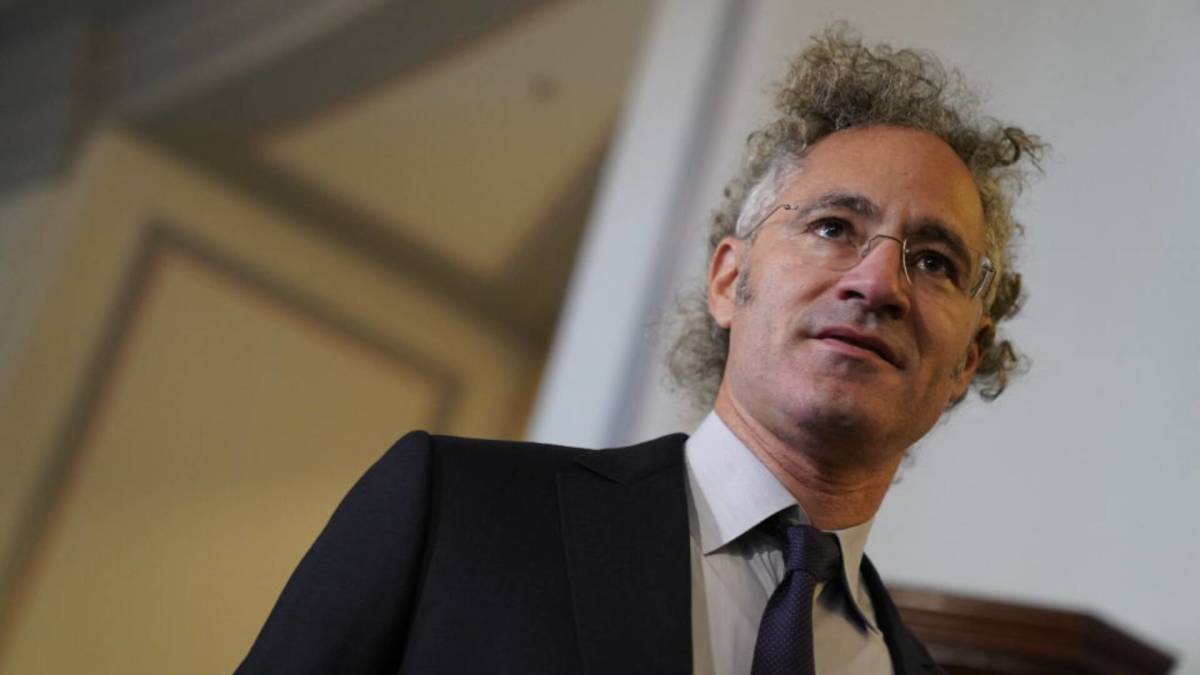
Reynolds/AFP via Getty Images
Palantir CEO Alex Karp has a history of making controversial statements.
Musk slams pay-package critics
A Gallup poll released in August indicated that the richest man in the world was also the most hated man in America.
And speaking of rich, Musk is well on his way to becoming the world’s first trillionaire after holders of more than 75% of the electric-vehicle maker’s shares approved a massive pay package, a move that even prompted an eye roll from the pontiff.
More Tech Stocks:
- As Palantir rolls on, rivals are worth a second look
- Nvidia’s next big thing could be flying cars
- Cathie Wood sells $21.4 million of surging AI stocks
“If that is the only thing that has value anymore, then we’re in big trouble,” said Pope Leo XIV, according to the Associated Press.
Musk, however, made his case for the mammoth paycheck last month during the tech company’s third-quarter earnings call.
“I just don’t feel comfortable building a robot army here and then being ousted because of some asinine recommendations from ISS and Glass Lewis who have no freaking clue,” Musk said, referring to the two largest proxy advisory firms, which both gave the thumbs down to the proposed pay package.
“I mean, those guys are corporate terrorists,” he added. “This is a fundamental problem for corporate governance. They’re not voting along the lines that are actually good for shareholders.”
The two firms did not immediately respond to requests for comment.
Palantir (PLTR) CEO Alex Karp also has raised eyebrows — and hackles — more than a few times with his cutting remarks.In addition to describing about “wokeness” as a “thin pagan religion,” Karp recently said he loved the idea “of getting a drone and having light fentanyl-laced urine spraying on analysts that tried to screw us.”
Market strategist: Investing in Tesla is investing in Musk
Jay Woods, chief market strategist at Freedom Capital Markets, described both Tesla and Palantir as “cult-like” stocks.”
Related: AI is enlisted in battle against workplace violence
“Without Elon Musk there is no Tesla,” Woods told TheStreet Pro’s Chris Versace during the Stocks & Markets podcast. “If you’re an investor in Tesla, you’re not investing in the electric cars. You’re investing in Elon Musk.”Woods said the focus on Tesla is on autonomous driving but “there is so much under the umbrella that is Tesla.”
The “robotics aspect of it, to me, the sky is the limit,” he said. “But you need to let them cook. And this pay package is something that will drive him and drive investors to get on board.”
Jeffery Gordon, co-director of Columbia Law School’s Ira M. Millstein Center for Global Markets and Corporate Ownership, described the concept of a celebrity boss as “a mixed bag.”
“Elon Musk is today’s poster child,” he said. “He once built Tesla brand loyalty. He now seemingly has degraded it, but he has held onto a retail stockholder base. Jeff Bezos built Amazon, then left and afterwards has become a celebrity ex-CEO.”
“I guess the most important recent positive example is” Apple (APPL) Co-Founder Steve Jobs, “who did not venture into the political or social realm but became a celebrity through his creative flair and marketing.”
Looking back, Gordon noted General Electric’s (GE) Reginald Jones, whom Gordon called “a corporate statesman of the 1960s and ’70s.” As CEO from 1972 to 1981, a turbulent time in society and business, Jones sought to develop cooperation between the business community and government.
Gordon also mentioned Jones’s successor, Jack Welch, “famed in his time but much criticized later.” Welch was dubbed “Neutron Jack” — a reference to the neutron bomb — in the 1980s for eliminating employees while leaving company infrastructure intact.
“What I think is interesting is how few CEOs offer themselves up to the celebrity limelight,” Gordon said.
Related: Analysts warn of status quo bias with AI in the workplace