
Chevron (CVX) is raising a significant warning. The oil giant says there is a dangerous assumption about the Iran war.
Oil prices fell after President Donald Trump said he remains “very intent on making a deal with Iran.” As a result of the move, many traders believed that the worst of the oil shock is over and the reverberations of the supply shock would become a thing of the past within a short period of time, with lagging effects limited.
On the surface, that reaction looked rational. Any sign of diplomacy will help cool fears that a geopolitical crisis can become a full-blown energy emergency.
Chevron CEO Mike Wirth does not, however, buy the argument.
Speaking at CERAWeek in Houston, Wirth warned that the oil futures market still does not appear to fully reflect the physical disruption that took place as a result of the Iran crisis.
The closure of the Strait of Hormuz is significant, as CNBC reports, and the markets may not understand what just happened. That is what the CEO is suggesting.
It matters because futures can move based on headlines, sentiment, and hope. Physical oil markets move on ships, storage, and export routes, and those take time to impact the markets. More importantly, these routes do not heal overnight.
For Chevron investors, the oil market is the key story to watch. This is no longer just a question of whether crude is hurting from one volatile trading session. Instead, this is part of a larger question regarding pricing this crisis as a short-term scare when it may actually be the early stage of a longer supply squeeze.
In that sense, Wirth’s message was not simply about oil. Instead, it’s about a complacency that can often haunt the markets.
“There are very real, physical manifestations of the closure of the Strait of Hormuz,” Wirth told CNBC.
He warned that those disruptions are not fully priced into oil futures.
Why Chevron says oil traders are reading Iran wrong
Wirth’s argument makes perfect sense on multiple fronts. The paper market is transforming much more quickly than the physical one.
Front-month prices still look elevated, but the futures curve also suggests traders expect the issue will become part of the past within a short period of time.
More Oil and Gas:
- The world’s biggest gas field matters just as much as oil right now
- Goldman Sachs reveals top oil stocks to buy for 2026
- U.S. economy will show resilience, despite rising oil prices
U.S. crude for May delivery settled at $88.13 per barrel, while Brent closed at $99.94. Later-dated U.S. crude contracts, however, were trading closer to $81, a clear sign of eventual cooling.
Chevron says the confidence is premature and often does not match the facts on the ground.
The company’s CEO said traders are still operating on “scant information” and “perception,” while the actual situation is much scarier. Before the war, roughly 20% of global oil supplies moved through the Strait of Hormuz, which is why the entire world’s demand is now in trouble.
As the conflict worsens, tanker traffic is dropping sharply because Iran is attacking commercial shipping. Gulf Arab producers are cutting back on production because exports are limited, and some governments are keeping more fuel at home instead of sending it abroad.
Even if diplomacy improves, Wirth cautions that the repair process will be time-consuming. Inventories must be rebuilt. Damaged facilities need fixing. Production needs to be dialed back; it cannot always be snapped back online at full speed.
Related: JPMorgan’s shocking Iran forecast could change oil’s next move
That lag is what makes Chevron’s warning more serious for the average consumer. Investors are accustomed to oil markets spiking on geopolitical headlines and then cooling once rhetoric fades. Wirth is suggesting this time is different because the disruption is not just psychological. It is logistical.
And when logistics break down in energy markets, price signals change at a rapid rate.
Trump’s Iran strategy is keeping energy markets off balance
Washington is also helping shape the market’s confusion.
Trump has signaled that he still wants a deal with Tehran, and that softer tone led to a substantial selloff in crude. But the broader political picture is muddled. The BBC reported that the White House appears to be taking a multipronged approach, pursuing pressure and diplomacy at the same time.
Related: Chevron, Shell make stunning Venezuela move as Iran crisis deepens
That strategy is often very difficult to pursue, considering that Iran rejected a reported U.S. peace proposal and publicly denied that meaningful negotiations were taking place.
That leaves investors trying to price one of the world’s most important oil chokepoints while the politics of the matter keep changing by the minute.
From the market’s perspective, there is a huge gap. Oil traders are not just trying to handicap war risk. They are trying to determine whether a diplomatic opening is real, whether the military situation is going to get worse from here, and whether the Strait of Hormuz can come back in the most effective and efficient fashion.
Right now, none of those answers looks especially clear.
That uncertainty is exactly why Wirth’s comments stand out. He is not telling investors that oil will immediately go higher. He says the market might be too focused on the possibility of a political off-ramp and not enough on the real damage already done to the supply chain.
If that’s true, recent weakness in crude may not be a sign of safety. It may be a sign the market is still in guess mode.
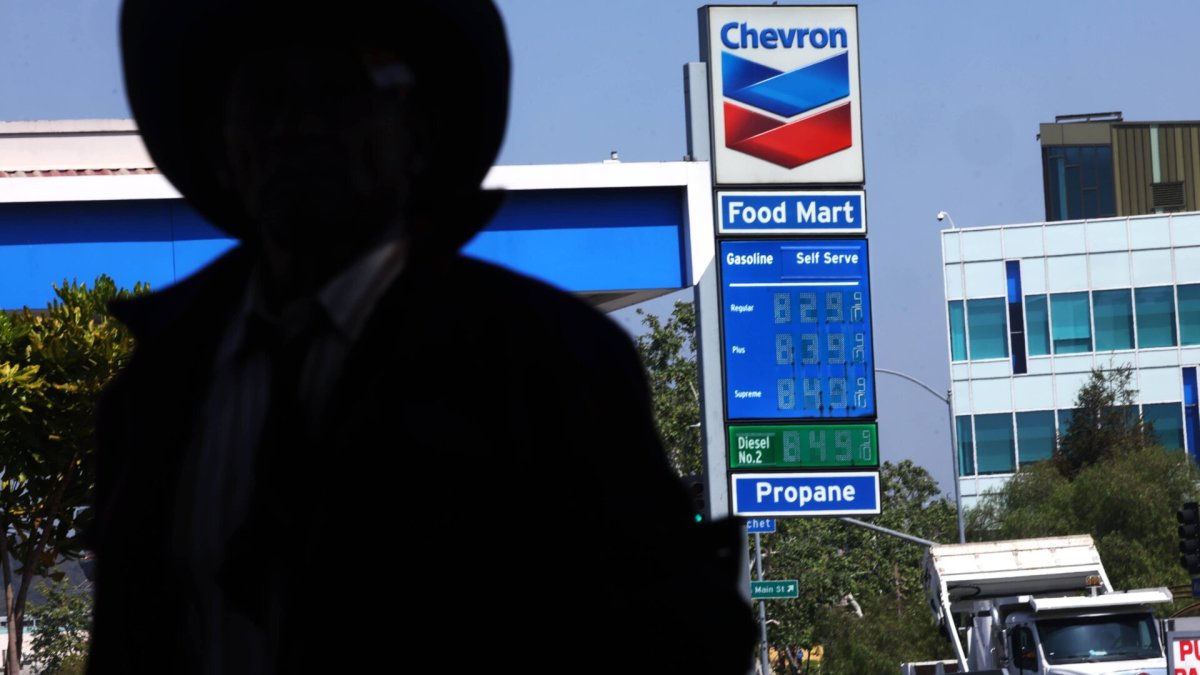 Chevron’s CEO warns that President Trump’s Iran deadline could jolt oil.
Molina/Los Angeles Times via Getty Images
What the Strait of Hormuz crisis means for Chevron stock
For Chevron shareholders, the takeaway is much larger than a one-day move in crude.
If Wirth is right, the market may still be adjusting to a supply shock that will last longer. For a major, integrated producer such as Chevron, high oil prices can help its upstream earnings and cash flow stay strong.
Related: Chevron stock sends loud message as oil panic grips Wall Street
It doesn’t mean that war is “good” for stocks in general, but the market may need to look again at which companies are likely to do well if supply stays low longer than expected.
That is why Chevron’s message matters so much. The company is not just describing turbulence, but also challenging the market’s timeline.
A short-lived disruption means one thing. A prolonged bottleneck in a waterway that typically handles approximately one-fifth of the global oil supply presents a unique challenge.
If ships continue to avoid the route, if export volumes stay under pressure, and if damage to infrastructure in the region slows the recovery, the current futures curve might look too relaxed.
What Chevron investors should watch next
- Whether tanker traffic through the Strait of Hormuz begins to normalize
- Whether Gulf producers restore output or keep exports constrained
- Whether front-month and later-dated crude contracts start converging higher
- Whether the White House delivers a real diplomatic breakthrough or more mixed signals
- Whether Chevron and other oil majors become bigger relative winners in a tight-supply market
Chevron investors also need to remember the situation will cut in both directions. A credible diplomatic breakthrough could cool crude quickly and push down the premium that is baked into the energy stocks. Broader equity markets could also remain volatile if war fears weigh on risk appetite, even while oil producers enjoy the best pricing situation they have enjoyed in years.
But that is exactly why Wirth’s warning merits attention.
He is warning Wall Street not to mix up a softer headline tape with an oil market that has healed. The futures market might be pricing hope. Chevron is pointing to a lack of physical scarcity.
If shipping disruptions persist, inventories stay tight and damaged supply chains take longer to repair. Oil may reprice higher, very quickly. And if that happens, Chevron may look less like a cautious observer of the crisis and more like one of the first major companies to state that the market has got it all wrong.
That is the real investor takeaway here. The danger is not only that the Iran war keeps oil elevated. It is that traders may still be underestimating how hard it is to unwind a supply shock once the barrels stay put.
Related: Palantir just got access to something highly sensitive