
Chipotle has struggled in recent years. Following jaw-dropping growth that transformed the regional fast-casual restaurant into a national powerhouse, controversy over pricing and portion sizes, as well as fiercer competition, have led to fewer customers and sluggish growth.
The dynamic was front and center in the second quarter, when Chipotle’s CEO acknowledged the challenges posed by cash-strapped consumers. Unfortunately, it didn’t improve in the third quarter. Sales at stores open more than a year were essentially unchanged year over year, and foot traffic remained downbeat.
You can’t blame customers. Chipotle Bowls can cost over $10, and burritos can reach $15, which is pricey for customers in its key 25- to 35-year-old cohort and small families. Especially given that inflation is rebounding and unemployment is climbing, creating uncertainty that’s crimping budgets.
Chipotle has headwinds to overcome
Chipotle gets a quarter of its sales from 25 to 35-year-olds, a group hard-hit by slowing hiring and lower pay.
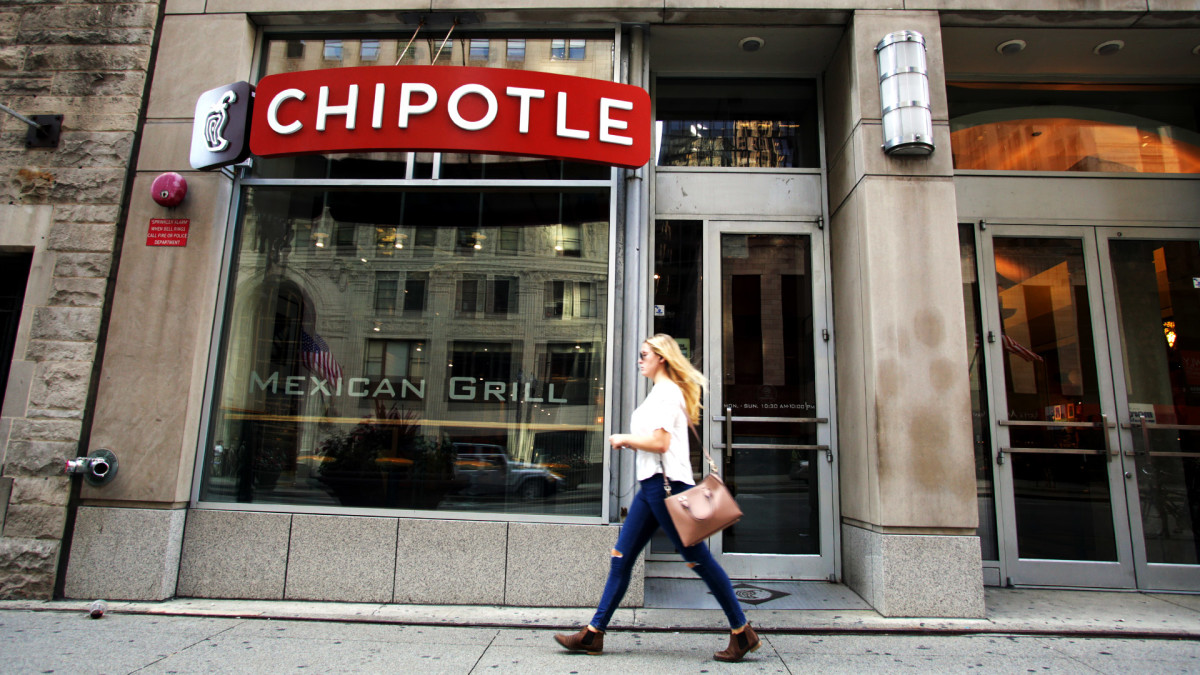 Chipotle has seen foot traffic slip in 2025 amid economic uncertainty.
Image source: Shutterstock
The unemployment rate for 25 to 35-year-olds was 4.7% in August, the most recent month reported due to the government shutdown, up from a low of 3.8% in June and 3.3% in 2022 before higher interest rates started slowing the economy to tame runaway inflation.
Chipotle statistics:
- Founded: 1993 (Denver, Colorado).
- Number of store locations: 3,916.
- Employees: 130,504
- Annual revenue (2024): $11.3 billion, up 15% from 2023.
- Annual net income (2024): $1.53 billion, up from $1.23 billion in 2023. Source: Wikipedia; SEC filings.
US employers have announced nearly 1 million layoffs through September 2025, according to Challenger Gray & Christmas, a 55% increase from the same period in 2024. And wage growth continues to shrink even as inflation rebounds in the wake of President Trump’s tariff strategy this year. In August, wages were up 4.1% year over year, down from 4.6% one year ago, and 6.7% in 2022, according to the Atlanta Fed’s Wage Growth Tracker.
Meanwhile, inflation was 3% in September, up from 2.3% in April, before most tariffs went into effect. The Yale Budget Lab reports that the effective tariff on US imports is 18%, the highest since 1934, and up from 2.4% in January.
More Restaurants
- Scandals force fast-food chain to close dozens of restaurants
- 30-year-old pizza chain closes all restaurants except one
- Texas Roadhouse rival shuts down several restaurant locations
“The gap has widened, with low to middle-income guests further reducing frequency,” noted Boatwright in the third-quarter earnings call. Boatwright says Chipotle’s market share among 25- to 35-year-old customers is holding steady, which suggests the company is losing business to dining at home.
Chipotle doesn’t import many of its products, but tariff-driven price increases are still leaving its customers with fewer discretionary dollars to spend on dining out.
“Inflation is accelerating into the mid-single-digit range, primarily due to tariffs and rising beef costs, and we anticipate it will remain in this range in 2026,” said CFO Adam Rymer on the call.
Chipotle suffers lackluster foot traffic
Chipotle saw its overall visits increase 0.5% in the third quarter, while same-store visits fell 3.2%, according to Placer.ai data. In September, same-store visits declined by 4%, according to their analysis.
The data suggest that new store openings drove overall visit growth, while the drop-off in same-store visits reflects the ongoing customer challenges facing the company.
Chipotle opened 304 new company-owned stores in 2024 and plans to open 315 to 345 new locations this year, with 80% of these locations featuring its Chipotlane. It opened 84 company-owned restaurants in the third quarter alone.
Those openings are propping up overall revenue growth, which grew 7.5% to $3 billion last quarter. And they could position the company nicely to benefit from an eventual economic rebound.
Chipotle store count by year:
- 2025 (September): 3,916.
- 2024: 3,726
- 2023: 3,437
- 2022: 3,187
- 2021: 2,966 Source: SEC filings; 10-K reports.
Still, current customer behavior is tilting away from it, given that a 0.3% increase in comparable restaurant sales was driven more by higher prices and mix, which resulted in a 1.1% bump in average check, rather than customers beating down the door. Chipotle reported a 0.8% decrease in transactions during the quarter.
It isn’t expected to improve in the fourth quarter.
“We now anticipate full year comps to decline in the low single-digit range,” said Rymer.
Price hikes help offset cost squeeze
Chipotle increased prices in 2024, and these price increases have contributed to its improved profitability.
Chipotle’s food, beverage and packaging costs were 30% of total revenue, down from 30.6% the prior year, “primarily due to the benefit of menu price increases in 2024 and cost of sales efficiencies,” according to the company. The margin improvement would’ve been better if not for “inflation, primarily in beef and chicken, and the impact from newly enacted tariffs.”
Labor costs totaled 25.2% of revenue up from 24.9% last year because of “lower sales volumes and wage inflation, partially offset by the benefit from menu price increases in 2024.”
To help drive more people to its stores, Chipotle, like many rivals, is getting creative with deals and promotions.
Wall Street weighs in on Chipotle
In a research note shared with TheStreet, Bank of America analysts were disappointed that Chipotle lowered its guidance for same-store sales for the fourth quarter.
“The outlook for muted traffic, limited pricing lagging inflation and layered on throughout the year, and higher inflation will weigh on margins and the stock,” said the analysts. “We revise our 4Q25E [same store sales growth] to -1.6% from +0.5%, in line with management expectation for negative [low single digit] comps in the quarter.”
As a result, it lowered its price target on Chipotle shares to $55 from $61 previously.
The analysts laid out three major risks facing the company:
- Lower than expected consumer uptake of new product innovations or digital ordering capabilities,
- Higher than expected food or labor costs that Chipotle is unable to offset with increased pricing, and
- Macroeconomic pressures that slow consumer income growth or otherwise dampen consumption.