
On June 25, Apple told the market it was raising prices on MacBooks, iPads, and other devices to cover the cost of a global memory chip shortage.
The stock fell sharply that day, wiping out everything it had gained year to date. For a company that had been on a strong run, it was a rough afternoon.
Three weeks later, Apple shares were trading at new all-time highs. And on July 13, Citi analyst Asiya Merchant raised her price target on the stock to $365 from $315, maintaining a buy rating and telling clients the company still has roughly 16% more upside from here, according to Barchart.
What Citi’s analyst said on Apple stock and what she’s actually betting on
Merchant’s thesis isn’t complicated. The smartphone and PC markets are in rough shape, likely down a mid- to high-teens percent in 2026. Apple is gaining ground anyway. That gap between where the market is going and where Apple is going is what she’s paying for.
According to her note, Apple is expected to reach a record smartphone market share of around 25% this year, up about two percentage points from where it was, Investing.com reported.
More Apple:
- Apple just billed you for the AI buildout you never asked for
- Apple’s gamble just exposed the AI bubble’s fatal flaw
- Bank of America resets Apple stock forecast after Siri AI shift
The company is doing this through design-driven demand, strong mid-range positioning through promotions and subsidies, and an ecosystem that keeps people from switching.
As TheStreet reported, Apple guided gross margins to 47.5% to 48.5% for the June quarter despite rising memory costs, signaling that its pricing power is holding. Merchant sees the June price increases on Macs and iPads not as a red flag, but as further evidence of that strength.
Merchant isn’t counting on Apple Intelligence to push people to upgrade. That story hasn’t really materialized yet, and she doesn’t expect it to drive a meaningful hardware cycle. Yet she thinks a smarter Siri keeps people inside the Apple ecosystem longer, and people who stay in the ecosystem tend to spend more on subscriptions.
That’s the services angle, and it’s where Apple actually generates much of its profitability.
How Apple is winning while the device market shrinks
Apple’s PC business put up 10.1% growth in the second quarter of 2026 in a market that was going the other way. That kind of performance in a down market comes from a few structural advantages the company has built up over years.
Apple’s supply chain is a big part of what makes this work. Most of its competitors buy memory on the spot market, so when prices spike, their costs spike with them and margins take the hit. Apple operates differently. It has long-term supplier agreements, tightly controlled hardware specs, and a customer base that’s used to paying more and tends to stay anyway. That’s why it could raise prices on MacBooks and iPads in June and still be trading at all-time highs three weeks later.
The June 25 sell-off looked bad in real time. But in hindsight, the market was punishing Apple for doing something that actually demonstrated pricing power. The stock has since recovered about 15% from that low, and Merchant’s note is essentially saying that recovery still has room to run.
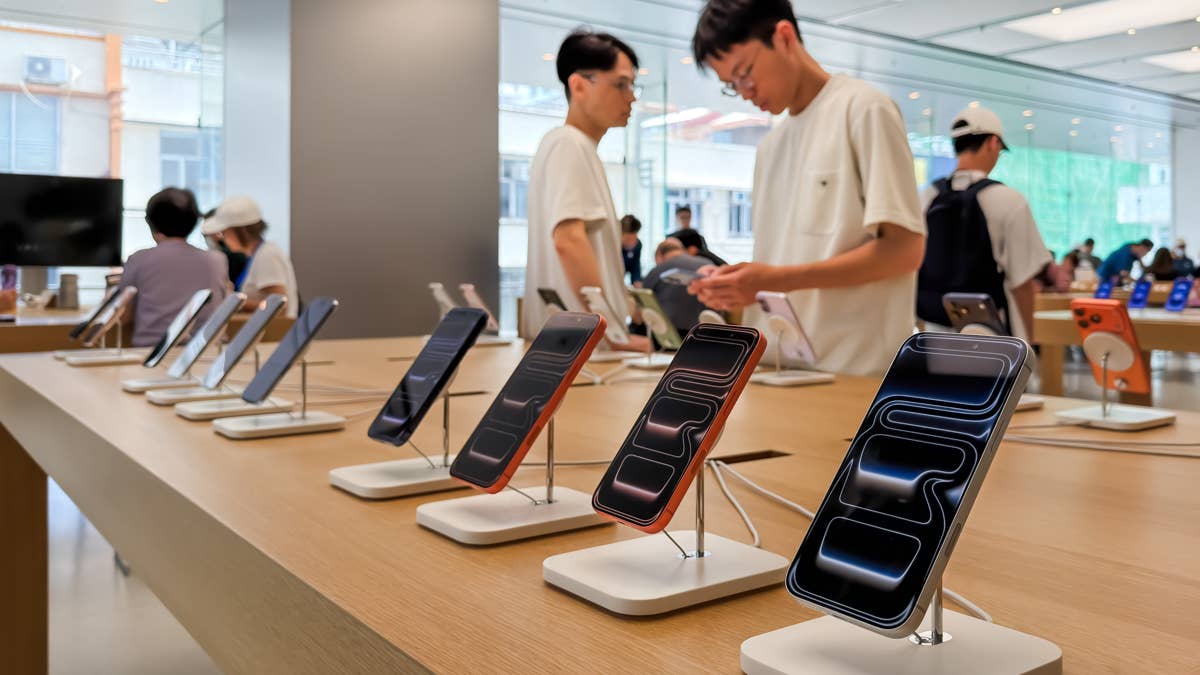 The iPhone 18 launch is when Merchant expects investor sentiment to really shift.
Cheng/Getty Images
The two events on Apple’s calendar that matter most right now
Apple reports Q3 earnings on July 30, and the setup heading in looks strong. Consensus has the company earning $1.88 per share, which would be a 19.75% increase year over year, Seeking Alpha noted.
For a company Apple’s size, that kind of EPS growth is genuinely impressive, and it’s part of why the stock has been resilient, even when the broader market got nervous.
After earnings, the next big catalyst is September. The iPhone 18 launch is when Merchant expects investor sentiment to really shift. She frames it as a significant inflection point, the moment when hardware momentum becomes visible in actual demand data rather than just analyst projections.
There’s one complication worth noting. Apple filed suit against OpenAI earlier this month, accusing the company of systematically stealing its trade secrets to fuel its own hardware ambitions.
The case adds legal complexity to Apple’s AI story at a moment when the company is trying to position Siri and its services business as a long-term growth driver. Merchant’s note doesn’t address the lawsuit, but investors heading into July 30 will likely want to hear how management talks about it.
Where Citi’s higher Apple price target fits in the broader Wall Street picture
Citi isn’t alone in turning more bullish on Apple. JPMorgan had already raised its target to $345 earlier this year. Merchant’s $365 now sits above that, making Citi one of the more constructive voices on the stock among major banks heading into the second half of 2026.
At current prices around $316, a $365 target implies a lot still needs to go right. Apple’s P/E sits at about 38 times earnings, which is a premium valuation for any company, let alone one in a mature hardware category. Merchant’s answer is that the premium is justified by share gains and pricing power that most hardware companies can’t replicate.
Apple is up nearly 30% from its March low. The stock was at all-time highs on July 13. And Citi thinks that even with all of that already in the price, there’s more to come.
Whether that holds through earnings, through the iPhone launch, and through the OpenAI lawsuit will be the real test of how much of Merchant’s thesis the market is willing to price in.
Related: Apple stock move vindicates Palantir CEO warning for AI industry