
One of the biggest problems a retailer can face is when a rival finds a way to bring customers their key product in a more convenient way.
That’s how Amazon drove Borders Books, Waldenbooks, and a number of smaller booksellers out of business. First, the online retailer simply delivered physical books to people’s houses.
Getting a book in the mail with just a few clicks online was nice, but the death knell for those retailers was when Amazon began delivering digital books. It took a few years for digital reading technology to become common and viable, but once it did, a lot of people opted to skip the trip to the bookstore.
I’m a huge fan of bookstores, but digital reading is simply too easy and more affordable. I’ve been in a Barnes & Noble, seen a book I wanted, and opted to order it online when I got home because the price for the digital book was cheaper, and I prefer reading on my iPhone to lugging books around.
Bookstores have actually adapted, selling things in addition to books, adding coffeehouses, and trying to appeal to people who still love physical books.
Video game retailers including Best Buy, Target, and GameStop have faced a similar problem for years. Consumers can download games at home and can even opt for subscription services that make buying many new games unnecessary.
This has created a true inflection point for GameStop (GME) , which has teetered on the edge of bankruptcy, but has found ways to survive.
GameStop has struggled to find a business model
Like many retailers, GameStop saw its existing problems get worse during the Covid lockdown period when many of its stores simply could not operate. That situation put the video game retailer in a fight for survival, according to You Exec.
GameStop’s near bankruptcy in 2020 was due to a combination of factors. The company had been struggling for years due to the rise of digital gaming, which reduced the demand for physical games and consoles that Gamestop sells. The COVID-19 pandemic further exacerbated these issues as many stores had to close temporarily. However, the company managed to avoid bankruptcy due to a surge in its stock price in early 2021, driven by a group of retail investors on Reddit.
The company reversed its fortune, or at least added to its cash reserves, because it became a stock touted on social media groups. Those groups weren’t making a comment on its business model, they were pumping the stock up to teach a lesson to short-sellers (and to make money).
GameStop, however, deserves credit for using its new cash to mount a turnaroud plan for its business. That has included a massive number of store closures with many more to come.
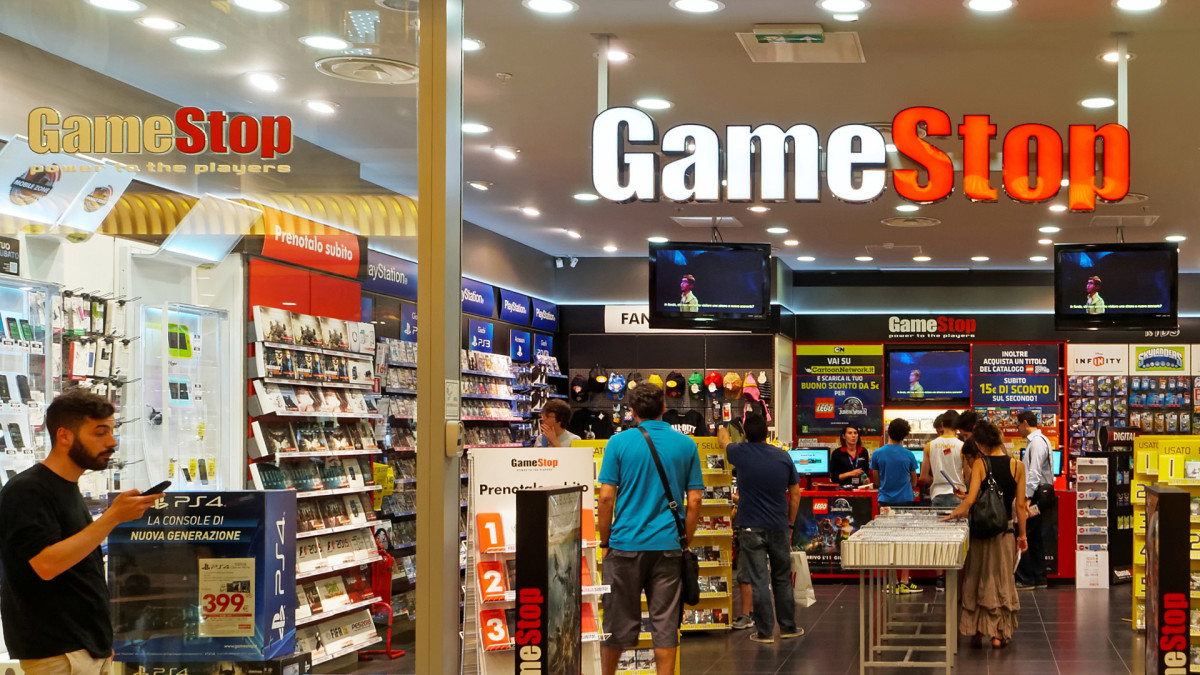 GameStop closed over 600 stores in 2024.
Image source: Shutterstock
GameStop needs to close more stores
GameStop shared risks to its business in its annual report. In many cases, the risks a company offers up are more generic (if weather is bad, foot traffic may suffer). In this case, the company has been very specific.
An important element of our profitability initiative is to reduce our global store base. Failure to successfully transfer customers and sales from closed stores to nearby stores could adversely impact our financial results.As a part of our profitability initiative, we are reducing our global store base, which includes closing stores that are not meeting performance standards or stores at the end of their lease terms with the intent of transferring sales to other nearby locations. If we are unsuccessful in marketing to customers of the stores that we plan to close or in transferring sales to nearby stores, our results of operations could be negatively impacted.
In addition to closing stores, GameStop has also been exiting certain markets with plans to leave more. The company shared that info in its annual report as well.
- During fiscal 2023, we exited our operations in Ireland, Switzerland, and Austria.
- During the fourth quarter of fiscal 2024 we closed down our store operations in Germany
- During the fourth quarter of fiscal 2024, we sold our Italian subsidiary, GameStop Italy S.r.l, which operated our Italian stores and e-commerce business.
- The stores in Italy will continue to operate under the GameStop brand for a transition period of up to six months.
GameStop has not shared how many stores it plans to close.
More Retail Stocks:
- Popular office supply retailer sold after closing 1,000 stores
- T-Mobile plans a harsh change for customers after new CEO starts
- Kohl’s hopes generous offers will bring customers back to stores
But the company has “initiated a comprehensive store portfolio optimization review which involves identifying stores for closure based on many factors, including an evaluation of current market conditions and individual store performance,” according to an SEC filing.
GameStop in-store foot traffic dropped by 10.7% year-over-year in August, according to data from Placer.ai.
GameStop store closure timeline
2024
- January 2024: GameStop closed 287 stores worldwide, reducing its total to approximately 4,000 locations.
- Throughout 2024: The company continued to shut down underperforming stores, with notable closures in Michigan, including locations in Midland Mall and Bay City Mall.
- November 2024: GameStop exited the German market, closing its remaining 69 stores and ceasing online operations.
- December 2024: The company sold its Italian operations to Cidiverte, marking its exit from Italy.
2025
- January 2025: A significant wave of closures occurred, with 401 U.S. stores shut down, nearly doubling the number from the previous year.
- March 2025: GameStop announced plans to close a “significant number” of additional stores in fiscal year 2025, as part of a broader cost-cutting effort.
- April 2025: The company closed several locations in Connecticut, including stores in Norwich and Waterford.
- May 2025: GameStop continued its restructuring efforts, with additional store closures reported across various states.
Sources: Newsweek, PYMNTS.com
Experts share their thoughts on GameStop’s plans
“Shrinking the footprint and trimming costs are necessary moves, but they don’t solve the core issue: the video game industry has shifted decisively to digital, leaving GameStop’s traditional retail model on a steadily eroding foundation,” Scott Benedict, a retail executive with over 30 years of experience told RetailWire.
He remains skeptical that the company can cut its way to success.
“The headwinds are structural and long-term. Digital downloads, subscription services, and cloud gaming continue to chip away at the very categories where GameStop once held relevance,” he wrote. “…Store closures may improve the bottom line now, but they also reduce brand presence and weaken customer relationships in the long run.”
David Bierbaum, another member of RetailWire’s Brain Trust, takes a more optimistic view.
“By investing in its digital transformation efforts, such as expanding its e-commerce platform and exploring new revenue streams in the gaming industry, the company is making the right decisions. As the market shifts toward online shopping, GameStop might be able to remain relevant and competitive,” he posted.
Related: Iconic Amazon ‘rival’ closed over 1,000 stores; more closing