
If you own CVS Health Corp. (CVS), the breakup plan the company announced on Wednesday, November 4, 2026, will eventually land in your brokerage account. Sometime in the first half of 2028, you will log in and find two stocks where there used to be one.
For shareholders, the question is, what will the two stocks be worth? That hinges on three questions CVS left open: the debt, the dividend, and whether a standalone drugstore can thrive after Walgreens.
According to a press release, Aetna, Caremark, CVS Specialty, Oak Street Health, and Signify Health will stay together under CEO David Joyner. That company keeps the CVS Health name for now.
CVS Pharmacy, the drugstore company, gets about 9,000 stores, the mail pharmacy, MinuteClinic and Health100. Group President Prem Shah will run it.
Also read: New CVS stores embrace throwback customer approach
Shares fell more than 10% on Wednesday, even though the quarter beat estimates, CNBC reported. Part of that reflects a softer 2027 outlook for the segment that houses Caremark, but in my view, the unknowns hurt more.
Your CVS shares will turn into two positions
This is a corporate split, not a stock split. At closing, you will likely keep your shares and receive new ones in proportion to your stake.
In 2024, 3M Co. (MMM) gave holders one Solventum Corp. (SOLV) share for every four 3M shares, a 3M filing shows. If CVS used the same ratio, 100 shares would bring you 25 new ones.
Your old stock then trades lower by roughly the value of the new shares. The swap itself does not shrink your account, since the same money sits in two tickers.
CVS intends the separation to be free of U.S. federal income tax for shareholders. Your cost basis gets split between the two stocks, so keep your records.
CVS has not said which company keeps the CVS ticker or what the ratio will be. The plan also needs final board approval and an effective Form 10 filing.
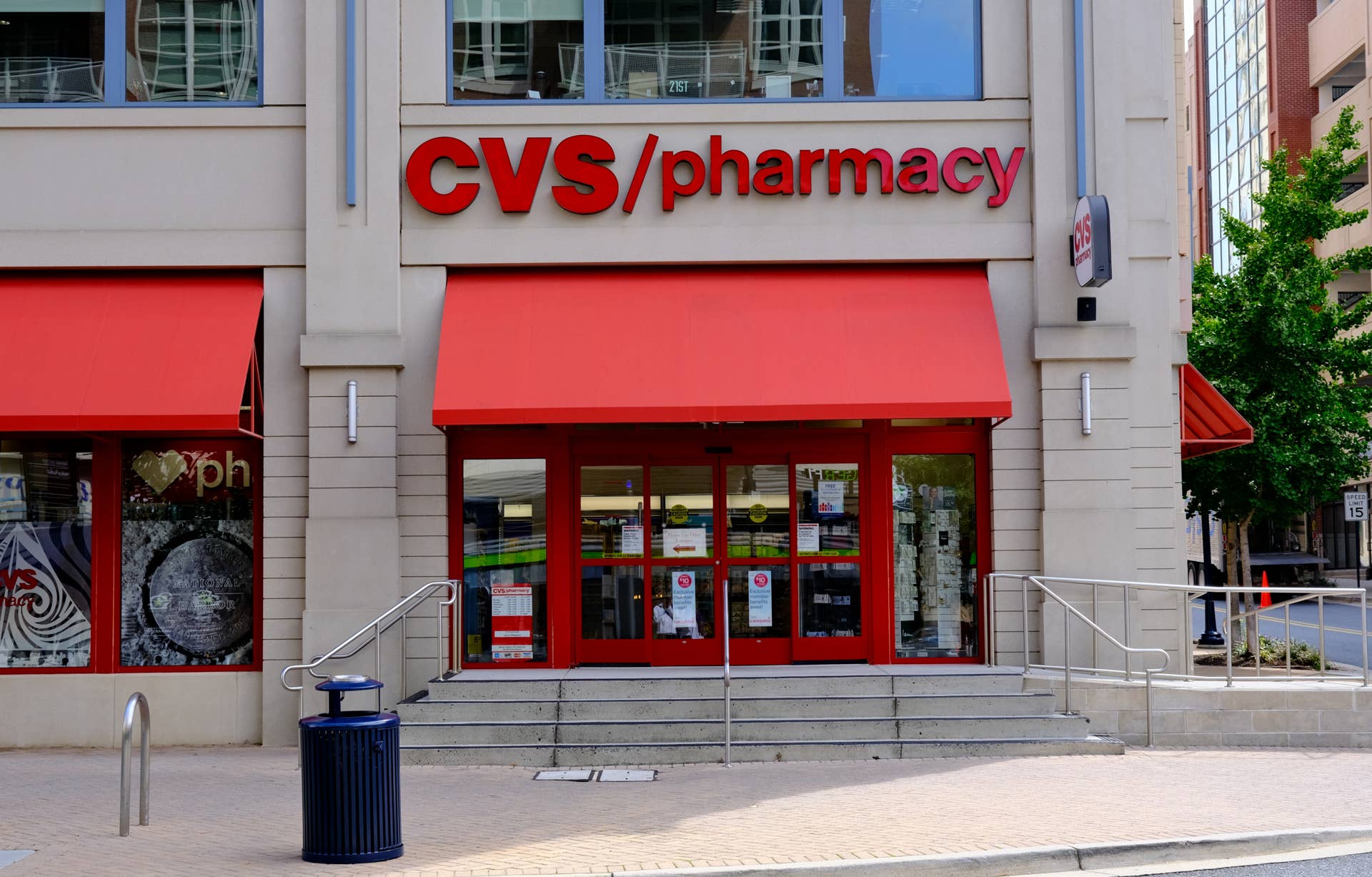 CVS Health plans to split its 9,000 drugstores from Aetna and Caremark by the first half of 2028, and shareholders will own stock in both companies.
Three things decide whether two CVS stocks beat one
Start with debt. CVS’s balance sheet showed about $60.7 billion in debt at the end of September, including what comes due within a year.
In response to Wolfe Research analyst Justin Lake, CFO Brian Newman said both companies will be solid investment-grade, according to the call transcript. He gave no breakdown of the debt, which matters more than anything announced.
CVS expects both companies to pay an attractive dividend. Today’s payout is $2.66 a share a year, unchanged since 2024, according to StockAnalysis. I would not assume two new checks add up to that.
3M shows why: after the Solventum spin, it cut its dividend to about 40% of adjusted free cash flow, Fortune reported. Solventum had produced roughly 30% of 3M’s free cash flow, so less was left to share.
Then there is Walgreens, which sold Boots and was taken private by Sycamore Partners, Reuters noted. With Walgreens in retreat, CVS Pharmacy would be the only big U.S. drugstore chain most investors can buy.
Pharmacy segment revenue fell 2% in the third quarter, CVS reported. Even so, adjusted operating income rose 10.6%. Newman expects that profit to grow by low single digits in 2027, steady rather than spectacular.
Joyner said that the stores and Caremark already deal at arm’s length, and commercial agreements will preserve their joint products. Contracts, though, can be renegotiated in a way that ownership cannot.
The two stocks beat one only if each half gets the debt it can carry. Both need cash left for dividends, and the drugstore must keep growing on its own.
CVS stock is priced as one company, not two
CVS now trades at about 10 times forward earnings, according to StockAnalysis. That one number covers an insurer, a benefit manager, and 9,000 stores. My worry is a split verdict: the drugstore gets a retailer’s multiple while the parent keeps its regulatory overhang.
The stock has traded between $69.51 and $110.68 over the past 52 weeks, according to StockAnalysis.
Its 27 analysts hold a consensus Strong Buy rating, with an average target near $115.50. Those targets were set for one company, and Wednesday’s drop suggests the market is repricing faster than analysts.
Index fund holders will automatically get both stocks. Direct holders should expect a second position, two dividend streams, and a real choice about whether to keep both halves.
More retail:
- Kroger cuts discounts, promises pricing changes
- Walmart gets aggressive when it comes to holiday sales
- Costco copies a popular Trader Joe’s collectible
CVS is splitting from strength, but Washington is not done
Joyner said CVS is acting “from a position of strength,” citing eight straight quarters of beating and raising guidance. Another stated benefit: more room to adjust as regulation shifts.
The catch: CVS Specialty stays with Aetna and Caremark. The bipartisan Patients Before Monopolies Act would bar any company owning an insurer or benefit manager from owning a pharmacy. Its text explicitly counts specialty pharmacies.
The bill, sent to the Senate Judiciary Committee in May, may never pass. Still, it signals that owning most of the drug chain may be no safer than owning all of it. Until the Form 10 arrives, shareholders are pricing a breakup without its most important numbers.
