
The aviation industry was severely affected by the Covid pandemic. Airbus’ CEO Guillaume Faury and other executives at major airlines agreed that the pandemic created one of “the gravest crises the aerospace industry has ever known.”
Before the crisis, more than 4.5 billion passengers flew globally. The numbers dropped to around $1.8 billion in 2020, when the virus spread around the world. The numbers reached 91% of pre-pandemic levels in 2023.
💵💰 Don’t miss the move: Subscribe to TheStreet’s free daily newsletter💰💵
As if the worst crisis for the industry wasn’t enough, the aviation space, just like many other sectors, is now dealing with another complex challenge — tariffs and trade wars.
The issue started to heat up on April 2, when Trump announced “reciprocal tariffs” on all countries not subject to other sanctions and extra tariffs for 57 major trading partners were scheduled for April 9, but later postponed.
Related: Delta Air Lines quietly tests new way to raise your ticket price
So far, the on-again, off-again nature of various tariffs has shaken up the industry with constant blows of uncertainty.
The U.S. imposes a blanket 10% tariff on imports, including aerospace products, which has already caused a notable disruption in aircraft trading. Peter Juhas, the CEO of AerCap, the world’s biggest aircraft lessor, recently said that it would be best if aerospace went back to the no-tariff regime from 1979 that was working. If not, “the EU may well retaliate,” he said.
Now, some major airlines, such as Delta Air Lines (DAL) , are devising cunning ways to avoid tariffs.
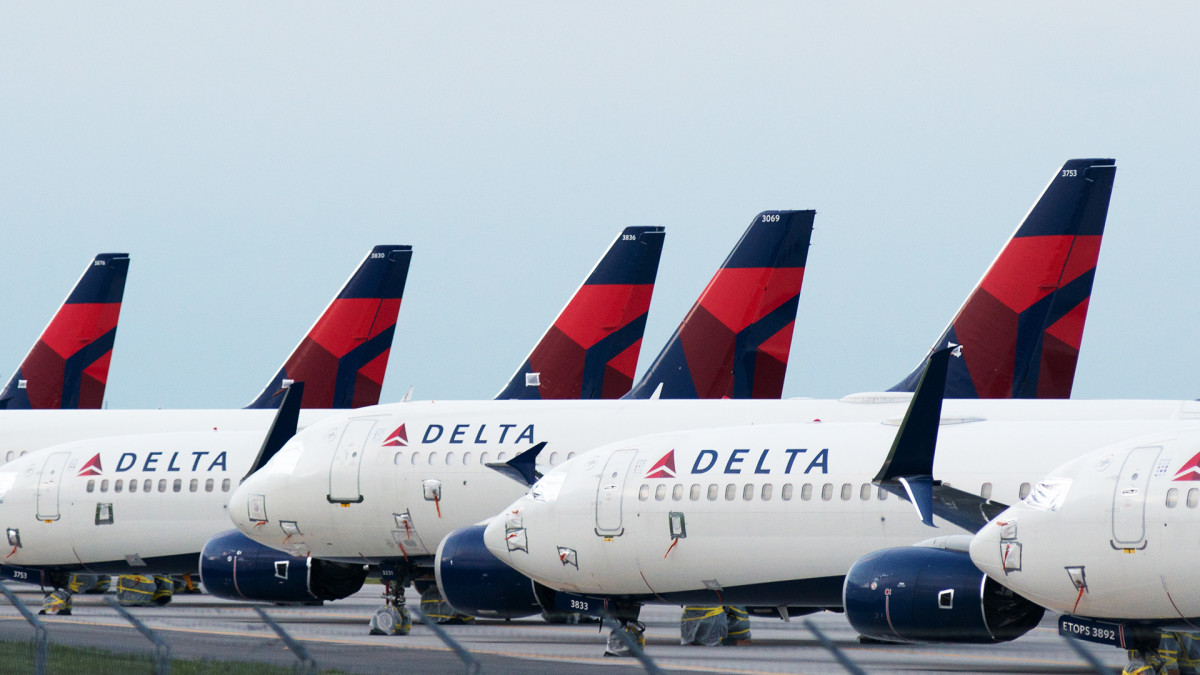 Delta Air Lines has found a creative way to navigate tariffs.
Image source: Shutterstock
Delta Air Lines’ promise from April
Airlines regularly pay Airbus and Boeing billions of dollars to equip their fleets, so adding even a small percentage of additional costs could hurt the airline industry’s profit margins, writes Fast Company.
Earlier this year, one of the world’s largest airlines, Delta Air Lines, shared a bleak plan to address tariffs. During the company’s first-quarter earnings call, CEO Ed Bastian openly discussed the airline’s position on the issue.
Related: Southwest Airlines is fed up with one huge problem
“The one thing that you need to know, we are very clear on, is that we will not be paying tariffs on any aircraft deliveries we take,” Bastian told analysts. “These times are pretty uncertain. And if you start to put a 20% incremental cost on top of an aircraft, it gets very difficult to make that math work. So we’ve been clear with Airbus on that, and we’ll work through and see what happens from that.”
At the end of 2024, Delta projected it should receive 43 aircraft from Airbus, many of which would come from outside the United States. Three weeks ago, the company sounded the alarm on the possible elimination of flights of up to 10 million passengers a year if tariffs on EU imports are reinstated to 20%.
In the most recent news, President Donald Trump threatened on July 12 to impose a 30% tariff on imports from Mexico and the EU starting August 1, writes Reuters.
More on travel:
- American Airlines, other major carriers delay over 4,000 flights
- United Airlines places big bet on new flights to trendy destination
- Another country just issued a new visa requirement for visitors
Amid all this tariff turbulence, Delta Air Lines has found a very creative way to circumvent tariffs.
Delta Air Lines strips engines from Airbus SE jets in Europe
Delta Air Lines has been removing engines from new Airbus SE jets in Europe and using them to power up grounded planes in the U.S. This is how the company has managed the shortage of planes while avoiding aircraft import tariffs.
Related: A low-cost airline is set to start flying to Moscow
The carrier is taking Pratt & Whitney engines made in the United States, which is why they can be brought back to the country without any duties, writes Bloomberg, citing people familiar with the matter.
Meanwhile, European-built Airbus A321neos remain engine-less in Europe.
Some of the company’s older A3210neo-family jets have been grounded due to problems with their original turbines. Now, these airplanes can be fixed with engines built in the U.S.
This week, as the company reported second-quarter earnings, Bastian reiterated that the company is “not planning to pay tariffs on aircraft deliveries,” adding that tariffs were partly responsible for a lack of plane imports into the U.S.
Meanwhile, the company posted $2.10 in adjusted earnings per share, which was higher than the $2.05 the analysts projected. Its net profit grew 63% compared to the previous quarter.
This is not the first time Delta Air Lines has found a way to dodge tariffs. Earlier this year, the carrier flew new Airbus long-haul jets via Japan before bringing them to the country. This way, it could avoid marking them as “new” upon arrival and consequently avoid hefty import tariffs.
Related: Veteran fund manager unveils eye-popping S&P 500 forecast