
Disney, which operates 12 theme parks worldwide, is starting to notice a concerning consumer trend that has recently impacted its U.S. theme parks following recent controversy.
Disney revealed in its latest earnings report that revenue at its U.S. theme parks increased by 6% year over year during the third quarter of this year. However, the company confirmed that attendance at these locations dropped by 1% compared to the same quarter last year, according to a recent report from DisneyFanatic.
The drop in attendance follows the company’s launch of new rides and attractions at Disneyland and Disney World this year, aimed at luring more visitors.
Examples include the debut of a new nighttime parade at Disney World’s Magic Kingdom, which opened in July, and a new “Walt Disney – A Magical Life” attraction at Disneyland that was also unveiled during the same month.
In a statement to TheStreet, Gavin Doyle, founder of Disney news site MickeyVisit.com, said the decline in attendance at Disney’s U.S. parks could be due to a lack of new attractions.
“The lower attendance could be tied to a lack of major new attractions opening at either Disneyland or Walt Disney World,” said Doyle. “Last year, Walt Disney World had the Tiana’s Bayou Adventure attraction open at Magic Kingdom, and this year there was no comparable opening with as heavy of marketing.”
During an earnings call on Nov. 13, Disney CEO Bob Iger said demand at the company’s U.S. theme parks “came in line with our expectations.” He also emphasized that upcoming expansion projects at each Disney theme park will help boost future demand.
“With expansion projects underway at every one of our theme parks, five additional cruise ships scheduled for launch beyond fiscal 2026, and a new theme park planned for Abu Dhabi, the strategic investments we are making now will help ensure our offerings remain best in class and appeal to audiences worldwide well into the future,” said Iger.
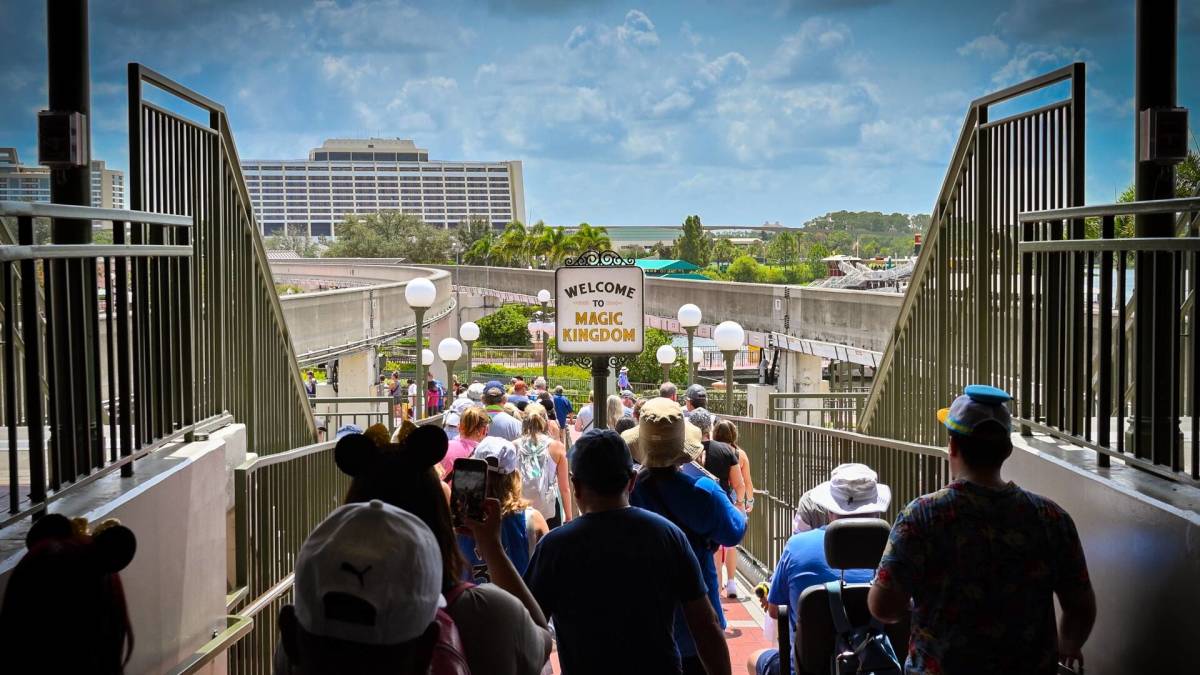 Disney recently saw a slight drop in attendance at its domestic theme parks.
Shuttershock/Charles Brown
Pricing has been a major concern at Disney’s theme parks
The decrease in theme park attendance also follows controversy that erupted over Disney’s prices, after the company hiked costs for tickets and in-park merchandise at Disneyland and Disney World late last year.
A survey from LendingTree last year even revealed that many consumers are going into debt to fund Disney vacations.
How consumers rack up debt during Disney trips:
- Approximately 24% of consumers have incurred financial debt to fund a Disney trip, which is higher than the 18% that did so in 2022.
- Additionally, 45% of consumers with young children went into debt to fund a Disney trip.
- Also, 65% of consumers with Disney debt said in-park food or beverages was what broke the budget, while 48% said general transportation costs and 47% said accommodations. Source: LendingTree
“For so many parents, taking their kids to Disney is a rite of passage, something they remember fondly from their youth and want to experience with their kids,” said Matt Schulz, LendingTree chief consumer finance analyst, in the survey. “Because of those feelings, they’re often willing to take on debt to get there.”
A report from The Wall Street Journal in February even revealed that Disney executives were allegedly concerned that its theme parks and resorts had become too expensive for middle-class families.
Earlier this year, Disney rolled out several deals and discounts, such as free dining plans, to attract more price-conscious visitors to its theme parks.
However, last month, it announced another round of ticket price hikes for Disney World and Disneyland, which went into effect earlier this month. The company also raised prices for several annual passes, parking, in-park food and beverages, and merchandise.
Related: Disney announces drastic theme park changes no visitor wants
Disney’s theme park ticket prices have now increased by up to 126% over the past decade, according to a recent study from MickeyVisit.com.
Disney is aware that consumer price sensitivity can impact demand at its theme parks. In its latest 10-K SEC filing, it states that “slowdowns in economic activity and/or inflationary conditions” and other factors can result in “lower attendance and spending” at its parks.
“While a number of different factors affect the demand for our products and services, actual or perceived declines in economic conditions typically have impacts across our businesses, including, among others, lower attendance and spending at our parks and experiences businesses …” said Disney in the filing.
Disney recently faced a boycott from angry consumers
In addition to controversy over high prices, Disney also recently faced consumer backlash in September for its decision to temporarily suspend late-night talk show “Jimmy Kimmel Live!” on ABC.
Disney made the tough move after comedian Jimmy Kimmel made jokes on the show relating to President Donald Trump’s reaction to the death of conservative political activist Charlie Kirk, who was assassinated on Sept. 10.
More Disney:
- New Disney World photo sounds alarm on a growing problem
- Disney World hopes to win back consumers with generous offer
- Disney dodges ‘woke’ backlash with major change to new series
The show’s suspension had a huge domino effect, sparking a massive boycott from consumers, who claimed that canceling the show over Kimmel’s comments was an act of censorship. The boycott involved consumers canceling their Disney vacations and Disney-owned streaming services.
Six days after Disney announced the show’s suspension, “Jimmy Kimmel Live!” returned on ABC on Sept. 23. However, while some consumers applauded the show’s return, Trump’s supporters, as reported by the Daily Beast, threatened their own Disney boycott due to the company caving to backlash.
More Americans nationwide are boycotting companies amid elevated political tensions, which can pose a major threat to a company’s financial performance.
Where Americans stand on boycotting companies in 2025:
- About 45% of Americans said that before purchasing from a business, they sometimes research the company’s values or beliefs.
- Also, 31% of Americans have boycotted a business due to reasons such as the company’s endorsement of discrimination, its political donations, affiliations, religious messaging or practices.
- Additionally, 37% would more likely boycott a large corporation, while 7% would boycott a small business and 28% would boycott both. Source: LendingTree
“Any company that attempts to downplay the importance of politics in their customers’ shopping choices does so at its own peril,” said Schulz in the survey. “Your potential customers are listening closely to what your business says, whether you like it or not.”
Related: Disney sends stern warning to customers amid boycott threats