
Dollar Tree stopped selling items for $1 back in 2024. Now, $1.25 serves as its entry-level price, but the company uses $2 as its baseline.
“We strive to balance our $2 or below opening price points with our multi-price points and to balance our consumable and discretionary categories so that we offer multiple ways to meet all customers where they are across all economic cycles,” CEO Michael Creedon shared during the chain’s third-quarter earnings call.
Mixed baskets, which combine multi-price and opening price point items, accounted for approximately 25% of Dollar Tree’s Q3 transactions, but nearly half of its sales. These baskets came in at more than 2.5 times the size of an opening price point basket.
“That tells us something important. Customers continue to rely on our opening price points while adding multi-price items that deliver exceptional value and help them accomplish more in a single trip,” the CEO added.
The chain’s pricing, however, has faced multiple challenges, and Creedon shared how Dollar Tree will address that. He was honest, and while he pledged a desire to hold prices steady, shoppers may not like some of the ways the chain is prepared to do that.
Dollar Tree faces rising costs
Creedon explained during the call how higher diesel prices have impacted Dollar Tree.
“Domestically, we’re dealing with higher fuel costs and a tight driver market, and on imports, that pressure is coming from fuel. With respect to your sort of rule of thumb, the best way I could describe that is that on the 2/3, which is the domestic transportation, about $1 in diesel price is worth somewhere around $40 million of annual cost to us,” he said.
On the import side, he made it clear that prices have gone up but that there’s no clear formula to share in that area. He also shared the five ways Dollar Tree can address higher costs, and consumers won’t like a couple of them:
- We’ve got supplier renegotiation to push back on the cost.
- Reengineering products and pack sizes to accommodate the price point.
- Discontinuing items that cannot meet the margin targets.
- We have seen a shift in countries of origin to accommodate the lowest-cost product.
- And finally, the last point for us is optimizing pricing.
He was clear that raising prices was something the company saw as a “last step.”
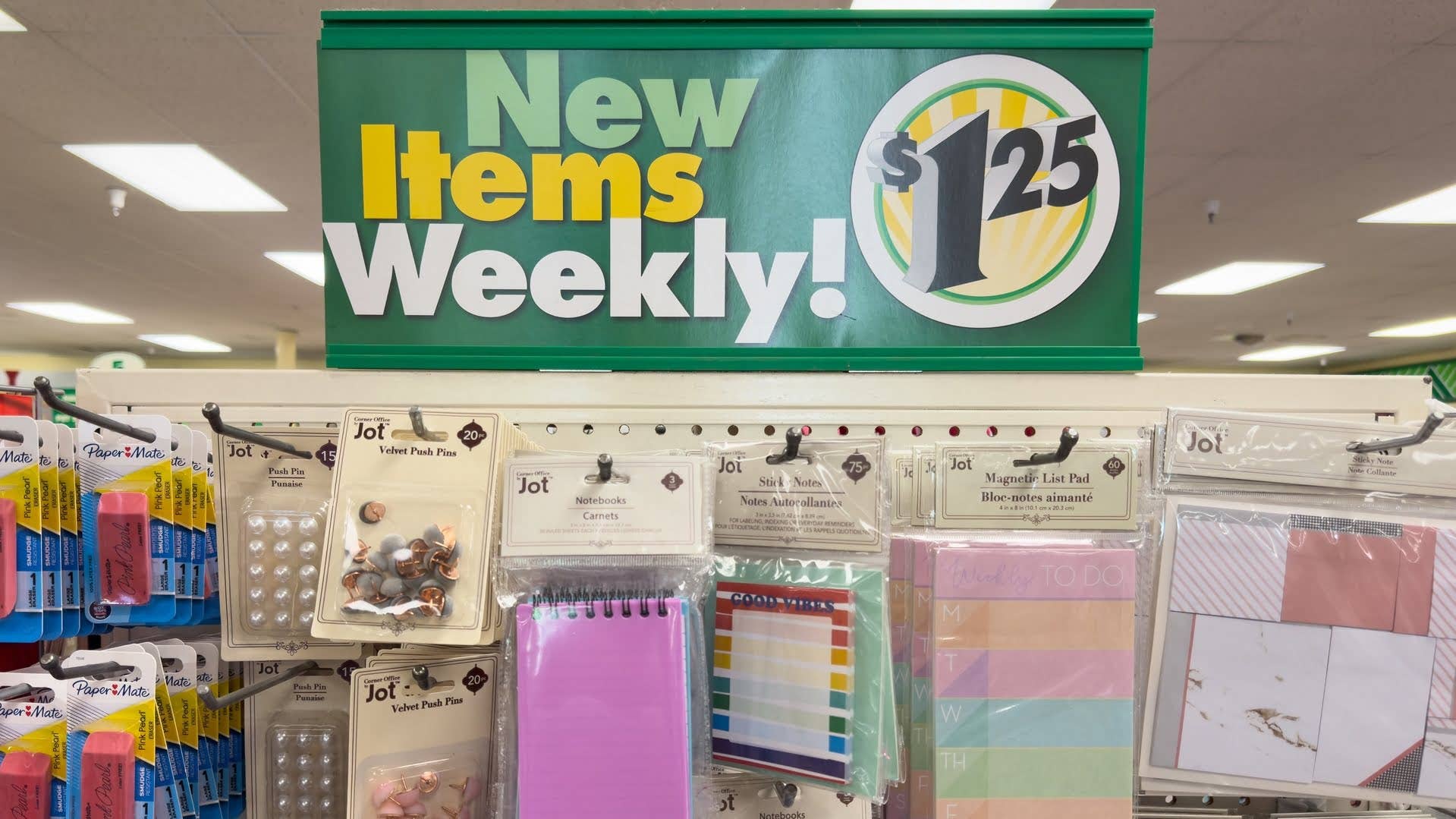 Dollar Tree’s opening price point is $1.25.
Shutterstock
Dollar stores might not be cheaper
The Dollar Tree website, which shows in-store pricing, shows an awful lot of items at the $1.25 price point.
What it doesn’t show is whether you’re getting less for your $1.25 than you did last time you visited. In addition, while the price might seem low, consumers may be paying more than they would at Walmart, Kroger, Publix, or any other regional grocery chain.
“It’s a shame because, on the one hand, dollar stores can keep price points low. But the real shame here is that they serve communities that are already underserved, and sometimes the cost per unit is actually higher than what you would pay at another store,” RTM Nexus CEO Dominick Miserandino told TheStreet.
For some shoppers, he noted, chains like Dollar Tree may be their only convenient option.
“For communities that already have limited shopping options, this is another kick,” he wrote.
More Retail:
- Struggling home goods chain closing more stores
- Verizon makes changes to be more like T-Mobile used to be
- Home Depot drops generous offers as customers grow harder to win
Finance Buzz‘s comparison of Walmart and Dollar Tree prices, updated in November, illustrates Miserandino’s point.
“A single roll of 451-sheet Charmin Essentials Strong runs $1.25 at Dollar Tree. Buy 18 rolls one at a time, and you spend $22.50, compared to $15.67 for an 18-pack at Walmart. That is about $6.83 extra, or roughly 87 cents a roll versus $1.25,” the article showed.
That was not an isolated incident.
“The pattern repeats elsewhere. Dollar Tree sells 3.5-ounce packs of Cinnamon Toast Crunch for $1.25, about 36 cents an ounce, and six-tablet Advil bottles for the same price. Small packaging quietly raises the real cost per serving,” the site reported.
Pricing, it should be noted, varies by store and date. Still, it’s generally true that at dollar stores, you’re paying more per serving, so to speak.
Dollar Tree has rarely raised prices
While telling consumers that he could raise prices or shrink how much you get when buying an item, Creedon also made it clear that the chain has only “taken price at scale twice” in its 40-year history.
“The competition is changing their pricing all the time. When we have to take price, which we did last year in the inflationary cost environment that we were in, the worst day for us is the day we take price. Every day after that, we get better,” he said.
Creedon also cited that the chain offers a shopping experience that many associate with Costco, TJ Maxx, and Marshalls.
“And so we like the position we’re in, zeroed in on that value, convenience, and still providing kind of guilt-free thrill-of-the-hunt pleasure and discovery,” he added.
Related: Forget Kroger, Target and Best Buy moved thousands of jobs to India
