
When my kids were younger, we’d visit our local Dollar Tree pretty often for what I called “afternoon rewards.”
In reality, what I was doing was letting them pick out things like crayons and coloring books in the hopes of keeping them busy to buy myself a little uninterrupted work time during those after-school hours.
But the nice thing about hitting up Dollar Tree back then was knowing that no matter what items my kids picked out, I knew what the price would be.
Those days are long gone, though.
Not only has Dollar Tree increased its base price, but those stores are now filled with products across a pretty wide range of price points.
And I’m not the only consumer who’s annoyed by the inconsistency and unwanted surprises at the register.
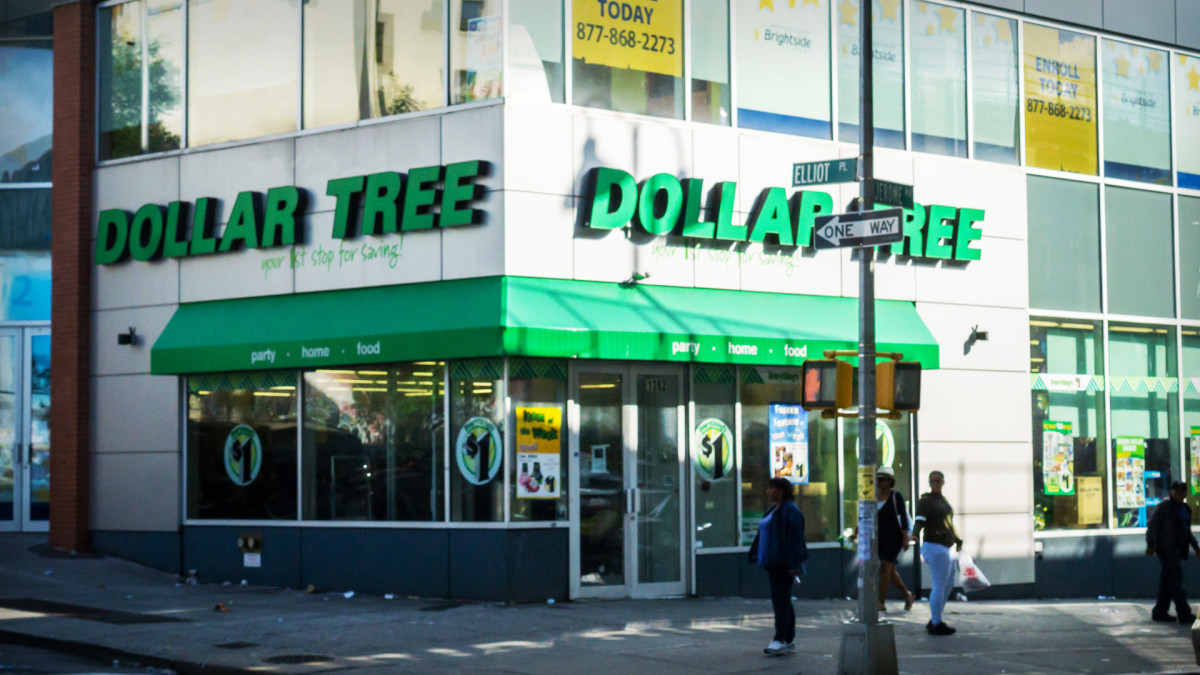 Dollar Tree’s prices are rising.
Shutterstock
Dollar Tree purposely raises prices to target larger audience
For many years, Dollar Tree catered to a core set of consumers — budget-conscious shoppers with limited incomes, and moderate-income shoppers looking for bargains.
The problem is that now, the company is specifically trying to appeal to higher-income customers. And in doing so, Dollar Tree risks alienating what was once its core audience.
“Today, we serve an increasingly broad spectrum of shoppers, from core value-focused households to middle and higher-income shoppers who are making deliberate choices about how and where they spend,” CEO Michael Creedon said during the company’s most recent earnings call.
Related: Costco quietly changes its famous return policy
Dollar Tree had 3 million more households shop at its stores during its most recent quarter compared to the same time last year, Creedon added. And roughly 60% of those incremental shoppers came from higher-income households earning more than $100,000.
Dollar Tree is convinced that its new multi-price strategy is essential to its growth. And some retail experts feel similarly.
“The multi-price model also gives Dollar Tree more scope in mitigating the impact of tariffs,” Neil Saunders, managing director at GlobalData, told Business Insider.
Dollar Tree could soon face serious backlash
It’s easy to look at Dollar Tree’s price increases as a new trend. But during Dollar Tree’s most recent earnings call, Creedon stated, “Multi-price is a deliberate, long-term, data-driven strategy that began back in 2019 to make Dollar Tree more relevant, flexible, and profitable.”
Creedon also confirmed that without its higher price points, Dollar Tree would be limited to a less exciting range of inventory. Now, the company can offer “more relevant and attractively valued items.”
A timeline of Dollar Tree’s pricing strategy
- 2021: Raises its base price to $1.25, according to Fortune.
- 2023: Introduces many $5 items into its lineup, reported Retail Dive.
- 2024: Expands inventory to include $7 items, per Fortune.
- Summer 2025: Raises prices on key items from $1.25 to $1.50, Parade reported.
- Late 2025: Customers spot $10 items in stores, according to Nasdaq.
Dollar Tree customers took to Reddit to express their displeasure with the store’s higher price points.
“Multiple categories of goods now automatically start at $1.75 and I saw individual price stickers for up to $10,” said one user.
“I knew the downfall was coming once I saw a price checker scanner in the store,” said another. “It is almost not worth shopping there anymore.”
More Retail:
- Costco sees major shift in member behavior
- Retail chain shuts all locations as legal changes hit industry
- Costco makes major investment in online shopping for members
- Lululemon struggles to reverse concerning customer behavior
- T-Mobile launches free offer for customers after major loss
A third Reddit user identified a major flaw in Dollar Tree’s evolving multi-price strategy.
“They’re forgetting themselves,” they insisted. “You’re supposed to have the illusion of things being cheaper because your customer is already at the store so they might as well pick up the items they may have bought elsewhere now. But with these changes, I’d just rather go to another store in the first place.”
All told, in expanding its reach to new customers, Dollar Tree is throwing itself into a major identity crisis.
And if the company keeps raising prices, it risks completely losing lower- and middle-income households who may not hesitate to take their business to competitors like Walmart.