
One of the biggest buyouts in tech history is happening with Electronic Arts (EA) going private. The $55 billion deal, backed by Saudi Arabia’s sovereign wealth fund Silver Lake and Affinity Partners, is a clear win for shareholders.
But while Wall Street celebrates the 17% premium, the real game might be happening in the boardrooms of Take-Two (TTWO) , Roblox (RBLX) , and Xbox.
EA is preparing to leave the public eye, but things are anything but quiet for them right now. The company now owes $20 billion and may have to change its leadership.
The Committee on Foreign Investment in the U.S. may also take longer to review national security issues with respect to the deal. That’s even before they have to face cutting costs, getting leadership on the same page, and changing the company’s strategy under new ownership.
In that limbo of integration, public competitors will get a rare opportunity to exploit the situation in their favor.
Companies like Take-Two can focus more on hiring and licensing because they don’t have to worry about paying off debts or having board members leave.
This is especially true now that the release of Grand Theft Auto VI is finally scheduled. Roblox’s creator-first platform keeps growing, and Xbox keeps trying to get third-party developers to work with them through Game Pass.
Now the question isn’t what EA will do next, but who is in the best position to take advantage of what it’s leaving on the table.
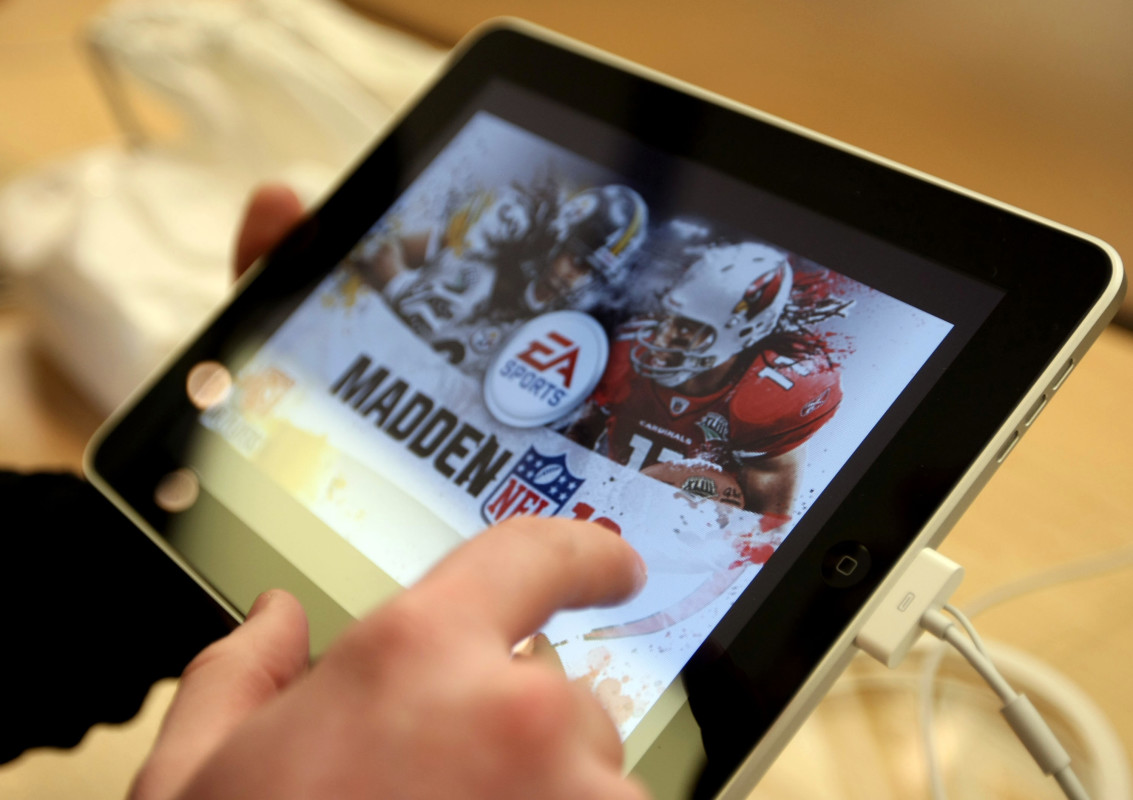 EA’s buyout creates an opening in the industry.
Image source: Lee/Bloomberg via Getty Images
Publicly traded gaming rivals face fewer constraints — and a bigger upside
EA’s decision to go private means it won’t have to report its earnings every three months, but it will encounter a whole new set of problems.
EA will now have to answer to its private equity backers, who are likely to enforce strict cost controls, aggressive profitability targets, and slower discretionary spending.
This is different from how public competitors work. It might not be able to be flexible for months or even years because it has to pay off $20 billion in debt.
That gives competitors clear paths to follow.
More Tech Stocks:
- Is Oklo a high-risk, high-reward investment?
- Nvidia’s deal with OpenAI ‘looks a lot like financial theater’
- Quantum computing companies looking to finance the future
In the short term, Take-Two Interactive is likely to benefit the most.
Grand Theft Auto VI, which could be the biggest gaming event of the decade, is set to come out in 2026.
Take-Two doesn’t have to worry about money problems when it comes to keeping talent, marketing, and licensing. If EA’s merger leads to IP churn or studio consolidation, top developers may start looking for work elsewhere.
Take-Two is the most likely place for them to land.
Related: Apple pulled off a quiet rebound, but here’s the lever many missed
Roblox is still doing well in its niche, thanks to its platform-first model and rapid growth around the world. Microsoft (MSFT) is still aggressive about third-party deals, which could be more appealing to studios that are worried about EA’s restructuring.
Each of these players knows: In gaming, timing is everything.
EA rivals aren’t just waiting; they’re quietly reshaping video-game dynamics
EA is reorganizing behind closed doors, but public competitors are making moves at the ecosystem level that could give it structural advantages in the future.
Roblox just came out with a License Manager that makes it easy for IP owners to add their characters and worlds to Roblox games. As was the case during the pandemic, Roblox is trying to become more than just a gaming platform by becoming a “meta-platform” for content licensing.
Some of its biggest partners include Netflix (NFLX) , Lionsgate, Sega, and Kodansha. This speeds up its journey to becoming a place where studios or media brands can find creators who want to work with them, which could attract developers who are wary of EA’s corporate changes.
Take-Two, on the other hand, is focusing on “big hit” games. It just sold its Private Division unit, which focused on indie games, and is now putting that money into its flagship IP, especially GTA VI.
Related: Amazon’s new Alexa feature impacts Nvidia
The company’s selective strategy of making fewer, bigger bets could help it quickly address problems with EA-led licensing or talent moving around.
Next up is Microsoft and Xbox. In the long run, it may be able to make Game Pass more powerful, increasing the appeal of deals with third-party publishers, especially for studios that want to know what the future holds in a changing industry.
Xbox is also making a bigger push into the PC and cross-platform space by integrating itself into the Steam and Epic ecosystems. This makes the company more of a draw for developers who are unsure of EA’s roadmap.
In short, while EA deals with debt, integration, and governance, its competitors are subtly tightening their moats by building platforms, locking in IP relationships, and changing how and where developers choose to commit.
What investors should watch as dust from the EA buyout settles
The next six to 12 months will be very important, not only for EA’s financial performance, which is now private, but also for the effects it will have on the public gaming space.
Investors should keep an eye on three important areas: the movement of talent, the activity of intellectual property, and the speed of third-party deals.
If EA starts cutting costs a lot or merging studios, it should expect a lot of developers to leave. In an industry that relies on talent, that move could quickly give competitors the upper hand in both creative and business.
Studios that want stability might choose platforms like Take-Two or Microsoft because they have strong pipelines, strong brands, and fewer unknowns.
Another sign is licensing and partnerships. If Roblox keeps adding big-name IP integrations and EA slows down or renegotiates terms, it means creators and brands are getting ready for EA’s private-equity era.
Lastly, keep an eye on third-party deal flow. If Game Pass adds more exclusive or time-limited deals, especially ones that were previously linked to EA, that’s not a coincidence. It’s a planned capture.
The buyout may have kept EA from being looked at every three months, but it has put a new kind of pressure on the company: to show that it can change while its competitors quietly change their positions.
For investors, the best chance might be with the rivals that are moving the fastest while EA gets back on track.
Saudi-linked ecosystem strategy could muddy EA’s competitive waters
EA’s move to private equity doesn’t happen in a vacuum. The Saudi Arabian Public Investment Fund, which already runs a gaming company called Savvy Games Group and has stakes in many other companies, is part of the group that is backing the buyout.
That means that the lines between EA’s internal restructuring and outside industry influence may become less clear, making the competition more difficult.
Picture this: As EA restructures its internal operations while dealing with debt and scrutiny from its board of directors, Savvy (through its holdings) could choose to support partner platforms or IPs that benefit from EA’s restructuring window, subtly affecting which competitors get stronger.
This gives PIF two ways to control EA: from the inside and from the outside.
Related: Palantir just walked away from a billion-dollar fight
Savvy has already put money into gaming companies like Scopely and is looking to expand its reach in the industry. That kind of cross-investment can cause problems or strategic alignments that change the nature of competition.
A competing platform might get better licensing or partnership terms that are tied to PIF interests, which would make EA’s competitive disadvantage less severe.
So although companies such as Take-Two or Microsoft might do better in the short term, they might also have to cope with a situation where one of their biggest competitors is tied to the same ecosystem that gives its rivals an edge.
A creative vacuum, or a chance for new video game franchises to shine?
One risk that people may not consider during EA’s transition is that creativity will stop. Because it needs to cut costs and focus on safe bets, EA is expected to rely more on its older IP — like FIFA, Madden, and Battlefield — instead of generating fresh concepts.
That makes room for white space.
As EA consolidates, publishers and platforms that can launch new IP or bring back old franchises could get people’s attention and money.
Sony has been quietly giving money to new games made by studios that aren’t part of its usual AAA circuit. Take-Two has given the go-ahead for more story-driven projects at Rockstar’s sister studios. Even Netflix has started making more first-party games, making it a dark horse in the world of premium storytelling games.
There are too many sequels on the market right now, but a single breakout hit on any platform could change the story.
The question is: Who will take a big swing while EA plays defense?