
Ken Langone, Home Depot co-founder, bought Eli Lilly (LLY) shares in 1977. He is now 91 years old and has never sold a single share.
I’ve thought about that fact a lot after covering stories including the Foundayo FDA approval, the manufacturing buildout in Houston, and Lilly CEO David Ricks hunting for deals in the “white spaces” of science.
Langone has watched Lilly through recessions, pandemics, and decades of pharmaceutical cycles. As noted in my coverage, his conviction is deeply rooted in nearly 50 years of pattern recognition. New data released Oct. 1 by Lilly adds another layer of scientific support to that conviction.
Eli Lilly announced that a post hoc analysis of its ATTAIN-1 Phase 3 trial showed Foundayo was associated with an estimated 57% reduction in the predicted 10-year risk of type 2 diabetes, versus placebo.
Obesity is strongly associated with an increased risk of developing both cardiovascular disease and type 2 diabetes.
The same analyses showed an estimated 18% reduction in predicted cardiovascular disease risk at that dose.
For a drug approved for weight management in April, this represents a meaningful expansion of the evidence base. Foundayo may be a meaningful treatment option for the more than 100 million U.S. adults living with obesity, Lilly noted.
Also Read: Eli Lilly Latest News and Stories
What the Eli Lilly 57% number does, and doesn’t, mean
Before getting carried away, the framing matters. These are post hoc analyses — meaning they were conducted after the primary trial data was collected, using modeling to predict long-term risk rather than measuring actual diabetes cases over a decade.
I agree that’s standard in the field, but it’s worth being precise about.
What the analyses showed, across all three Foundayo doses at 72 weeks, was the following, according to Eli Lilly:
- Foundayo 5.5 mg: Estimated 45% reduction in predicted type 2 diabetes risk versus placebo
- Foundayo 9 mg: Estimated 50% reduction
- Foundayo 17.2 mg: Estimated 57% reduction, plus 18% reduction in predicted cardiovascular disease risk
Thomas Seck, Lilly’s senior vice president of product development for cardiometabolic health, put the human significance plainly in the company statement.
“For many people living with obesity or overweight, the concern isn’t just what the scale says today — it’s whether their future could include type 2 diabetes or heart disease.”
That sentence matters beyond the clinical data because it shows what patients actually worry about. And it frames Foundayo not just as a weight loss drug but as a preventive medicine for two of the most costly chronic conditions in American healthcare.
Why Eli Lilly’s Foundayo design makes this data more commercially significant
My colleague Peace Longe covered the Foundayo approval in August, and I want to revisit one detail that makes the Oct. 1 data more meaningful than it might otherwise be.
Most GLP-1 drugs require injections. The alternatives that don’t — like Novo Nordisk’s oral semaglutide — require patients to take the pill on an empty stomach, with specific water restrictions, and wait a period before eating. That’s a real barrier to adherence for millions of people.
More Healthcare Stocks:
- BofA sees Eli Lilly’s overseas obesity sales topping the U.S.
- Eli Lilly’s Foundayo pill wins first European approval
- Novo Nordisk CEO resets expectations for Wegovy’s growth
The good news is that Foundayo works differently. As a small-molecule, non-peptide drug, Foundayo can be taken once daily without food or water restrictions. In fact, no fasting window. No injection. No timing constraint around meals.
That design removes the friction that can make long-term adherence difficult, and sustained adherence is precisely what a 57% reduction in diabetes risk requires.
Ricks said on Sept. 21 that one-third of all new patients starting an oral GLP-1 medication are now choosing Foundayo, according to my earlier reporting on Houston, where Lilly is building its $6.5 billion manufacturing facility.
That’s one-third of a new and growing category, captured in months, by a drug with a fundamentally easier patient experience.
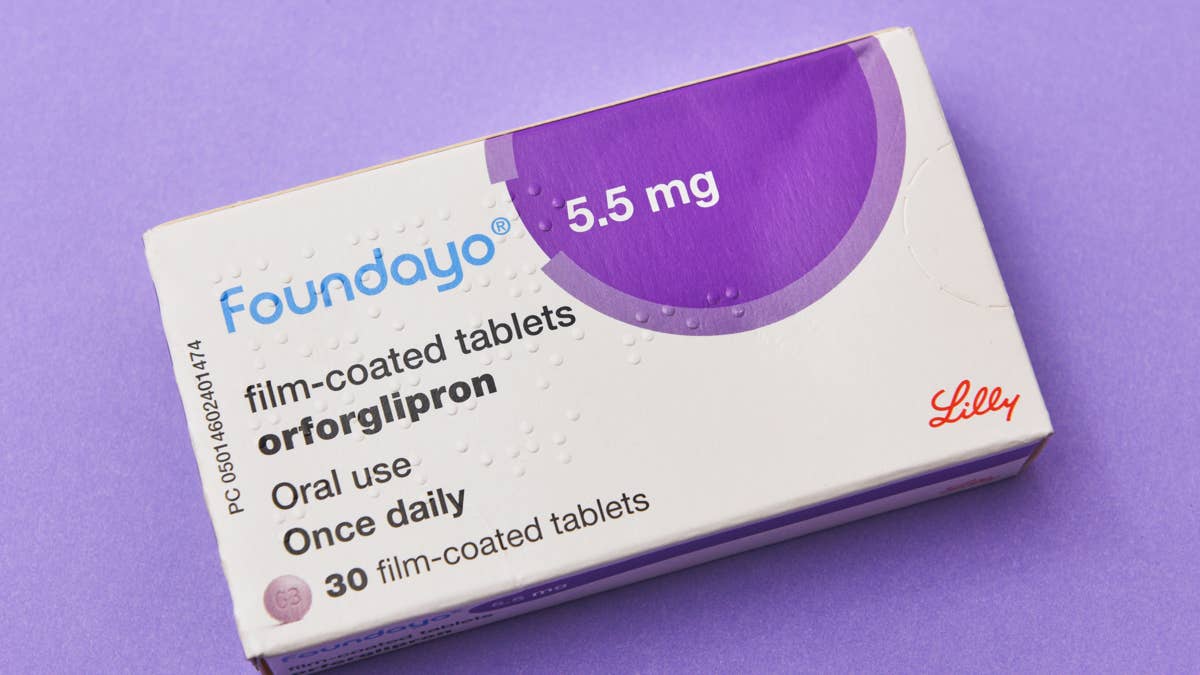 The FDA approved Foundayo on April 1, 2026, as a once-daily oral GLP-1 receptor agonist for chronic weight management.
The Eli Lilly business is building behind the science
The Oct. 1 data release is backed by strong numbers from Lilly. It’s another piece of evidence in a company reengineering itself at remarkable speed.
Q2 fiscal 2026 total revenue reached $23 billion, up 48% year over year (YoY), driven primarily by volume of Mounjaro and Zepbound, according to Lilly’s statement.
Full-year 2025 revenues were $65.2 billion, up 45%. TheStreet reports that Lilly is aiming for $85 to $87 billion in full-year 2026 sales, nearly double its revenue from two years ago.
Medicare coverage of obesity drugs, which began in July, has opened tens of millions of newly insured patients to the category. The manufacturing capacity to serve them is being built. Since 2020, Lilly has committed more than $50 billion to manufacturing expansion, according to TheStreet’s reporting.
The Houston facility alone, opening in 2030, will produce Foundayo and small-molecule medicines across multiple therapeutic areas.
LLY has returned 424% over five years and 118% over three years, according to Yahoo Finance. The one-year return is 40%, and year-to-date is up 7.51%. It’s no wonder Langone has been a loyal bull since 1977.
He has watched this company compound for nearly five decades without selling. And the recent data suggest the compounding isn’t slowing down.
The obesity pill that already helped people lose weight is now showing it may also keep them from developing diabetes. In healthcare, that kind of evidence tends to widen markets, not just deepen them.
