
It’s no secret that Elon Musk thrives on disruption.
More often than not, you’ll find him launching rockets, discussing politics, or just stirring the pot on X (formerly known as Twitter). The maverick Tesla (TSLA) CEO rarely holds back.
💵💰Don’t miss the move: Subscribe to TheStreet’s free daily newsletter💰💵
His latest move, though, has investors scratching their heads, wondering what’s next.
Musk has never shied away from stunning predictions or controversial pivots, but this time, his comments could reshape Tesla’s roadmap for the near future.
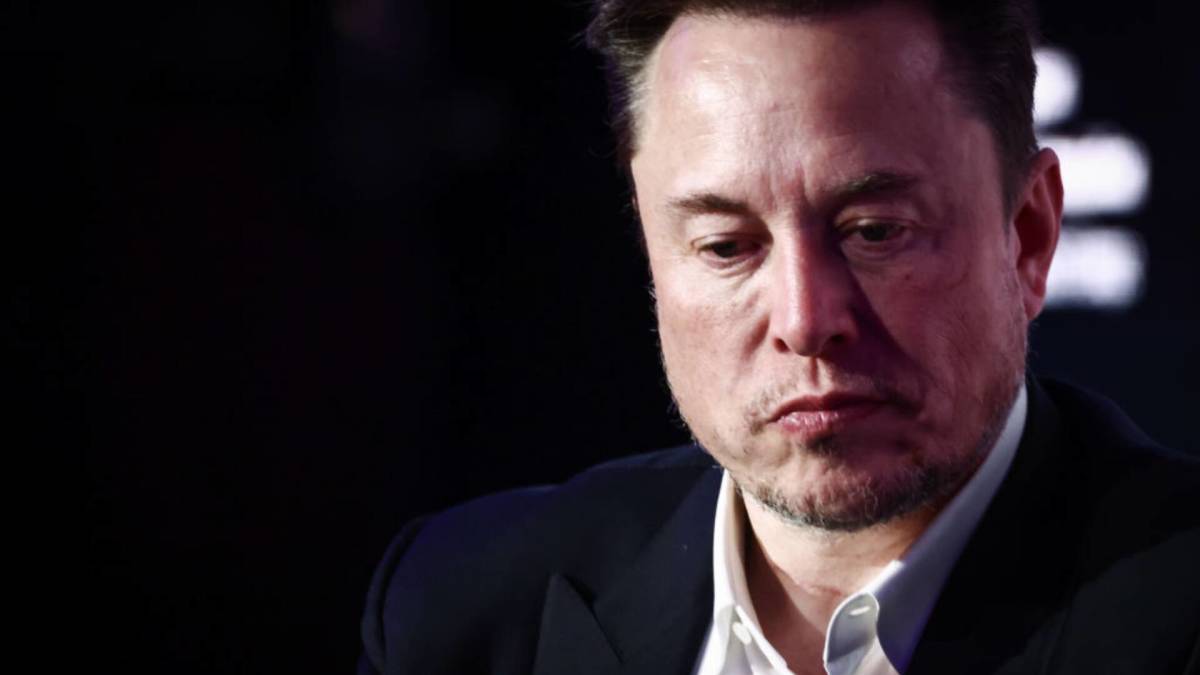 Elon Musk drops shock comments as Tesla faces new questions about its future.
Image source: Zawrzel/NurPhoto via Getty Images
EV support fades just as Tesla needs it most
Tesla has depended on two major financial boosts for years: consumer EV tax credits and regulatory credit sales to legacy automakers.
However, both support systems are now crumbling quickly.
In 2021, Tesla brought home a modest $314 million from selling zero-emission credits. However, that number ballooned to a whopping $2.76 billion by 2024, a colossal 54% year-over-year increase.
The impact was perhaps crystal clear in Q1 2025, when Tesla’s $595 million haul from regulatory credits turned what would otherwise have been a $189 million net loss into a narrow profit.
Related: Analyst says markets could tumble on employment
But the easy money is running out.
Congress pushed through the so-called One Big Beautiful Bill in June, looking to effectively phase out EV tax credits. Starting in October, the $7,500 credit for new EVs and $4,000 credit for used EVs will likely be gone.
This move takes away the incentives that were originally set to phase out gradually under the Inflation Reduction Act, and it does so across the board.
Buyers and dealers are scrambling to lock in credits while they can, but once the deadline hits, Tesla loses a crucial advantage.
It’s especially tough, considering Tesla’s current state, where margins are already tightening.
The pain doesn’t stop there, though. In February, the Trump administration froze close to $3 billion in NEVI grant awards (funds for fast-charging infrastructure expansion).
Thankfully for EV players, a court battle recently freed up $1 billion to 14 states, but the damage was done.
More News:
- Top economist drops 6-word verdict on Trump tariffs, inflation
- Amazon’s quiet pricing twist on tariffs stuns shoppers
- Microsoft software flaw leads to shock nuclear cyber breach
On top of that, the Department of Energy also slashed charger grant rounds by over 80%, stalling thousands of stations.
Then came the political firestorm.
In early July, President Donald Trump called out Musk directly, tweeting that Tesla might “close up shop” in the absence of government subsidies.
That jab, layered with policy shifts, sent a chill through Tesla bulls.
Tesla braces for impact as sales slide and subsidies shrink
Tesla’s Q2 results are in, and they’re not pretty.
The EV behemoth posted its worst quarterly sales drop in over a decade, and Musk is already warning that the next few quarters could be just as bumpy.
Revenue dropped 12% year-over-year to $22.5 billion, comfortably missing Wall Street expectations, as the EV maker buckles under the pressure as U.S. government support begins to fade.
The company also reported adjusted earnings per share of just 40 cents, comfortably behind consensus estimates.
Related: Intel stock faces a chipmaking Catch-22, top analyst warns investors
Part of the pain came from a 51% drop in sales of regulatory credits, a top-line stream Tesla has leaned on for years as rivals struggle to meet emissions rules.
Yet not everything in the report was gloomy.
Tesla’s automotive gross margin, excluding credits, was almost 15%, beating expectations. The improvement was led by considerably lower production costs per vehicle, a silver lining for the EV giant, facing growing pricing pressure and global competition.
Still, Musk didn’t sugarcoat the broader outlook.
With the $7,500 federal EV tax credit likely to be slashed later this year, he acknowledged on the earnings call that Tesla will face “a few rough quarters,” possibly through Q2 of 2026.
Adding to the uncertainty, Tesla’s highly anticipated low-cost EV hasn’t ramped up production, either.
Though some units were built as of late June, CFO Vaibhav Taneja said mass production won’t be hitting full stride until later this year.
Meanwhile, Tesla continues to pin its long-term hopes on autonomy.
Musk said sales from Robotaxi and self-driving services could “materially impact” the company’s financials by late 2026.
“Autonomy is the story,” Musk said, reinforcing his belief in Tesla’s Robotaxi endeavors.
In commenting on its long-term potential, Musk said that Tesla aims for autonomous ride-hailing to reach half the U.S. by year’s end.
As reinforced by Tesla bulls and industry experts, it looks like Tesla’s next lift in the trillion-dollar club hinges on autonomy.