
When I first saw Elon Musk write that he would “probably end up paying over $500B in taxes, inclusive of death,” I had to read it twice just to make sure he hadn’t added an extra zero as a joke.
He posted that line on X (formerly Twitter) while reposting a clip where he called himself “the largest individual taxpayer in history” and said he had already paid more than $10 billion in tax, joking that the IRS at least owed him a little trophy for the effort.
He made the claim as his wealth surged to about $852 billion after a merger of SpaceX and his AI venture xAI into a combined company valued around $1.25 trillion, Times of India reported.
To me, that $500 billion number reads less like a precise forecast and more like a way of translating “I am the richest person on Earth” into the language of tax receipts.
He is putting a price tag on his relationship with the tax system over his life and at his death, and that alone is a useful framing if you’re trying to understand what rising wealth and changing tax policy actually mean in dollar terms.
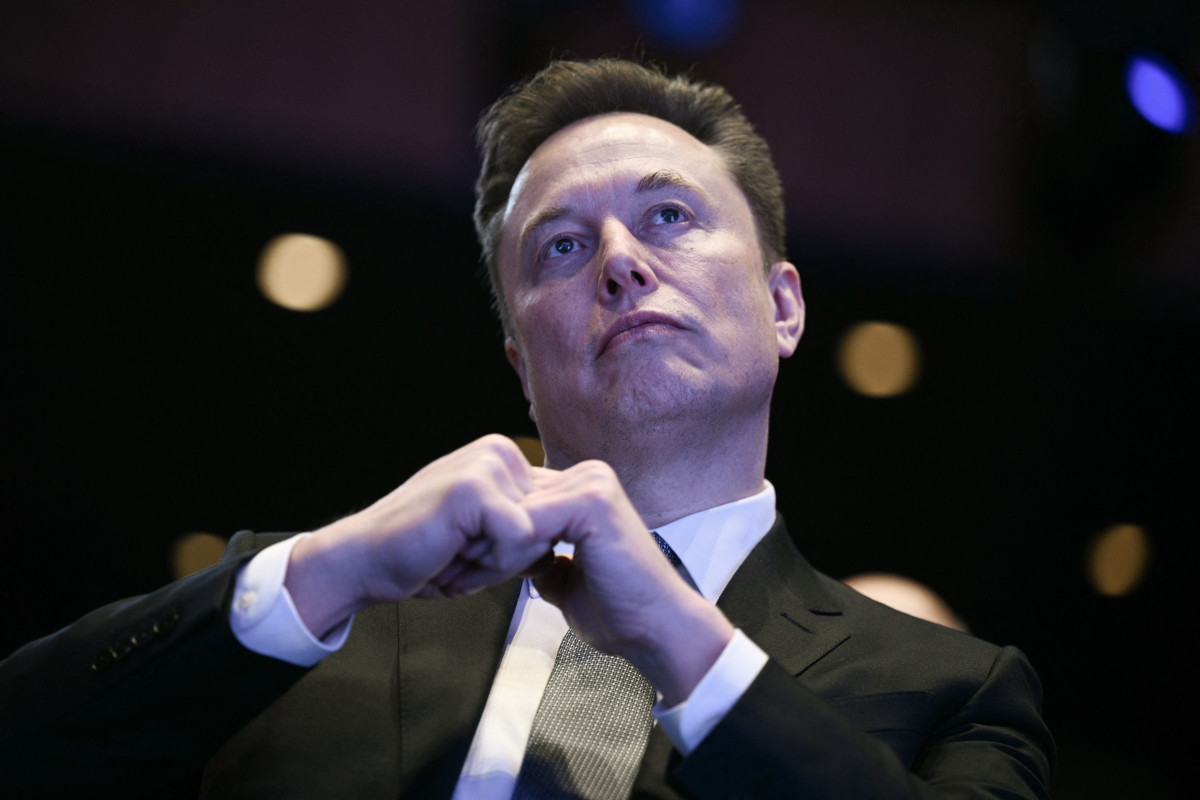 Elon Musk could end up paying up to $500 billion in taxes.
Photo by BRENDAN SMIALOWSKI on Getty Images
Andreessen’s response turned the dial to 11
Musk’s projection was big, but Marc Andreessen’s response is what really blew the conversation into “billionaire math” territory for me.
“Elon is being characteristically modest. The true number will likely be closer to $5 trillion. Maybe higher,” the Andreessen Horowitz cofounder wrote on X.
Related: Elon Musk says stop retirement saving: Experts call it ‘nonsense’
Andreessen was arguing that Musk’s personal taxes alone could eventually reach into the trillions once you factor in decades of gains and final estate taxes, before you even count what his companies, employees, and investors will pay, Chinese outlet Sina Finance’s analysis highlighted.
I don’t read Andreessen’s number as a spreadsheet result; it looks more like a provocation that forces you to imagine taxes on the scale of national budgets rather than individual fortunes.
The idea of a lifetime tax bill “exceeding $500 billion” is unprecedented, and Musk has not published any model explaining how he gets to that total, MEXC noted.
When I think about those two numbers side by side, $500 billion and $5 trillion, what jumps out is not which one is “right,” but how quickly taxes can compound once you have a trillion-dollar balance sheet that mostly lives in volatile stock.
How billionaire taxes really get that big
If you strip away the social-media theatrics, the mechanics of how a tax bill like this could accumulate are fairly straightforward, just blown up to an unfamiliar scale.
- First, there is the part Musk has already lived through.
In 2021, he exercised a huge set of Tesla options and sold enough stock to trigger what news outlets such as Bloomberg widely reported as roughly an $11 billion federal income tax bill, one of the largest single-year payments ever recorded.
- Then there is everything that happens while Musk is alive and still controlling these companies.
After the SpaceX–xAI merger, the Times of India reported that Musk held about a 43% stake in the combined entity worth roughly $542 billion, alongside an approximately 12% stake in Tesla and a massive options package that could add up to $1 trillion more if Tesla hits long-term targets.
- Every time he exercises options or sells stock, realized capital gains create taxable events, and those events get bigger as the underlying shares appreciate.
On top of that, Andreessen pointed out that there is a parallel stream of corporate income, payroll, and other taxes paid by Musk’s companies and employees, saying those amounts could at least match his personal tax bill over time.
The last piece is the phrase that caught my attention: “inclusive of death.” That’s where estate tax and any future wealth or inheritance levies come in.
More Personal Finance:
- Why selling a home to your child for a dollar can backfire
- Elon Musk says ‘universal high income’ is coming
- FTC, 21 states sue Uber over ‘shady’ subscription billing
A major health-care union is pushing a proposed “Billionaire Tax Act” in California that would impose a one-time 5% tax on residents with net worth over about $1.1 billion, payable over five years on top of existing state and federal taxes, Bloomberg reported.
If something like that passed and was replicated, the estate of someone whose wealth ultimately reaches into the trillions could face an extraordinary final bill, even before counting federal estate taxes and any charitable or other planning.
When I put all of that together in my own head, I don’t need a precise model to see how the tax meter can keep running: every major liquidity event, every policy change, and eventually the estate itself adds another big chunk to the total.
Why Elon Musk’s tax bill matters to you and me
I’m obviously not expecting to pay anything like Musk’s tax bill, and you probably aren’t either, but I still think this conversation is useful if you invest, run a business, or just care about how policy shapes money.
For one, it is a reminder that concentrated equity is both a wealth engine and a tax time bomb.
Musk has said that his net worth is almost entirely tied up in his positions in Tesla and SpaceX, with very little held in cash, a pattern Goelite and other outlets have noted in coverage of his fortune.
If you hold a lot of a single stock, whether it’s your employer’s shares or a long-term winner in your portfolio, you’re dealing with a smaller version of the same math. The higher it goes, the bigger your eventual tax hit if you ever need or want to sell.
The difference between us and Musk is scale, not the underlying rules.
Second, the Musk–Andreessen exchange puts a human face on something that can otherwise feel abstract: policy risk.
Wealthy residents could see an extra five-figure percentage of their net worth effectively booked as future tax over a five-year period, on top of everything else, Bloomberg reported on the California billionaire tax proposal.
That might sound far away if you live in a different state or country, but we’ve already seen repeated proposals for federal wealth taxes and higher estate taxes in the U.S., often with explicit references to people like Musk in the political messaging.
Finally, I think there is a personal finance lesson here that goes beyond politics.
If you look at your own long-term plan, you can choose to be intentional about when and how you trigger taxes, whether that means spreading out stock sales, using tax-advantaged accounts, donating appreciated assets, or planning how your estate will be taxed.
Can anyone really pay half a trillion in tax?
Here’s the natural question I asked myself after sitting with these numbers: Is this real, or just billionaire bravado?
If anything, Musk’s “over $500B” line nudged me to look at my own assumptions about future tax rates and policy changes and to remember that my spreadsheet is only as good as the rules it bakes in.
The math he’s talking about is just compounding, concentration, and taxes taken to an extreme, and those same forces are quietly working on our own balance sheets every year, just with fewer zeros.
Related: OpenAI accuses Musk’s xAI of destroying evidence in escalating lawsuit