
“Let me tell you about the very rich,” F. Scott Fitzgerald wrote in his 1926 short story, “The Rich Boy.”
“They are different from you and me.”
Case in point: Elon Musk, the world’s wealthiest individual with an estimated net worth of almost $700 billion or more, doesn’t think you need to save for retirement.
And most experts think his crystal ball is cracked.
“It is nonsense,” Alicia Munnell, a senior advisor at Boston College’s Center for Retirement Research and its former director, said in a Pensions&Investments article published this week. Musk, Munnell told P&I, “has no idea about how the American person lives… and how important saving for retirement is today and will probably be tomorrow.”
“People,” she added, “get old and tired and they can’t work any longer, and they need some money to live on.”
So what did Musk say?
Well, in comments he made on the “Moonshots with Peter Diamandis” podcast in January and later echoed at the World Economic Forum, Musk is projecting a highly optimistic, tech-driven future in which artificial intelligence, robotics, and cheap energy make goods and services so abundant that traditional retirement saving becomes unnecessary.
His argument, according to published reports, rests on what he calls “universal high income.”
In his scenario, AI and robots drive productivity so high that essentials such as housing, health care, and transportation become cheap and widely accessible.
And if material needs are easily met, Musk argues, setting aside money for old age becomes irrelevant.
This is bonkers, say retirement experts, who note that his vision ignores how people actually age, work, and face risk — and that following his advice could leave savers exposed.
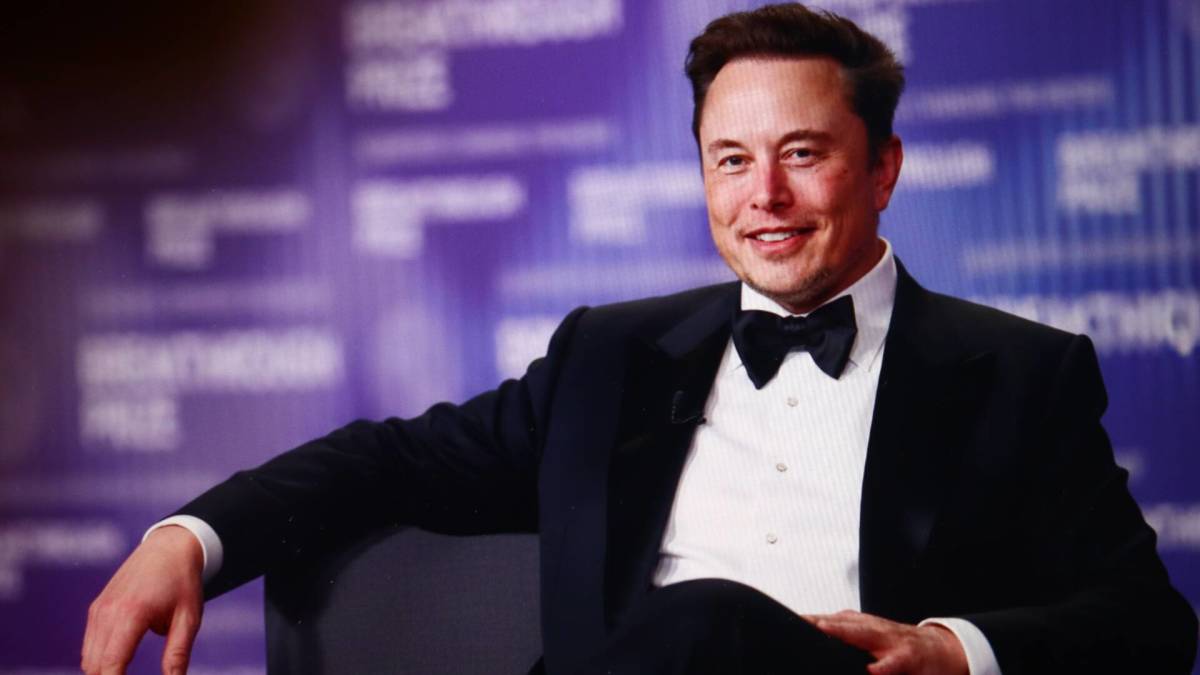 Elon Musk has expressed controversial opinions regarding saving for retirement.
Shutterstock
Why retirement experts reject Musk’s idea of “universal high income”
Researchers who study aging, labor markets, and retirement security say Musk’s view confuses technological possibility with household reality.
Olivia Mitchell, who directs the Pension Research Council at Wharton, told P&I that Musk’s advice is “risky” and “behaviorally and economically” damaging. “Advising people that retirement saving will not matter reinforces” the tendency to delay planning “while ignoring the severe downside consequences if optimistic scenarios fail to materialize or benefits are unevenly distributed,” she said.
Also worth reading
- Retirees may want to rebalance as markets broaden, volatility rises
- Why “breaking even” on Social Security is the wrong goal
- The $83,250 secret every solo entrepreneur needs to know for 2026
And Geoffrey Sanzenbacher, a research fellow at the Center for Retirement Research, told P&I that “saving more while working is probably more, not less, important than in the past.”
And that’s especially so “given that in the next decade, some change to Social Security will occur that will likely make it less generous for many,” he added.
Labor income versus capital income
A central critique is that Musk’s personal experience — his leadership of Tesla, SpaceX, X (the former Twitter), and xAI — is not representative of us mere mortals.
Most of us rely on wages, not investment income. And if AI replaces human labor faster than it creates new jobs, earnings could become less stable for workers long before any promised era of abundance arrives, the experts noted.
Related: A simpler way to pass on your home without probate
What’s more, Sanzenbacher noted that a future where machines do more of the work could reduce labor income for many households, making private saving a critical buffer rather than an outdated habit.
The overlooked risks of retirement
For her part, Gopi Shah Goda of Brookings’ Retirement Security Project emphasized that retirement planning is not just about having enough money at one moment. It is also about managing uncertainty over decades — health expenses, long-term care needs, market volatility, and longevity. When plans fall short, the burden often shifts to spouses and adult children.
And that reality clashes sharply with Musk’s assumption that future systems will automatically absorb those risks.
A familiar warning from futurists
Even technology thinkers are cautious. Historian Yuval Noah Harari has discussed universal basic income as a possible response to automation, but largely to warn that it could deepen inequality or social tension if poorly designed.
In his writing and public remarks, Harari has stressed that technological power does not guarantee broad economic security.
The bottom line
Musk’s message is less retirement guidance than speculative futurism. It assumes a smooth transition to abundance, universal access to new technologies and political systems that reliably redistribute gains.
Retirement researchers argue that until those conditions exist – and there is no evidence they will arrive soon or evenly – saving remains the safest way for households to protect themselves against aging, health shocks and policy uncertainty.
Or, as Munnell put it, Musk may be worth listening to on rockets and robots.
But when it comes to retirement, most experts say, his advice should be ignored.