Who should pick up the tab when AI starts taking people’s jobs?
Tesla and SpaceX CEO Elon Musk has an answer, and it doesn’t involve the tax code.
It’s a striking stance from the richest man alive, whose net worth hovered near $900 billion on Forbes’ real-time billionaires list in early November.
In a July interview with The Economist Editor-in-Chief Zanny Minton Beddoes, Musk was asked directly whether wealthy people like him should pay more to fund income programs for workers displaced by artificial intelligence. His answer skipped taxes altogether.
“I think that the Treasury should just simply issue people checks,” Musk said.
Beddoes wasn’t about to let that slide. She pushed back right away, warning that handing out checks with no revenue behind them could send inflation climbing.
Read more: Elon Musk once backed Buffett’s 5-minute fix for national debt: ‘This is the way’
Musk bets on deflation, not inflation
Musk had his counterargument ready.
Inflation, he said in The Economist interview, comes down to how much money is chasing how many goods and services. If AI and robotics send production soaring, the money supply can grow without pushing prices higher.
To make his case, he floated a hypothetical 1,000% jump in output, the kind of leap that could outrun the money supply and tip the economy toward falling prices instead of rising ones.
“I’ll make a prediction, which is that deflation will be the issue, not inflation,” Musk said.
Beddoes then steered the conversation toward the political fallout. If workers lose their jobs while wealth piles up among the people who own AI technology, she suggested, calls for nationalization and higher taxes could get much harder to ignore.
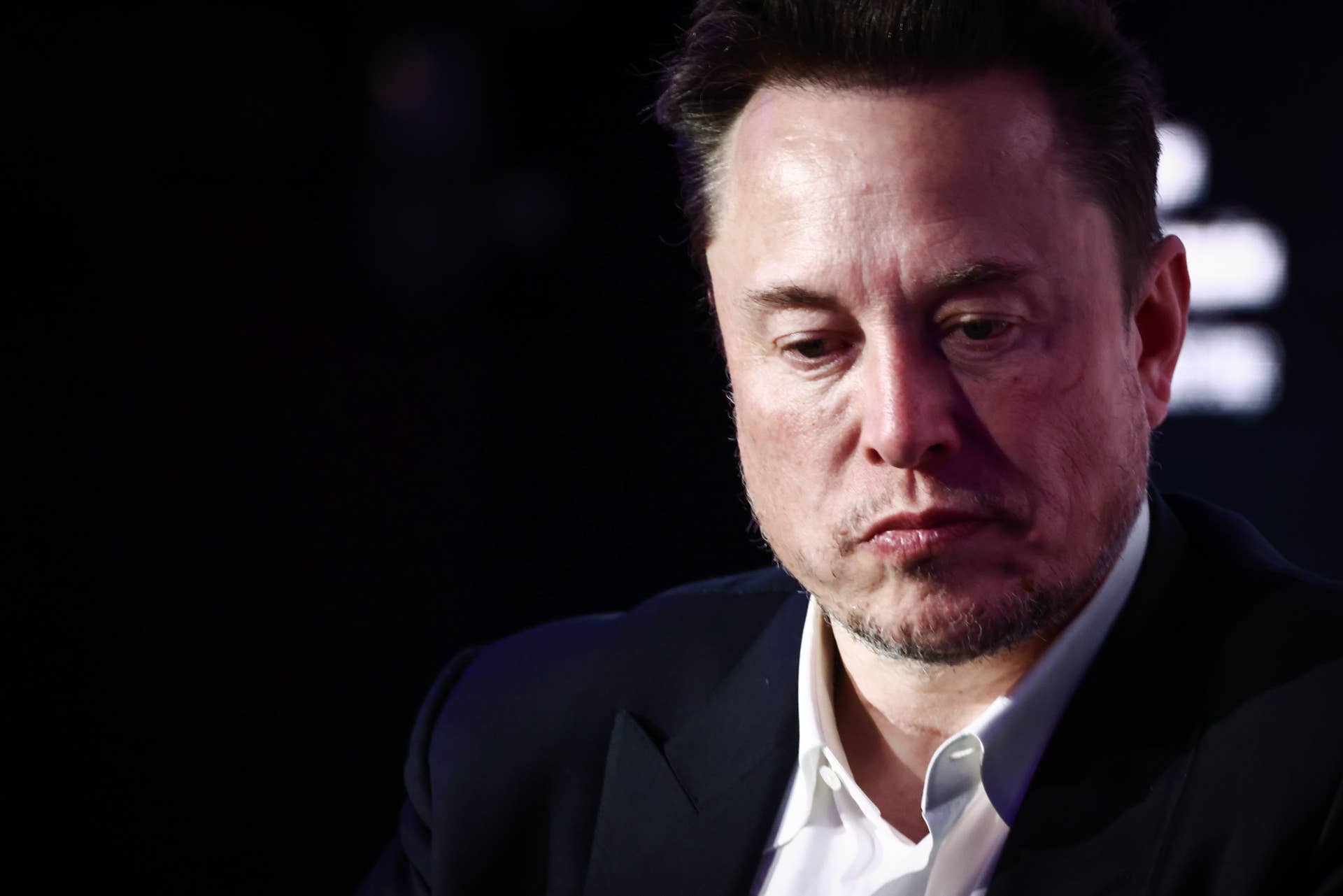 Elon Musk says billionaires don’t need to pay more in taxes for there to be a high universal income in America.
Musk defends his tax record
When Beddoes circled back to whether he should chip in more, Musk bristled.
“Well, first of all, I do, I do pay a lot of tax. So in fact, I set a record for the most amount of taxes ever paid by a human,” Musk said.
He added that he was comfortable with the idea of paying many trillions in taxes over time, but then took the argument somewhere bigger, questioning whether taxes would even matter in the world he’s imagining.
“But I don’t think in a future where money’s relevant, I think taxation also becomes somewhat irrelevant,” Musk said.
Musk’s net worth stood at about $902 billion on Forbes’ real-time billionaires list as of early November 2026.
More Elon Musk:
- Elon Musk makes bizarre claims about money, future of AI
- Elon Musk sends blunt verdict on the future of humanity and AI
- Elon Musk’s startling claim to SpaceX investors
From universal basic income to universal high income
This isn’t a new theme for Musk. He has been talking about universal basic income as an answer to automation for nearly a decade.
In a 2016 CNBC interview, he said there was a good chance automation would lead to universal basic income. By the 2017 World Government Summit in Dubai, he was calling it necessary, saying robots would increasingly do jobs better than people.
His language has since shifted toward “universal high income.” The idea rests on AI and robotics producing such a flood of goods and services that people could enjoy greater financial security, even as traditional employment fades.
The sticking point is the stretch between here and there. Musk’s proposal assumes technology will eventually generate enough abundance to support government payments, but workers facing displacement in the meantime still need a way to pay their bills.
Beddoes’ questions kept that near-term funding gap at the center of the debate.
