
Elon Musk set off a fresh firestorm this week by declaring that people will not need to save money in the future because artificial intelligence will eliminate poverty and usher in “universal high income.”
Responding on X to billionaire Ray Dalio’s praise of new “Trump Accounts” that seed $1,000 investment accounts for newborns, Musk called the initiative a “nice gesture” but said, “There will be no poverty in the future and so no need to save money. There will be universal high income.”
The comment came on the heels of Musk’s recent interviews and conference appearances, highlighted by Fox Business. He has argued that AI and robots will eventually make work optional and turn money itself into something close to an outdated concept.
What Musk means by “universal high income“
Musk has been workshopping this idea for more than a year, shifting from talking about “universal basic income” to something much more ambitious he calls “universal high income.”
On the “People by WTF” podcast, he said that within about 20 years, advances in AI and robotics will allow most people to stop working while still having all their needs met, including housing, food, and health care.
He has framed this as a “benign scenario” where there is “no shortage of goods or services” and governments (or some broader system) ensure every person enjoys a high standard of living funded by ultra‑productive AI systems.
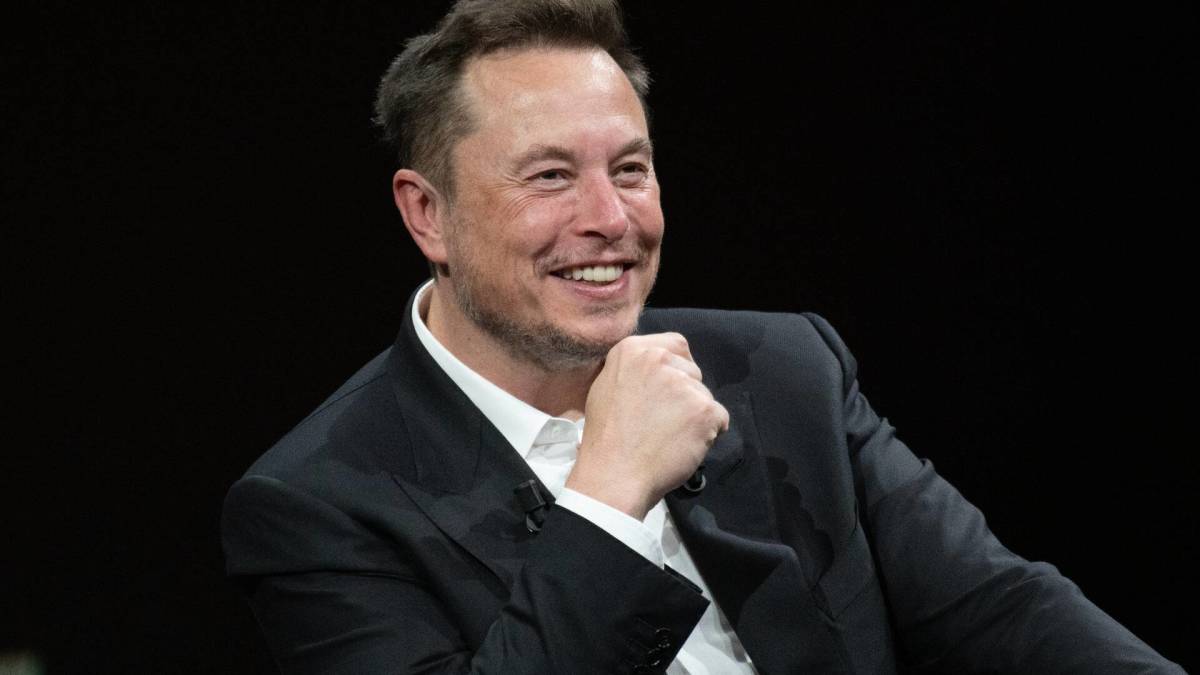 Elon Musk has pinned high hopes on artificial intelligence.
How AI fits into Musk’s money‑free future
Musk’s prediction depends on a world where machines like Tesla’s Optimus robot handle most physical work, while advanced AI systems run logistics, design, customer service, and much of the decision-making that today requires human labor.
At the 2024 Viva Technology conference in Paris, he said that in a best‑case outcome, “probably none of us will have a job,” because AI and robotics will do it all.
More Personal Finance:
- Estate planning tips every blended family needs to know
- Dave Ramsey sounds nationwide Medicare alarm
- After Your Death, Who Takes Care of Your Dog?
- What Medicare Part B price hike means for your 2026 Social Security
- Student loan forgiveness at risk for many
Musk added that this would pave the way for “universal high income, not universal basic income.”
He has also suggested that if productivity rises fast enough, money could “stop being relevant,” comparing it to oxygen — so abundant you no longer have to think about it, even though it still exists in the background.
Social media backlash and skepticism
The latest “no need to save money” line drew immediate backlash, especially because it came from one of the richest people on the planet telling struggling savers to relax about their futures.
According to NDTV and Fox Business, users on X and other platforms pointed out the gap between Musk’s optimism and realities like high housing costs, medical debt, and stagnant wages, questioning how soon any universal high income could actually arrive.
On Reddit, commenters in personal finance and Futurology forums argued that universal‑style income programs remain politically controversial even at low levels, let alone at the “high income” standard Musk keeps invoking.
Related: Elon Musk’s net worth in 2025: On the path to trillionaire status?
Where the “universal income” idea came from
Musk has been talking about guaranteed income for almost a decade, first telling CNBC in 2016, as reported by Azertac, that universal basic income would be “necessary” once robots took many jobs.
Over time, his message has shifted from “basic” to “high,” reflecting his belief that AI will be so productive that societies won’t just avoid mass poverty, but also be able to afford generous payments or free access to goods and services for everyone.
In multiple appearances, Musk has said that “anyone can have any products or services that they want,” but also warned there will be “a lot of trauma and disruption along the way” as old industries are automated.
Who pays, who decides?
For all the bold language, Musk has not provided a concrete blueprint for universal high income.
- No tax framework
- No distribution mechanism
- No global governance plan for how all that AI‑generated wealth ends up in your bank account
Nasdaq notes that he has not given any dollar figures or formulas, instead painting a picture of abundant necessities and very cheap goods, leaving economists to guess how that translates into real household budgets.
Critics also point out that today’s experiments with universal basic income remain limited in size and scope, often targeted to specific cities or low‑income groups, and have not yet been scaled to full national programs.
Why personal finance experts aren’t buying it — yet
From a personal finance standpoint, Musk’s message collides head‑on with standard advice to build an emergency fund, pay off high‑interest debt, and invest for long‑term goals like retirement.
Fortune highlighted the blunt implication: If Musk is right, “your six‑figure salary — and every savings and investment you’ve built — could be irrelevant within a few decades,” but there is no guarantee that timeline or outcome will arrive.
Until lawmakers actually pass and fund something like a universal high income, your future still depends on your ability to earn, save, and grow assets in a world where recessions, layoffs, and medical bills are very real risks.
The risks of betting your future on Musk’s prediction
If you took Musk’s statement as a literal green light to stop saving, you would be making several huge, unhedged bets at once.
- That AI will progress as fast as he expects
- That governments will capture and redistribute the gains
- That this will all happen before you hit retirement age
History shows that big technological shifts (from industrialization to the internet) have taken decades to translate into broad, stable gains for workers, often with painful inequality and policy fights along the way.
If universal high income shows up later than expected, arrives in a watered‑down form, or never becomes reality, those who kept saving and investing will still have a cushion; those who stopped will be exposed.
What you can take from the universal-income debate right now
Musk’s comments do highlight a real trend: AI and automation are reshaping labor markets, and there is growing discussion among policymakers and economists about new safety nets, from basic income pilots to expanded child and earned‑income credits.
They also serve as a reminder that the old model (one job for 40 years and a pension at the end) is already gone. Your best defense is diversifying your income sources, skills, and investments rather than assuming any one system will protect you.
Even if some version of AI‑funded income emerges, savings will still translate into options: the ability to live where you want, weather policy changes, support family members, or pursue opportunities that a standardized payout might not fully cover.
The takeaway for your wallet
Musk may be right that AI will make the world richer and eventually force governments to rethink how people get paid — and his “universal high income” sound bite captures that possibility in a way that grabs headlines.
But until there is actual legislation, clear funding, and real cash showing up in ordinary people’s accounts, “no need to save money” is closer to a sci‑fi thought experiment than advice around which you can safely build your financial life.
Related: Elon Musk celebrates victory over $45 billion rival