
Companies preparing for an initial public offering normally set a price range, gauge demand on a roadshow, and negotiate a final share price.
SpaceX skipped every step of that process, and the decision reveals how Elon Musk intends to operate as a public company executive.
The rocket and satellite company filed an amended prospectus with the Securities and Exchange Commission, setting a flat price of $135 per share.
That number implies a base valuation of roughly $1.75 trillion, according to Reuters, rising to approximately $1.77 trillion if pending transactions close.
SpaceX tells Wall Street to take $135 or walk away
Under the traditional IPO playbook, a company sets a preliminary price range to frame valuation expectations and leaves room for adjustments during investor meetings.
SpaceX declared $135 as a fixed number before its roadshow formally began, and the company told its underwriting banks that it would not adjust it, Reuters reported.
The amended filing detailed plans to sell 555.6 million Class A shares, with underwriters holding an option to purchase an additional 83.33 million at the same price.
Goldman Sachs leads the underwriting syndicate, followed by Morgan Stanley, Bank of America Securities, Citigroup, and JPMorgan Chase as additional lead bookrunners, with Barclays and other regional banks rounding out the broader 21-bank syndicate.
More Tech Stocks:
- Morgan Stanley sets jaw-dropping Micron price target after event
- Nvidia’s China chip problem isn’t what most investors think
- Quantum Computing makes $110 million move nobody saw coming
“This would be very unconventional, but the market will see this as a sign of confidence in the SpaceX IPO, while others could see it as a head-scratcher,” Dan Ives, managing director and senior equity analyst at Wedbush Securities, told Fortune.
The Nasdaq debut under ticker SPCX is expected the week of June 12, following investor presentations that began this week, Reuters noted.
The fixed-price approach has virtually no precedent among major U.S. offerings, stripping away the demand-testing process that normally protects both buyers and sellers.
Starlink generates billions while SpaceX’s AI unit burns cash
SpaceX’s landmark S-1 filing revealed the company generated $18.67 billion in consolidated revenue during 2025, representing a 33% increase from the prior year.
Starlink, the satellite broadband service, contributed $11.39 billion in revenue and posted $4.4 billion in operating income, solidifying its role as the company’s financial engine.
The connectivity unit now serves 10.3 million subscribers across more than 160 countries, with its user base roughly doubling over the preceding 12 months.
The AI segment, which absorbed xAI through a February 2026 merger, generated $3.2 billion in revenue but incurred $6.35 billion in operating losses.
Those losses dragged the company as a whole to a $4.94 billion net loss for 2025, even as Starlink generated high operating income on its own.
The first quarter of 2026 saw the trend accelerate, with a $4.28 billion net loss in a single quarter, according to the company’s SEC filing.
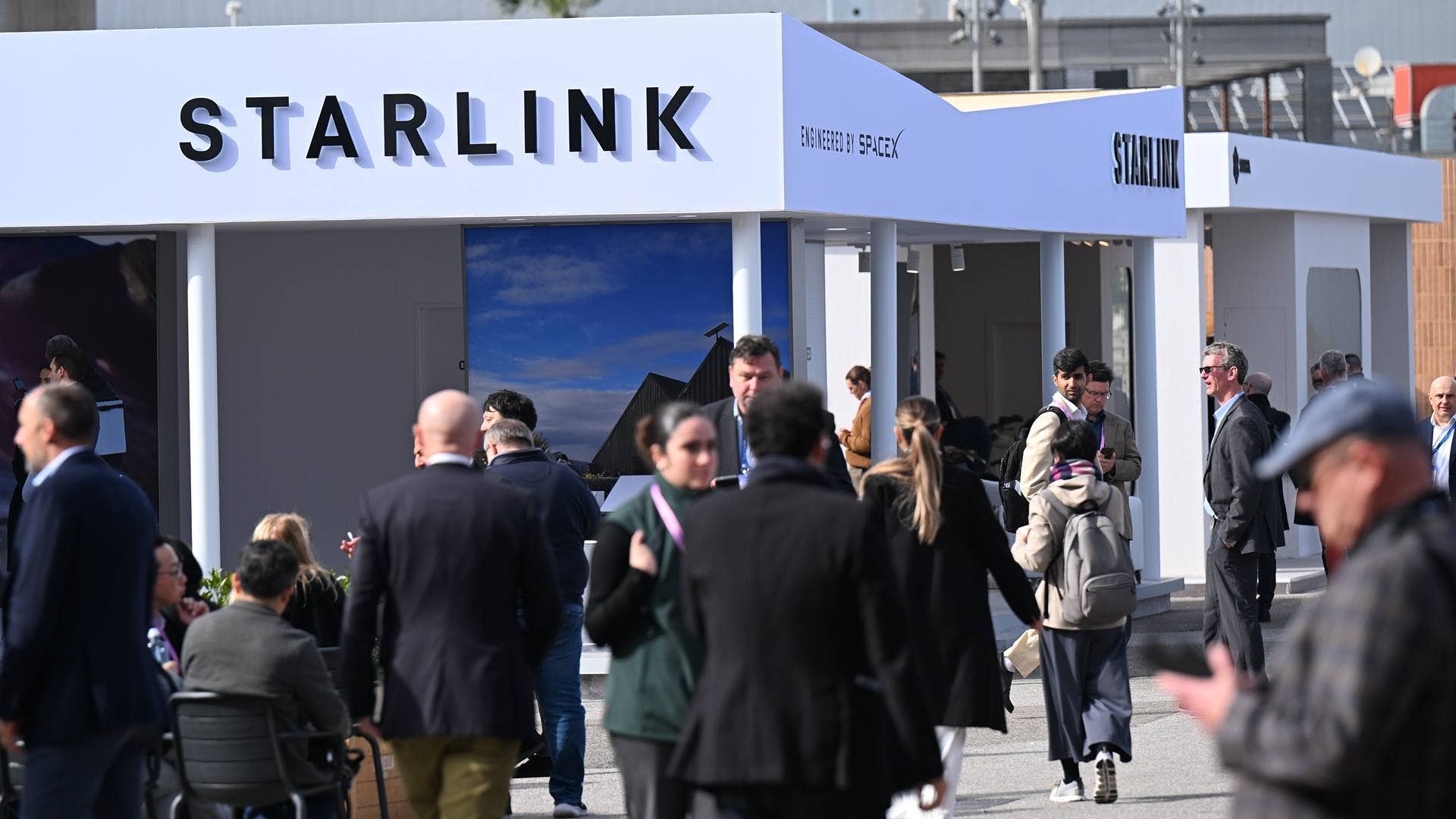 Starlink’s profits are fueling growth at SpaceX, but heavy AI losses pushed the company to nearly $5 billion in net losses.
picture alliance/Getty Images
Morningstar values SpaceX at less than half IPO target
One of Wall Street’s most prominent independent research firms offered a starkly different assessment of the company before the roadshow even began.
Morningstar initiated coverage of SpaceX with a fair value estimate of $780 billion, roughly 55% below the company’s own $1.75 trillion IPO target.
Analyst Nicolas Owens built a discounted cash flow model that valued the launch and Starlink businesses at a combined enterprise value of $611 billion.
Some investors may view that as a serious governance trade-off, while others may decide it is the price of access to one of the few companies with SpaceX’s scale and positioning.
Owens assigned an additional $170 billion to the AI operations on a probability-weighted basis, reflecting deep uncertainty about the segment’s commercial viability.
“We think the company has been significantly overvalued and investors will have opportunities to buy the stock at more attractive levels after the IPO,” Owens said.
The valuation gap highlights a central tension in this offering: whether investors are paying for proven satellite broadband economics or speculative AI infrastructure.
Musk’s dual-class share structure limits public investor influence
Public shareholders will have minimal say in how SpaceX operates after listing, owing to a governance structure tilted heavily toward its founder.
Musk will retain roughly 82.4% of voting power through a dual-class arrangement, which gives certain shares 10 times the voting power of ordinary stock.
Only about 5% of outstanding shares will trade freely after the offering.
Musk and certain significant investors face a 366-day lockup, while other pre-IPO investors are subject to a staggered structure that releases 7% tranches at 70, 90, 105, 120, and 135 days after listing, with additional releases tied to quarterly earnings reports.
“We think long-term investors eager to participate in SpaceX’s future endeavors and potential success will have opportunities to do so with more margin of safety than the initial offering is likely to provide,” Owens wrote in the Morningstar report.
Retail investors will have unusual access to this debut, with SpaceX naming Schwab, Fidelity, Robinhood, SoFi, and E*Trade as retail allocation channels.
This IPO could set pace for Anthropic, OpenAI listings
The implications of this offering extend beyond a single company, because two other major AI firms are expected to follow with their own public listings.
“This listing represents the first major test for public markets after years of muted IPO activity, with SpaceX paving the way for AI giants Anthropic and OpenAI to follow soon after,” Wedbush analysts wrote in a June 3 research note, Fortune confirmed.
At its target valuation, SpaceX would rank among the most valuable U.S. public companies at listing, with Al Jazeera placing it ahead of Tesla and Meta Platforms and potentially in the top five by market capitalization.
How the market receives this unconventional pricing approach will likely shape the terms and expectations for every major technology listing that follows.
Related: Elon Musk sends startling message on SpaceX, Tesla merger