
The seed for Musk’s “bizarre new airline idea” came from a short note on frequent‑flyer site View from the Wing, which flagged that Ryanair boss Michael O’Leary and Musk were suddenly feuding over the costs of installing Starlink on the Irish carrier’s Boeing 737 fleet.
In that post, travel writer Gary Leff described Musk “mulling” the idea of buying Ryanair and putting “a guy named Ryan in charge” after the back‑and‑forth, framing it as the kind of outlandish thought experiment only the world’s richest man can casually float.
The online feud had already turned personal by then. O’Leary labeled Musk “an idiot, very wealthy, but he’s still an idiot” in comments cited by the Times of India, arguing that the tech billionaire did not understand real‑world aviation drag and fuel economics.
Musk hit back on X (formerly Twitter), calling O’Leary an “utter idiot” and saying he should be fired, as reported by Yahoo Finance. That is the context in which he added the line about buying Ryanair and replacing the CEO with “someone whose actual name is Ryan,” an X quote that market‑watch accounts blasted out.
I spend a lot of time in economy seats, and I watched this one‑liner do something unusual in real time. Within hours of Musk’s crack about buying Ryanair, pilots were dissecting the numbers, analysts were gaming out scenarios, and frequent flyers were asking whether the man who scooped up Twitter could realistically take a swing at Europe’s busiest budget carrier.
Why Wi‑Fi matters so much to Elon Musk
Underneath the trolling, Musk is sticking to a simple thesis: Cheap, reliable in‑flight internet is now a core part of the product, not an optional perk.
In coverage of the spat, Yahoo Finance noted that Musk warned airlines that refuse to fit Starlink “will lose customers,” a line he has echoed repeatedly as more carriers sign deals with SpaceX for high‑speed satellite service.
Related: Elon Musk drops a surprise curveball on Nvidia
Ryanair has taken the other side of that bet. O’Leary told Irish broadcaster Newstalk that adding Starlink terminals would increase drag and fuel burn enough to cost the airline “$200 million to $250 million a year,” a figure picked up by the Times of India and other outlets.
He said that works out to about $1 per customer, and argued that Ryanair passengers will not pay that for Wi‑Fi on short‑haul European flights, even though he conceded that some rivals are adding connectivity.
At the same time, the airline’s social‑media team has not been shy about needling Musk. When X went down, Ryanair’s account mocked the outage with the line “perhaps you need Wi‑Fi @elonmusk?”
Musk’s “should I buy Ryan Air” response came right after that taunt, which helps explain why so many pilots, aviation bloggers, and even retail investors saw his comment less as a fantasy and more as a warning shot.
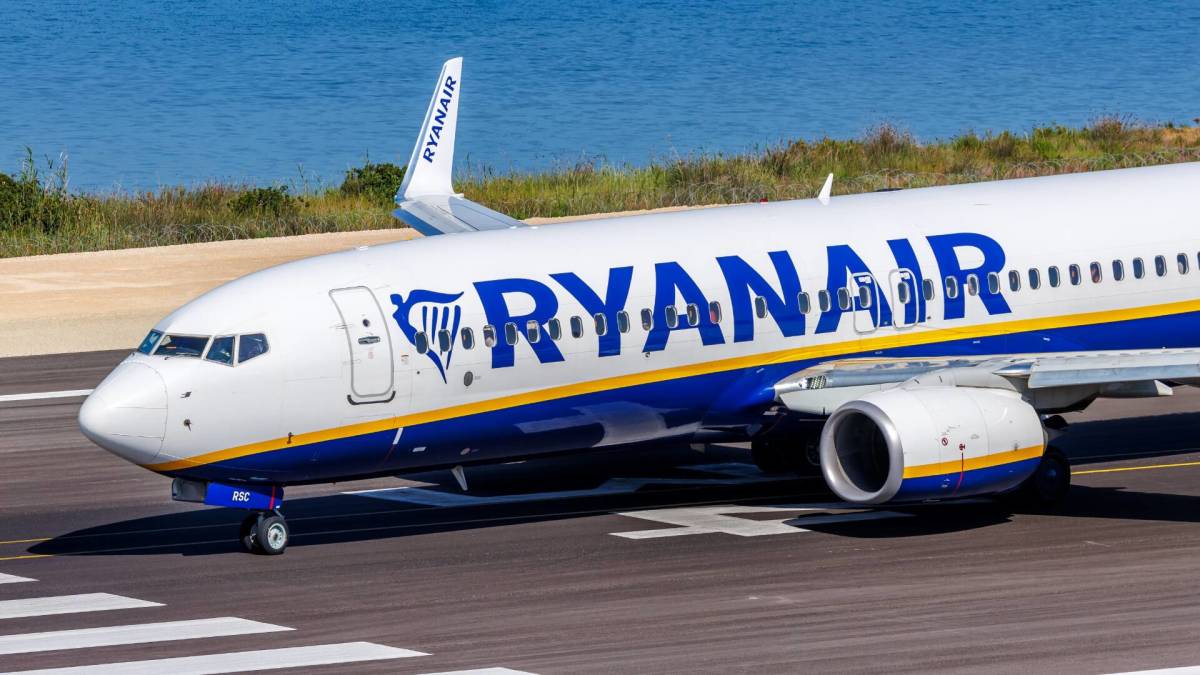 Elon Musk claims to want to buy Ryanair.
What pilots, passengers, and analysts are really debating with Musk’s Ryanair comment
Talk to pilots, and they tend to focus on weight, drag, and operational complexity rather than memes.
Starlink hardware adds a fair amount of equipment to the roof of a narrow‑body jet, which can increase fuel burn slightly and requires installation, certification, and maintenance across a large fleet, as noted by aviation reporters at Live and Let’s Fly and One Mile at a Time.
For an airline like Ryanair that makes its money on quick turnarounds and ultra‑tight cost control, that kind of modification hits both the cost structure and the schedule.
Analysts quoted in Business Insider’s coverage of the Ryanair‑Starlink fight pointed out that a 1% to 2% increase in fuel consumption can wipe out a big share of margin on routes where tickets already sell for the equivalent of a few dozen dollars.
That is why O’Leary keeps stressing that he is not against technology in general, but against anything that forces him to raise prices on the very customers who made Ryanair the template for European low‑cost flying.
Related: Frontier Airlines denies bankruptcy as it paused booking past April
Passengers are less patient with that argument, especially those who fly for work or travel with kids. In comment threads compiled by sites like LatestLY and Moneycontrol, many users argued that they would switch to airlines that offer reliable Wi‑Fi, even if it cost a few euros more, while others defended Ryanair’s bare‑bones model and said they would rather keep ultra‑low fares.
The split in the cabin explains why Musk’s “bizarre” idea resonates with some travelers and irritates others. For one group, he is speaking up for a more connected, productive flight; for the other, he is threatening their cheap tickets in the name of a product they do not value.
Could Musk actually buy an airline named Ryan?
From a dealmaking perspective, Musk has already shown that he is willing to turn social‑media performance into real acquisition moves. Commentators at NDTV and American Bazaar made that connection directly, noting that his Ryanair quip arrived only a couple of years after he went from joking about taking Twitter private to closing a roughly $44 billion deal for the company now known as X.
That history is one reason Leff called this a “genius exit strategy” for O’Leary in his View from the Wing roundup: If you are sitting on about 50 million Ryanair shares, getting “goaded” into a bid from a billionaire might be the cleanest way to cash out.
More Airlines:
- American Air launching 15 new summer routes between U.S. cities
- Low-cost airline will launch new flight to South Korea from US
- American Airlines joins the Spirit Airlines bankruptcy case
- JetBlue Airlines founder shares why Frontier needs Spirit Airlines
Even so, the hurdles would be substantial. Owning a European airline would drag Musk directly into labor negotiations, strict EU aviation rules, and volatile jet‑fuel markets in a way that is very different from selling rockets or cars, according to analysts cited by Business Insider.
Ryanair is also not a distressed target. It is profitable, aggressive on pricing and expansion, and led by a CEO who has built his reputation on resisting outside influence, especially from regulators and unions.
I see Musk’s comment less as a literal takeover signal and more as a way to pressure the industry.
By suggesting that he could buy Ryanair if he wanted to, he makes every other airline CEO more aware that turning down Starlink or mocking X could turn into an extended public fight with a figure who commands millions of followers and often moves markets with a single post.
What the strange Musk‑Ryanair clash means for flyers
The Musk‑Ryanair scuffle lands at a moment when airlines are making big, expensive calls about tech upgrades that will shape the flying experience for the next decade.
If more low‑cost carriers follow Ryanair and refuse to pay for full‑featured Wi‑Fi, passengers who need to work in the air will keep gravitating to higher‑fare or legacy brands that sign on with Starlink or rival satellite providers.
If Musk succeeds in making connectivity a default expectation even in the cheapest seats, the low‑cost model will have to absorb higher capital and fuel costs or find new ancillary fees to cover the gap.
For now, Musk’s “put someone named Ryan in charge” airline exists only as a viral line attached to a public feud, but it has already forced a serious conversation about who decides what counts as “basic” on a budget flight.
Pilots and analysts are arguing over drag coefficients and fuel bills, passengers are voting with their wallets and Wi‑Fi preferences, and one of the most unpredictable CEOs in the world has reminded European aviation that, in theory, he could buy himself a front‑row seat to that argument anytime he wants.
Related: Elon Musk’s xAI reveals $200 billion breakthrough project