
Elon Musk’s 2025 has been far from quiet.
Starship explosions, robotaxi reveals, and Twitter wars with President Donald Trump have headlined Musk’s chaotic year.
💵💰Don’t miss the move: Subscribe to TheStreet’s free daily newsletter💰💵
Yet, in the middle of the noise, Musk’s AI brainchild in xAI continues moving like clockwork.
Moreover, with the newest update, xAI’s Grok could be angling to knock on the same high-security doors Palantir’s been guarding for years.
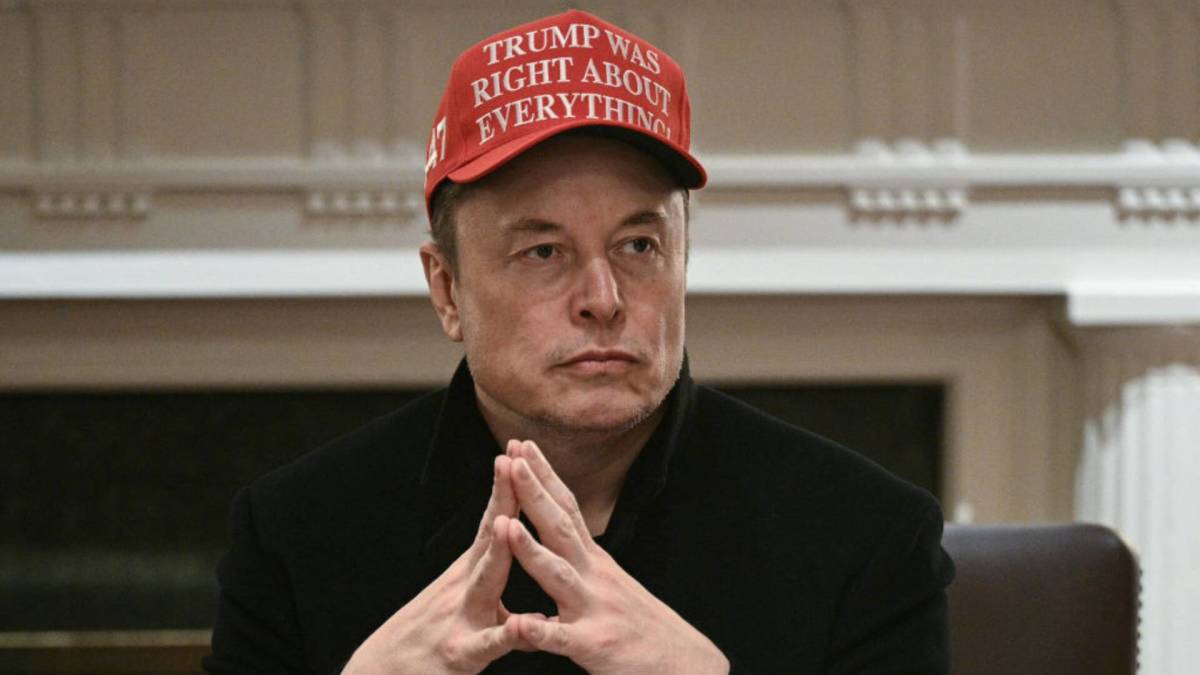 As Grok expands, Elon Musk’s xAI edges closer to Palantir’s turf.
Image source: Smialowski/AFP via Getty Images
xAI isn’t just quick; it’s flush with cash and firepower
Recent months have shown that xAI doesn’t lack any ambition or capital.
Since its hotly anticipated launch in March 2023, the company has built Colossus, a GPU supercluster that scaled from 100,000 to 200,000 Nvidia units in just 122 days.
Now, it’s aiming for a million, to position itself as the world’s largest AI training platform. That’s some serious flex in a market where compute capacity is critical in staying ahead.
Musk has kept xAI separate from Tesla, though he’s alluded to a future shareholder vote on deeper investment.
The great thing is that the strategy is clear with xAI.
Related: Elon Musk’s xAI is already shockingly massive
A key focus for the AI upstart is to develop frontier large language model (LLM) development across government, defense, and commercial domains.
At the same time, the goal is to seamlessly embed Grok into Tesla cars and Optimus humanoid robots for edge deployment.
The funding numbers are just incredible.
xAI recently secured $10 billion, split evenly between a $5 billion equity raise and a $5 billion debt package arranged by Morgan Stanley.
That round took its meteoric valuation to $113 billion, thanks in part to a $2 billion boost from SpaceX.
Now, talks suggest a new raise that could take its value to between $170 billion and $200 billion.
More Tech Stock News:
- Cathie Wood drops bold message on Apple, Tesla stock
- Google Brain founder has an unexpected one-word message on AI
- Unsung AI stock pops after joining S&P 500
That’s a monstrous jump from early estimates of $33 billion to $80 billion. Some call it hype. Others say it’s the price of building the most potent AI infrastructure at scale.
Musk’s AI ambitions take a national security turn
Elon Musk’s xAI is taking things up a notch with his government work, and not quietly.
Just days after the Grok 4 reveal, Musk has now “Grok for Government,” a customized suite of AI tools for federal, state, and local agencies.
The move signals Musk’s intent to jump into the high-stakes defense-grade AI world.
The announcement comes with some real muscle.
xAI secured a massive new Department of Defense contract with a $200 million ceiling, standing alongside tech giants like Google, OpenAI, and Anthropic.
While that sum is relatively modest next to bigger contracts, it’s a powerful entry point for a company still in its nascence.
“Supporting the critical missions of the United States Government is a key part of this mission,” xAI said in a statement.
Related: JPMorgan reveals 9 stocks with major problems
The Department’s Chief Digital and AI Officer Doug Matty echoed that urgency, saying the government must adopt commercial AI tools in warfighting and intelligence efforts.
For Musk, it’s more than a business deal.
Grok’s powerful future is linked closely to Tesla’s broader ecosystem, and this unusual overlap puts Musk’s fingerprints all over the next generation of U.S. AI capabilities.
Could this be a direct challenge to Palantir?
More importantly, though, the arrival of Grok for Government can effectively take xAI in direct competition with Palantir.
Palantir has effectively become the U.S. government’s go-to name in mission-critical analytics.
It pulled in a whopping $1.2 billion from U.S. government contracts in 2024, a robust 30% jump YOY, with deep roots in defense and intelligence through its Gotham and Foundry platforms.
However, where Palantir leans on Big Data fusion and tailor-made deployments, Grok offers greater agility.
xAI’s tools could potentially offer faster rollouts and flexible API integrations.
Early signs of traction have already been emerging, with reports that the General Services Administration is exploring Grok, pointing to stronger civilian agency adoption.
If Grok could match or beat Palantir on speed, cost, or ease of use, we could see Musk’s name plastered on more than just SpaceX rockets and EVs.
With AI looking to reshape military logistics and fraud detection, the real battle may be over who defines the next phase of American power.