
The United States has an international reputation for liking everything big, from our homes to our roads to our vehicles. Still, U.S. automakers claim European consumers share many of the same tastes, but European bureaucrats are keeping these vehicles off the road.
The Ford F-150, Chevy Silverado, and Ram 1500 are among the most popular cars on the road in the U.S., but in Europe, they account for a small fraction of sales, which automakers claim is due to interference from EU politicians.
German auto industry exports
- Germany exported 3.4 million vehicles in 2024
- U.S. was the biggest German auto importer with a 13.1% share
- Germany exported $27.25 billion worth of autos to the U.S. in 2024
- Volkswagen, Mercedes-Benz, and BMW account for approximately 73% of EU car exports to the U.S.
One unnamed automotive executive even went as far as to say that the EU is in “a better position” than the U.S. in Donald Trump’s trade war, the Financial Times reported.
The established narrative is that Europeans like a certain type of car that American companies simply don’t design.
“You’ll notice that European car makers meticulously craft each model, integrating sleek lines and modern styling that reflects cultural preferences for luxury and style,” according to Kassel Motor Sports. “On the other hand, American car makers often prioritize size and practicality, which translates into bold, imposing designs. Their vehicles are built for spaciousness and durability, often sacrificing intricate design elements for robustness and utility.”
“The differences in design and aesthetics aren’t just about appearance; they reflect distinct cultural values.”
But according to the auto execs the Financial Times spoke with, European consumers aren’t being given the opportunity to choose larger American vehicles they might enjoy.
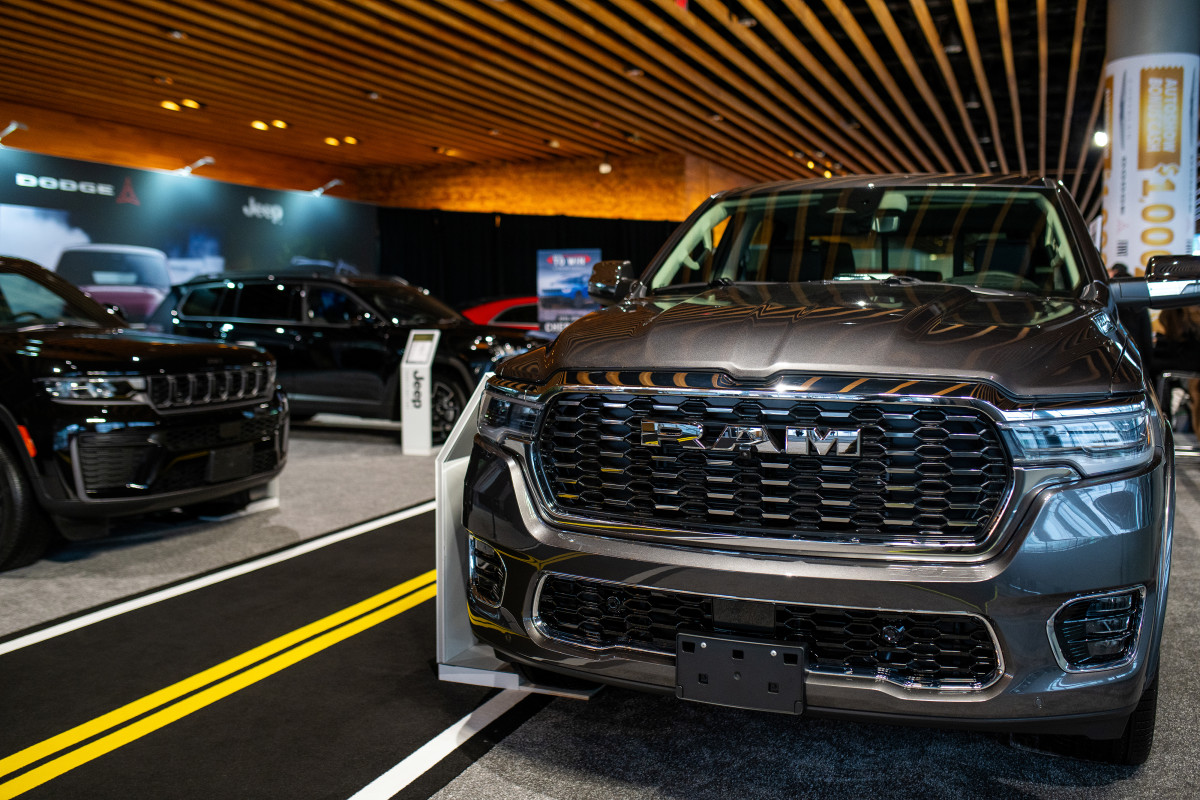
Photo by Bloomberg on Getty Images
EU is taking advantage of U.S. tariff deals, U.S. auto execs say
Last year, the European Union was able to negotiate its tariff burden down from 25% to 15%. Still, German auto marque Volkswagen said that U.S. tariffs would cost the company up to 5 billion euros ($5.8 billion) in 2025. Through the first three quarters last year, tariffs shaved 58% off its year-over-year profit.
But a U.S. automaker executive told the FT that the EU has been dragging its feet on ratifying the deal, placing American car companies at a stark disadvantage, as they still have to pay the 10% tariff that was supposed to be reduced to zero.
“Right now Europe is in a better position than the US,” the unnamed auto exec told the FT.
Related: Tesla dodges more headaches as autonomous driving scores a win
At the heart of the dispute is the EU’s Individual Vehicle Approval rule, which allows certain models from outside markets to be approved for sale under less stringent standards than usual.
U.S. carmakers sold 7,000 SUVs and pickup trucks in 2024 through that mechanism, the FT reported, but now the EU Commission is close to finalizing rules that would make it even tougher to sell those vehicles in European markets.
“We would hope … issues like the IVA will be resolved in the spirit and consistent with the terms of that agreement,” Andrew Puzder, U.S. ambassador to the EU, told the news service. “You can’t have low tariffs and massive non-tariff trade barriers and claim you’ve got a functioning relationship.”
But the auto exec took it a step further, saying that the EU is not only imposing non-trade barriers but also dragging its feet on lowering its tariffs.
“The US administration is aware that not only is Europe dragging its feet on the trade agreement, but they’re also looking at restricting US products and limiting customer choice in Europe,” he said.
The FT points out that this rule runs starkly counter to a country like Japan, where vehicles deemed safe enough for the American market are allowed into the country without any additional safety tests.
EU isn’t alone in stiffing U.S. carmakers
One unintended consequence of President Trump’s trade war has been increased cooperation among countries not named the United States.
India, the world’s third-largest car market behind China and the U.S., while making a few concessions on U.S. vehicles, announced a wide-ranging automotive tariff deal with the EU in January. The agreement lowers tariffs on car imports from EU countries to 40% from 110%, with that rate potentially going down to 10% over time.
This immediately reduced prices on EU car imports, priced at about 15,000 euros ($17,700), according to Reuters, and lowered tariffs on as many as 200,000 vehicles, though negotiations are still ongoing.
In February, the U.S. and India agreed to a deal that lowered India’s tariff burden to 18% while India promised to cut tariffs on high-end American cars to 30% from as high as 110%. India will also eliminate tariffs on Harley-Davidson motorcycles under the interim agreement.
However, India will not make any concessions on electric vehicles.
Related: GM forced to make tough decisions as EV market collapses