
This summer, we’ve started seeing cracks in the US economic armor, including a significant weakening in the jobs market that could signal tough times ahead for many American workers.
💵💰Don’t miss the move: Subscribe to TheStreet’s free daily newsletter💰💵
While low at 4.2%, the unemployment rate is threatening to break out to a new cycle high, and layoffs are up significantly from one year ago.
This dynamic could accelerate a growing divide in the US economy, which Federal Reserve Bank President Beth Hammack labels a “two-speed” economy.
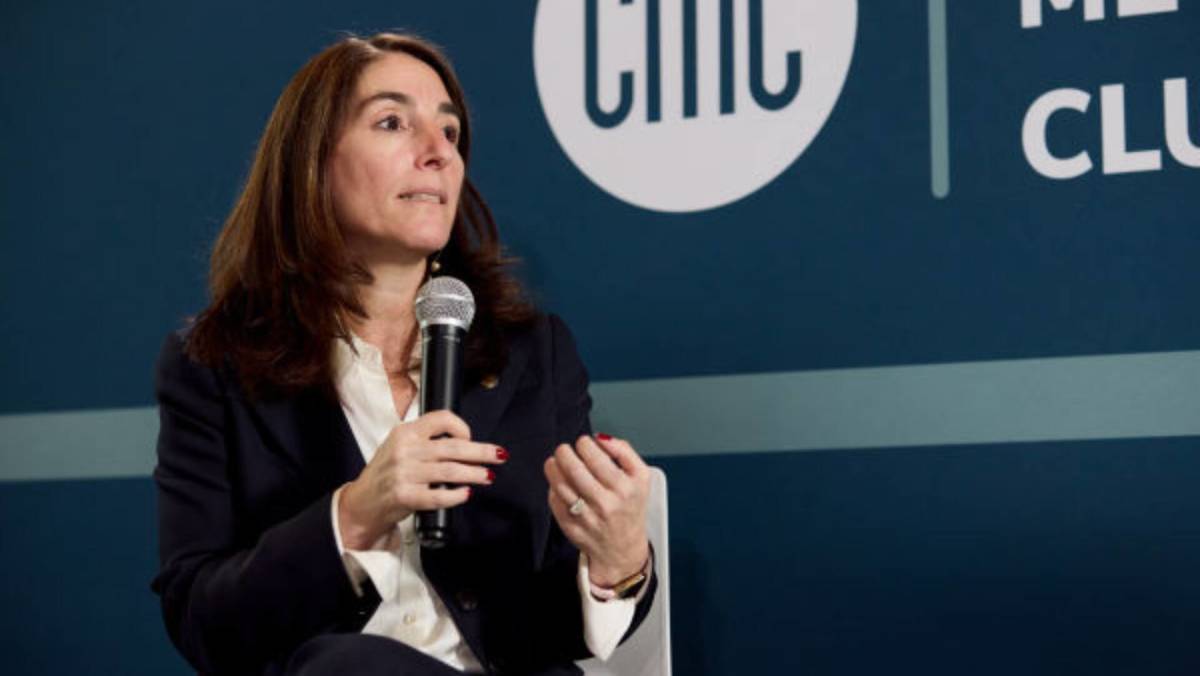 Federal Reserve Bank of Cleveland President Beth Hammack says there’s a “two-speed” economy.
The economic haves and have-nots
Hammack is the president and chief executive officer of the Federal Reserve Bank of Cleveland, one of 12 regional Reserve Banks in the Fed’s Reserve System. She took over the role in August 2024.
The former cohead of global financing at Goldman Sachs and a member of Goldman’s management committee was formerly the global head of short-term macro trading and repo trading, so she knows a thing or two about the markets and economy.
Related: Jobs report shocker resets Fed interest rate cut bets
Unfortunately, she sees a glaring and growing problem—an economy increasingly separating the haves from the have-nots.
In an interview with CBS News, Hammack said that means we’re in a “two-speed” economy, where the highest income earners are doing much better than everyone else.
“The top part of the income spectrum is doing incredibly well,” said Hammack. “They’re feeling a lot of excitement about the stock market, how their 401(k)s are doing, and they’re feeling flush with cash.”
It’s a much different story for those with lower incomes, who Hammack says are “trading down” when shopping for groceries and are cash-strapped.
Stock market delivers riches… for some
The S&P 500 delivered back-to-back years of 20%-plus returns in 2023 and 2024, and despite a retreat this spring, is up over 7.5% in 2025. As a result, Americans exposed to the US stock market have seen their account balances increase significantly.
Related: A divided Federal Reserve mulls interest rate cut after wild week
To be sure, that’s no small number of people, given Gallup reports 62% of Americans report owning stocks, mutual funds, or exchange-traded funds, up from 52% in 2016.
However, it’s really high-income workers who have benefited.
According to Gallup, about 87% of adults with household incomes over $100,000 and just 28% of those earning less than $50,000 have stock market exposure.
Layoffs surge while hiring sours
The latest economic data on the jobs market suggests that workers are increasingly getting pinched.
During Covid, low interest rates and stimulus fueled massive hiring. However, it also caused skyrocketing inflation, forcing the Federal Reserve to hike rates at the fastest pace since the 1980s, when Former Fed Chair Paul Volcker broke the back of inflation.
More Layoffs:
- Intel’s recent layoffs take an unexpected turn
- Walmart makes more cuts customers won’t like
- Looking for a job? Job ads probably won’t help you find one
The higher rates worked, given inflation has retreated below 3% from 8% in 2022, but they did so at a steep cost.
Slower economic activity due to higher rates has meant less job growth, something that’s increasingly evident in 2025.
According to the Bureau of Labor Statistics, the unemployment rate was 4.24% in July, up from 3.4% in 2023.
The economy created just 73,000 jobs in July, below 100,000 forecasts, and over the past three months, it created 106,000 jobs. For perspective, in 2024, 368,000 jobs were created in the same period.
The slower hiring pace is compounded by increasing layoffs.
Through July, US companies have announced 806,383 job cuts, up 75% from last year, and the most layoffs since Covid shut down the economy in 2020, according to Challenger, Gray & Christmas.
Fewer jobs, and more workers competing for them
In July, over 62,000 American workers lost their jobs, up 140% year over year. Those newly unemployed workers face a tougher time finding new work, given that companies are ratcheting back hiring plans amid tariff-driven economic uncertainty.
The BLS’s Job Openings and Turnover Survey, which tracks the monthly number of unfilled open jobs, reports that, at the end of July, the number of open positions had fallen to 7.4 million, down from 12 million in March 2022 before the Fed started increasing interest rates.
The situation could also worsen for the haves in Hammack’s “two-speed” economy.
Challenger, Gray, & Christmas said layoffs have hit the high-paying technology sector hardest, resulting in 89,251 layoffs this year, up 36% from 2024.
Inflation may make things worse
The two-speed economy isn’t likely to get any better, given that the labor market is struggling, especially since inflation remains troublesome and could climb from here.
Hammack said, “Individual businesses have been trying to hold back” on passing along tariffs to consumers, but that may get harder now that they’ve sold through inventory built up before the tariffs were put in place.
“They’re coming to the point where their margins are getting squeezed and they need to start passing that onto consumers,” said Hammack.
The risk of persistent upward pressure on inflation puts Federal Reserve Chair Jerome Powell in a box, trapped by its dual mandate.
The Fed is tasked with setting rates at levels that support low unemployment and inflation—two often competing goals, particularly this year, given rising joblessness and higher prices because of tariffs.
Related: Major analyst sends blunt 3-word message to investors