
After years of interest rate hikes to suppress inflation, homebuyers and economists both hoped consistent interest rate cuts from the Federal Reserve would breathe new life into a fading housing market.
However, three rounds of consecutive interest rate cuts last fall didn’t bring mortgage rates down — in fact, mortgage rates began climbing toward 7% again.
The Fed has come under fire for not lowering rates at all this year, but chairman Jerome Powell has followed the central bank’s dual mandate of moderating inflation while ensuring maximum employment.
💵💰Don’t miss the move: Subscribe to TheStreet’s free daily newsletter 💰💵
Powell has also maintained that housing hasn’t been a top priority, as the Fed doesn’t have any direct power over mortgage rates, which are tied to longer-term benchmarks like the 10-year treasury-yield.
However, the tide may be changing, as housing was a hot topic at the Fed’s Jackson Hole Economic Symposium earlier this month. The focus on the long-term economic implications of a lagging housing market could indicate a greater consideration of the housing sector in monetary policy going forward.
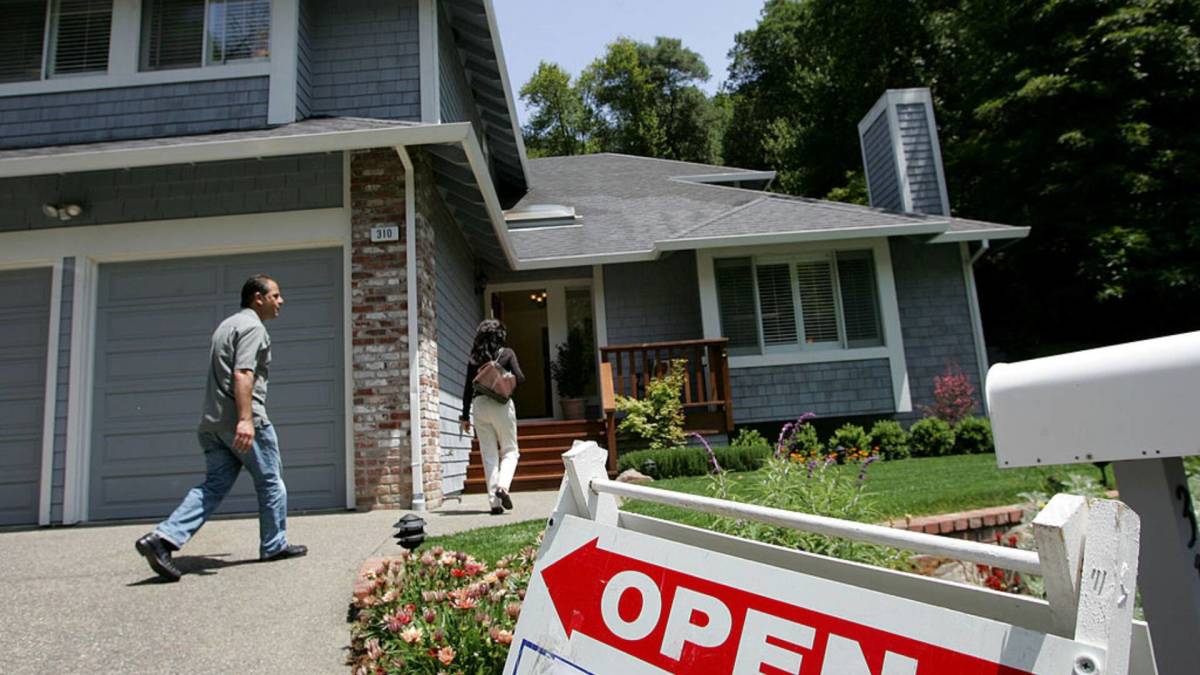 The housing market has been stymied by years of rising home prices, high mortgage rates, and declining homebuyer demand. Housing sector performance typically hasn’t been a major influence on Fed policy, but that may change in the future.
Image source: Sullivan/Getty Images
Fed chair Jerome Powell believes tackling inflation will help relieve housing market gridlock
After eight months without interest rate cuts, consumers may finally see some relief this year. CME FedWatch predicts an 85.1% chance that the Fed cuts the federal funds rate at its September meeting.
Over the past five years, 30-year mortgage rates have followed the same trajectory as the federal funds rate; an interest rate cut would generally lower mortgage rates. However, mortgage rates proved unresponsive to rate cuts beginning in September 2024.
In an increasingly complex economy environment, the Fed seemingly has less influence over housing market conditions.
In Powell’s press conference following the Fed’s July meeting, he underscored the differences between the federal funds rate and 30-year mortgage rates, repeating that the Fed cannot directly lower mortgage rates.
More on homebuying:
- The White House will take surprising approach to curb mortgage rates
- Redfin says housing market bubble could deflate this year
- Dave Ramsey predicts major mortgage rate changes are coming soon
- Warren Buffett’s Berkshire Hathaway sounds the alarm on the 2025 housing market
“Housing is a special case. Right? We don’t set mortgage rates at the Fed. We set an overnight rate, and the rates that go into mortgages are longer-term rates, like Treasury rates,” Powell said. “It’s not that we don’t have any effect. We do have an effect, but we’re not the main effect.”
Powell’s approach over the past few years has been to focus on tempering inflation and supporting the housing market, noting that the housing market would correct itself eventually if other economic factors stabilize.
“There’s kind of a long-term housing shortage that we have. We haven’t built enough housing. This is not something the Fed can help with, but then that’ll be the case even after things normalize,” he continued. “So, I think the best thing that we can do for housing is to have 2 percent inflation and maximum employment. And that’s what we can contribute to housing.”
Fed policy shift could indicate new mortgage rates, housing market priorities
The Federal Reserve hosted its annual Jackson Hole Economic Symposium earlier this month, announcing that it would update its policy approach, eliminating the 2% inflation benchmark implemented in 2020.
The shift toward “flexible inflation targeting” signals that the Fed is less rigid may be more open to future interest rate cuts, and will be less restricted by strict inflation benchmarks.
Related: Bank of America warns mortgage rate changes could have major housing market impact
The Jackson Hole Symposium minutes highlight that, “Participants observed that growth of economic activity slowed in the first half of the year, driven in large part by slower consumption growth and a decline in residential investment. A few participants noted a weakening in housing demand, with increased availability of homes for sale and falling house prices.”
For the first time in quite a while, the Fed acknowledged and addressed the broad economic risks associated with a long-term stagnant housing market. The weakening housing market was referenced with regard to other growing economic concerns such as tariffs, AI, and the labor market.
Including housing concerns in the broader economic conversation could mean that the Fed may target housing issues with its new policy approach.
“In addition to tariff-induced risks, potential downside risks to employment mentioned by participants included a possible tightening of financial conditions due to a rise in risk premiums, a more substantial deterioration in the housing market, and the risk that the increased use of AI in the workplace may lower employment,” the minutes added.
Related: Shark Tank’s Kevin O’Leary makes grim 2025 mortgage rate prediction