
Your first Social Security check of 2026 will probably look a little bigger — but that doesn’t automatically mean you’re getting ahead.
According to the Social Security Administration (SSA), benefits rise 2.8% in January 2026, lifting the average retired worker’s monthly check from $2,015 to $2,071. That’s about $56 more a month on average, which might sound meaningful until you stack it against higher prices for groceries, rent, and health care.
Investopedia reports that Social Security recipients will also see a new tax deduction for people 65 and older, part of a broader set of tweaks that will change how much actually stays in your pocket.
At the same time, retirement earnings limits, Medicare premiums, and disability thresholds are all moving, so the money you see in your bank account could be higher, lower, or unchanged, depending on your situation.
“Social Security’s COLA is designed to preserve buying power, but it rarely feels like a raise when you’re at the cash register,” Mary Johnson of The Senior Citizens League told Bankrate, noting that modest COLAs often trail real-world expenses for retirees.
If you rely on Social Security for a big chunk of your monthly budget, these 2026 changes make it a good time to revisit your spending, savings, and tax plan.
1.Your check will be bigger, but not by much.
The headline change in 2026 is that 2.8% cost-of-living adjustment, which lifts benefits for roughly 75 million Americans.
SSA’s 2026 COLA fact sheet shows the average retired worker’s benefit climbing to $2,071, while an older couple both receiving benefits will average $3,208 a month.
More Social Security:
- AARP raises a red flag on Social Security, Medicare
- Dave Ramsey warns Americans on Social Security, 401(k)s
- Dave Ramsey warns of big Social Security problem
According to an analysis from Empower, that 2.8% bump translates to about $56 more per month for the average retiree, which is real money, but not a game-changer if your rent or HOA fees just went up by more.
AARP similarly notes that, while the higher COLA is welcome, many retirees “will still feel like they’re running to stand still” because essentials have climbed faster than that 2.8%.
For your budget, this means you should treat the COLA as a partial inflation offset, not a raise you can freely spend.
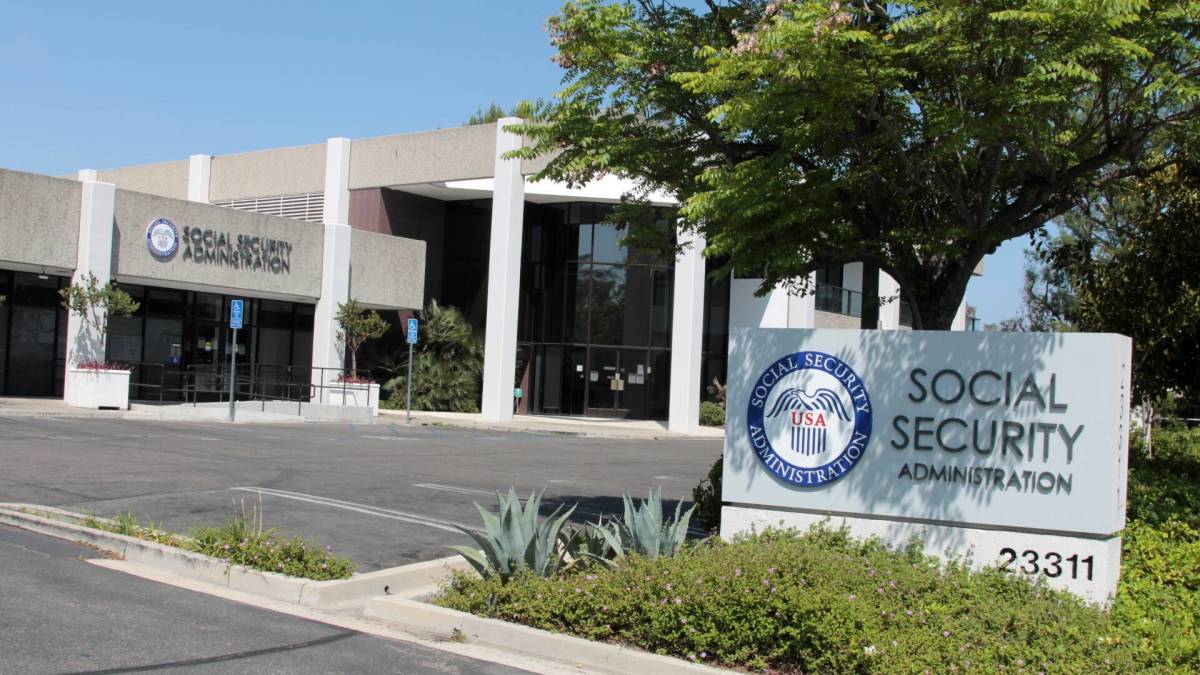 Social Security recipients should be aware that the 2026 COLA may not keep pace with rising expenses.
2. A new senior tax deduction can lower your bill.
Investopedia reports that a new federal tax deduction for individuals 65 and older will kick in for the 2025 tax year, which you’ll file in 2026. The deduction allows eligible seniors to reduce their taxable income further, on top of the existing standard deduction, potentially cutting the share of Social Security benefits subject to federal tax.
The deduction begins to phase out once your modified adjusted gross income exceeds $75,000, so higher‑income retirees may see little or no benefit. For middle‑income retirees, however, this tax change could offset some of the extra tax owed on their larger 2026 Social Security checks.
For your budget, this is a place where planning pays: If you can time IRA withdrawals, capital gains, or part‑time work to stay under key tax thresholds, you keep more of every dollar.
3. Payment dates shift your cash flow.
Your first 2026 payment doesn’t show up on January 1.
The initial 2026 Social Security payment for those who were getting benefits before May 1997 will arrive January 2. For others, regular retirement and spousal benefits follow the standard staggered schedule based on your birth date: January 14 (birthdays 1–10), January 21 (11–20), and January 28 (21–31).
This staggered calendar matters if you make rent, utilities, or debt payments near the start of the month.
- If you rely on that first check for housing, confirm whether your 2026 payment date still lines up with your due date.
- If you’re juggling multiple income sources (pension, part‑time work, Social Security), consider staggering bill dates so you aren’t cash‑starved in the first week.
According to AARP, many seniors get hit with overdraft fees simply because benefit dates and bill dates are out of sync, not because their total income is too low.
4. Earnings limits change if you still work.
If you’re not yet at full retirement age and you’re working while collecting Social Security, 2026 brings new earnings thresholds.
The SSA’s COLA fact sheet shows the retirement earnings test limit rising to $24,480 a year (or $2,040 a month) for those under full retirement age. In the year you reach full retirement age, the limit jumps to $65,160, with more lenient withholding rules.
Retirement planner Devin Carroll offered further detail, discussing upcoming Social Security changes with CNBC.
Those withheld benefits aren’t lost forever, but in 2026 your monthly cash flow can take a hit if you don’t track your earnings.
For your budget, this is a classic “measure twice” issue: Run the numbers before you accept extra hours or a new part‑time role so you don’t accidentally shrink your monthly check.
5. Disability and SSI thresholds move.
If you’re on disability or receiving SSI, your first 2026 payment reflects more than just the 2.8% COLA.
SSA’s fact sheet shows the substantial gainful activity (SGA) threshold — the monthly earnings level used to decide if a disability is too mild for benefits — rising to $1,690 for non‑blind workers and $2,830 for blind workers in 2026.
The trial work period amount ticks up to $1,210 a month, and SSI federal payment standards move to $994 for individuals and $1,491 for couples.
Advocacy group The Senior Citizens League has warned that even with these increases, many disabled workers “struggle to cover rent, food, and transportation as local costs outpace national benefit adjustments.”
For your budget, those higher thresholds can offer a bit more flexibility to test work without losing benefits, but they don’t erase the need for careful planning around housing and health care.
6. Medicare and other costs will still bite, despite bigger checks.
A higher Social Security check doesn’t mean every dollar hits your spending account.
While 2026 Medicare Part B premiums are not detailed in the SSA COLA fact sheet, reporting from The Economic Times and other outlets indicates premiums will rise again in 2026, eating into part of the COLA increase for many retirees.
AARP notes that for people who have Medicare premiums deducted directly from Social Security, the “raise” they see may be noticeably smaller than the 2.8% headline number.
CNBC also highlighted that rising Medicare and Medigap costs can outpace COLA, meaning health care continues to claim a bigger share of retirees’ monthly income over time. For your budget, it’s smart to increase your health care line item before you increase the “fun money” line.
7. Long‑term Social Security uncertainty should shape your plan.
No Social Security changes happen in a vacuum.
CNBC reported that Social Security’s trust funds are projected to be depleted around 2034, at which point about 81% of scheduled benefits would still be payable unless Congress acts.
The Committee for a Responsible Federal Budget has floated ideas such as capping COLAs for high‑benefit recipients or shifting formulas, which could mean future checks grow more slowly for some retirees.
“Pressure is building for Social Security updates, and 2026 is shaping up to be a year where some of those long‑running conversations finally move onto the legislative agenda,” one policy analyst told Nasdaq in a discussion of potential 2026 “shakeups.”
For your budget and retirement plan, that means you don’t want to rely solely on Social Security for long‑term security — side savings, part‑time work options, and flexible housing costs can all help you adapt if benefits change.
How to adjust your budget around your first 2026 check
Your first 2026 benefit payment is a useful moment to reset your plan instead of just spending the extra cash.
Simple action checklist for Social Security in 2026:
- Rebuild your budget using your actual 2026 net Social Security amount, after Medicare and any withholding.
- Revisit debt payments and subscriptions; apply part of your COLA to high‑interest balances instead of new spending.
- Talk to a tax or financial professional about the new senior deduction, especially if your income is near key thresholds.
As Empower noted in its analysis of the 2026 COLA, the real win comes when retirees “treat each cost-of-living increase as a chance to strengthen their financial position, not just keep up with rising prices.”
Related: AARP sends vital message on Social Security, Medicare