
We all thought we knew it by now: We should prepare our ID and boarding pass, remove our shoes and large electronic devices, and make sure liquids are in containers of 3.4 ounces or less.
Well, not anymore.
Over the last couple of months, some of these longstanding Transportation Security Administration (TSA) rules have changed. More have been added. There’s always something new, as technologies develop and people’s behaviors change.
💵💰Don’t miss the move: Subscribe to TheStreet’s free daily newsletter 💰💵
A recent shocking TSA decision was the end of one of the most dreadful airport screening rules after 23 years — shoe removal. Many travelers agreed that this is one of the most hated requirements and would sign up for PreCheck just to avoid going through the airport in socks.
The new policy quietly went into effect on July 7, 2025, meaning travelers no longer have to sign up for PreCheck to keep their shoes on, writes TheStreet’s Christy Rakoczy.
There is another security screening practice many travelers feel uncomfortable with, but have no idea they can opt out of.
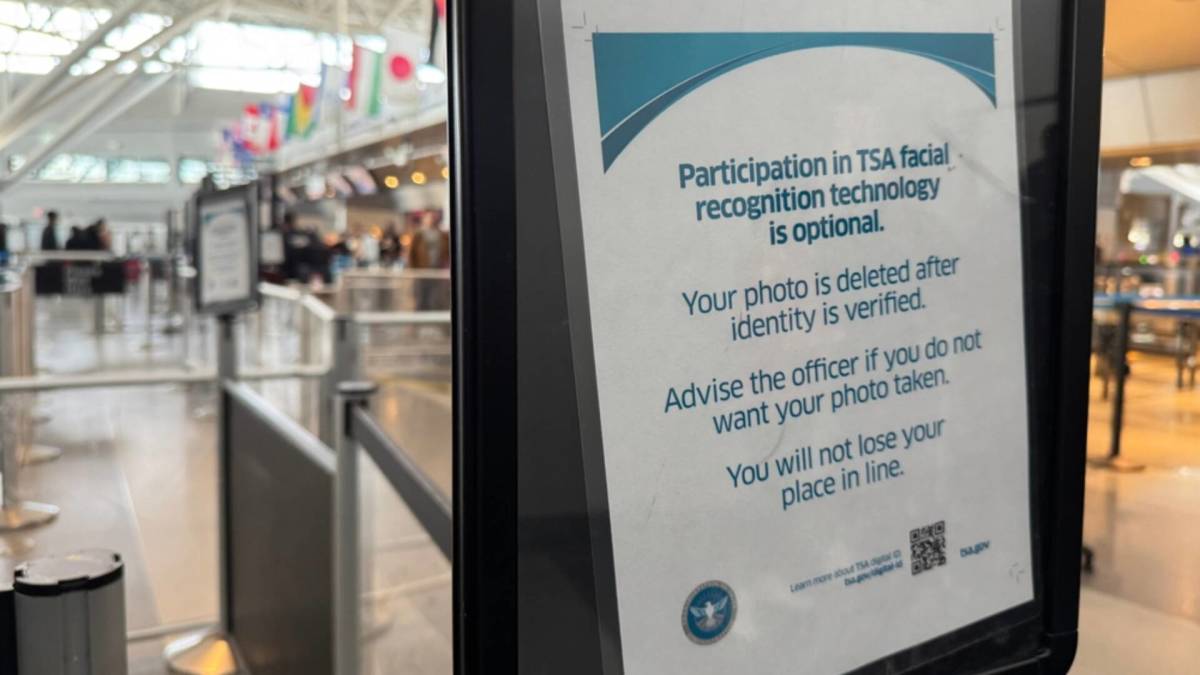 TSA’s facial recognition program has some lawmakers and experts concerned.
Image source: Shutterstock
TSA’s facial recognition technology faces scrutiny
TSA has been expanding facial recognition technology into the screening process at airports nationwide. According to the agency, this technology, which uses a real-time photo of your face to confirm passenger identity, “represents a significant security enhancement and improved traveler convenience.”
Related: Delta Air Lines faces pushback over new pricing policies
However, not everyone agrees with that.
While TSA officially states that “photos are not stored or saved after a positive ID match has been made, except in a limited testing environment for evaluation of the effectiveness of the technology,” some experts question the possible consequences of this practice.
Jennifer King, a privacy and data policy fellow at the Stanford University Institute for Human-Centered Artificial Intelligence, told the Huffington Post, “TSA is part of the Department of Homeland Security, which is also responsible for immigration enforcement. There’s lots of different uses that you could see for these images.”
Airport facial recognition technology concerns some lawmakers as well. Senators Jeff Merkley (D-Ore.) and John Kennedy (R-La.) introduced a bill to protect Americans’ ability to opt out of these TSA screenings.
“The TSA subjects countless law-abiding Americans to excessive facial recognition screenings as they travel, invading passengers’ privacy without even making it clear that they can opt out of the screening,” Kennedy said in May, reported Reuters.
On July 28, groups representing major U.S. airlines (such as American Airlines, Delta Air Lines, United Airlines, and Southwest Airlines), travel companies, and airports urged the Senate to reject this bill.
More on Travel:
- US government issues major travel advisory for an entire continent
- Government issues new travel advisory on popular beach destination
- Disney World brings back a popular attraction after 10 years
Groups argued a change would significantly increase wait times by slowing down identity verification at every airport security checkpoint.
You can refuse TSA facial recognition screening, but there could be consequences
The proposed Traveler Privacy Protection Act aims to:
- Limit TSA’s current authority to use biometric and facial recognition technology;
- Require TSA to allow passengers to opt out of identity verification using facial recognition;
- Prohibit TSA from subjecting travelers who opt out to discriminatory treatment or less comfortable screening conditions.
Related: US travel industry faces huge setback from One Big Beautiful Bill Act
Meanwhile, a recent report from an independent agency within the executive branch of the United States government, the U.S. Privacy and Civil Liberties Oversight Board (CPLOB), reported that “complaints submitted to TSA’s Contact Center (TCC) suggest that TSOs may not be uniformly implementing this opt-out policy.”
Additionally, an organization that raises alarms on the damaging impacts of AI released a report Tuesday sharing stories from passengers who faced discrimination after opting out of facial recognition, reported Men’s Journal.
Comply to Fly Report key takeaways:
- 55.5% of respondents said they did not see signage about the right to opt out of facial recognition.
- 74% said they have not received clear information about the facial recognition program at the airport.
- 48% of respondents had at least one concern about general privacy and/or data handling practices.
- 47.7% said they did not know opt-out was an option, and 20.1% indicated they “did not feel comfortable requesting to opt out, fearing consequences.”
When one traveler asked if they can opt out, “The agent got angry, raising his voice to tell me that ‘We already took your picture’ and that there are ‘a thousand cameras in this airport…there’s a camera in your phone, too,’” reads the quote in the report.
Another testimony describes how rude and unprepared TSA agents were when a traveler chose to opt out.
The TSA agent was “visibly angry with me. Sent me to a different agent because he didn’t have the right tool. That agent didn’t have the right tool either and sent me back to the first agent. I was told I had to wait for them to fetch the right tool, which took approx. 10 min. Was treated with extreme rudeness the entire time.”
While the report is based on a small number of respondents — 420, the testimonies from passengers and the bipartisan bill suggest something controversial is happening with this modern AI-powered screening technology.
Related: TSA issues stark warning about transporting these in underwear