
TheStreet aims to feature only the best products and services. If you buy something via one of our links, we may earn a commission.
When it comes to cutting costs, there are always areas that are easier to cut down on or eliminate entirely in your day-to-day life. Unfortunately, groceries aren’t one of them. As an essential item, your food and drink costs might be one of the harder areas to save money on, mostly because it’s something you sort of have to buy to survive. You can always save by cutting coupons and keeping an eye out for deals on pantry products, produce, and more, but sometimes the best way to save a bit of money is making the most out of what’s already in your fridge or freezer.
Food waste is a huge problem in the world right now. In fact, up to two-thirds of the food purchased by households gets thrown away or goes uneaten due to improper storage, poor planning, and only partial use of food. According to the U.S. Department of Agriculture, at home, about 30% to 40% of the entire U.S. food supply goes to waste, with improper storage as the leading catalyst. That can mean anything, including forgetting to seal perishables, not having the correct containers that effectively seal food, improper temperature settings, stacking foods incorrectly, and confusing date labels. It seems to us that as great as it is to be budget-conscious in the store, the most effective way to save some money and get your groceries to last longer is by investing in the right food saver products to keep what you have going longer.
Food preserving products, like containers, dehydrators, and vacuum-seal machines, can extend the shelf life of food, helping you cut down on grocery costs, eliminating extra waste, and making the most out of what you have. That said, they all have their different advantages and disadvantages, so when you’re adding some to your pantry, fridge, or freezer, here’s what you need to know.
Glass storage containers
As a more eco-friendly alternative to plastic, glass containers preserve food incredibly well and provide an excellent barrier that locks out air and moisture, keeping food fresher longer. When paired with silicone or rubber seals, glass containers prevent oxidation and freezer burn. They can withstand a wide range of temperatures, although only glass containers specifically labeled as freezer-safe should go in the freezer. Although much more fragile than their plastic counterparts, glass storage containers don’t stain or absorb food odors and tastes because they are made from a nonporous material.
More often than not, they are easy for meal prep because they can go straight from the fridge or pantry right into the microwave or oven (but only if they are made from oven-safe tempered or borosilicate glass). Since glass is transparent, it’s far easier to find exactly what you’re looking for as it allows you to identify what is inside without opening up each container. One disadvantage is that glass is heavier than plastic, and more prone to chipping, cracking or shattering. If you have young kids, it might be best to opt for something plastic or less breakable. Glass food storage containers are great for acidic foods, like tomato sauce, oily meals, and meal-prepped grains and proteins.
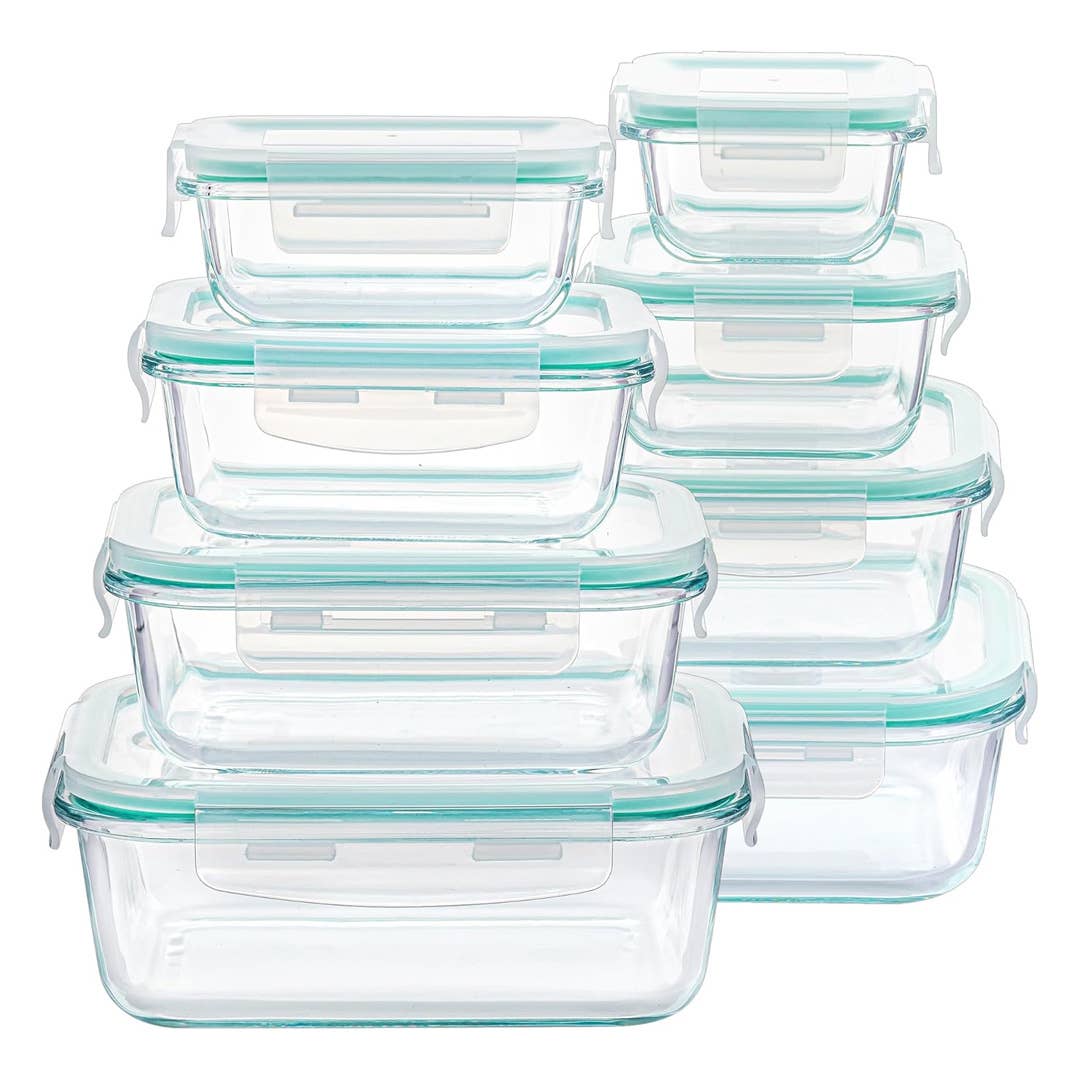
Vtopmart 8-Pack Glass Food Storage Containers
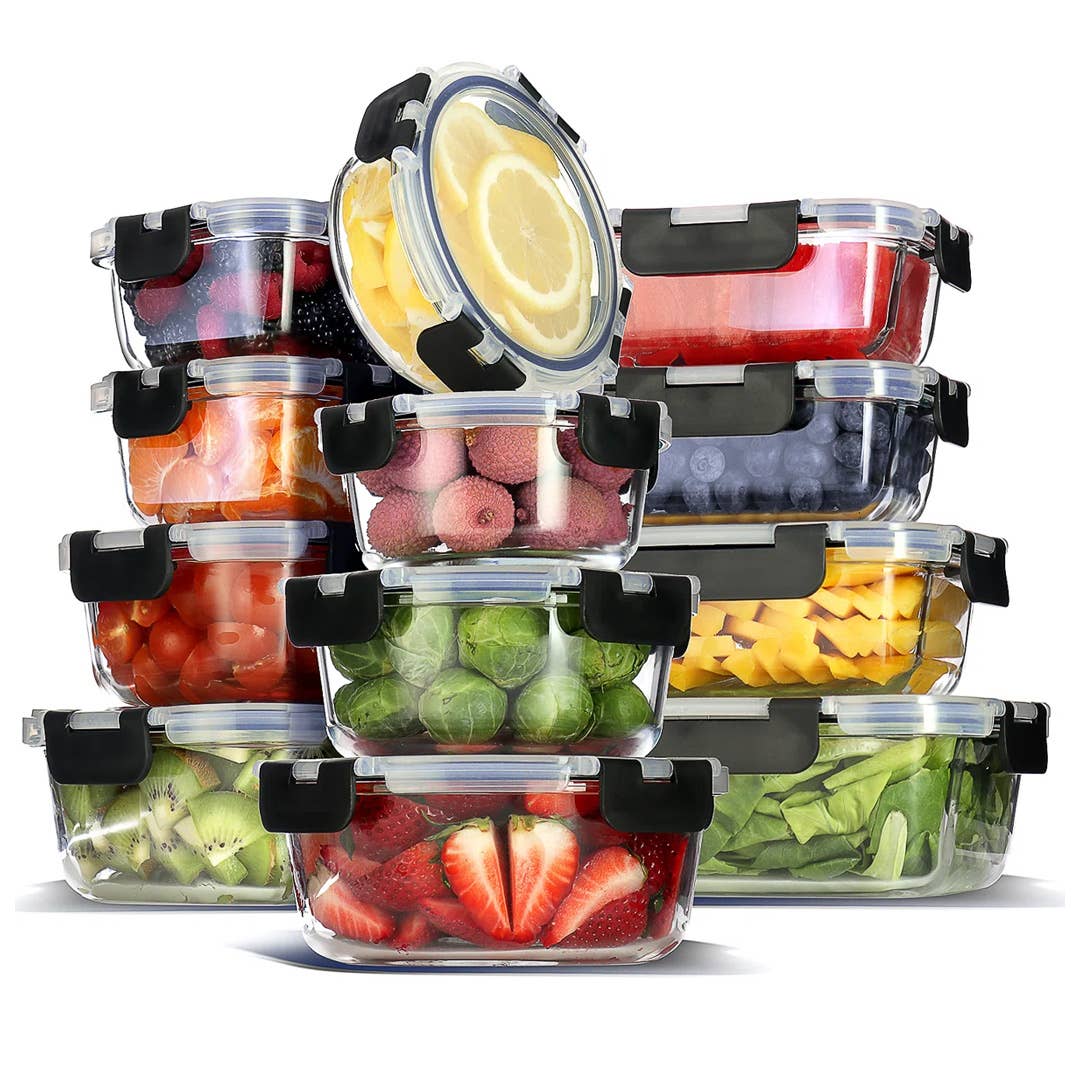
Ivy Bronx 24-Piece Glass Food Storage Containers
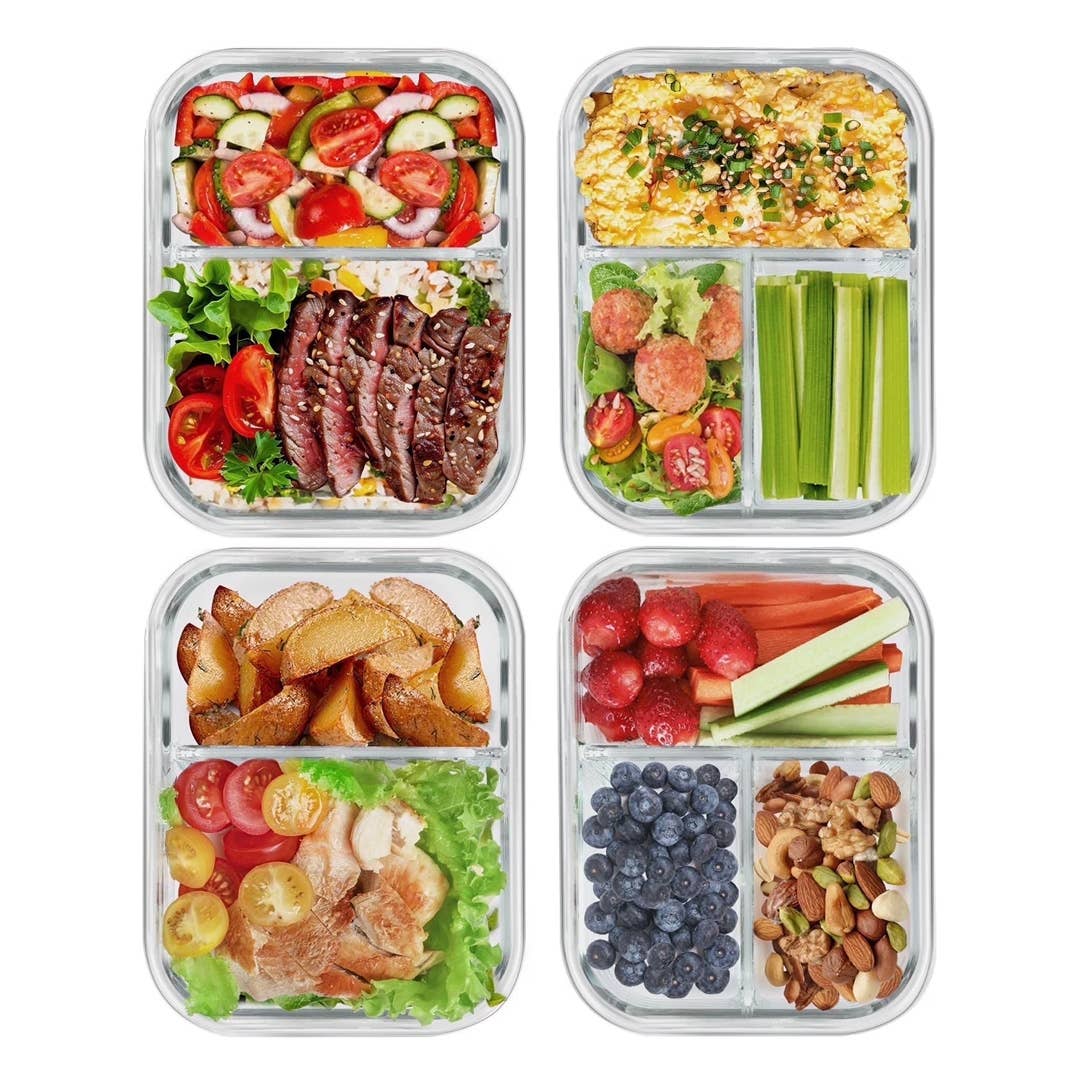
Taimasi 8-Piece Glass Food Storage Containers
Plastic containers with water drainage
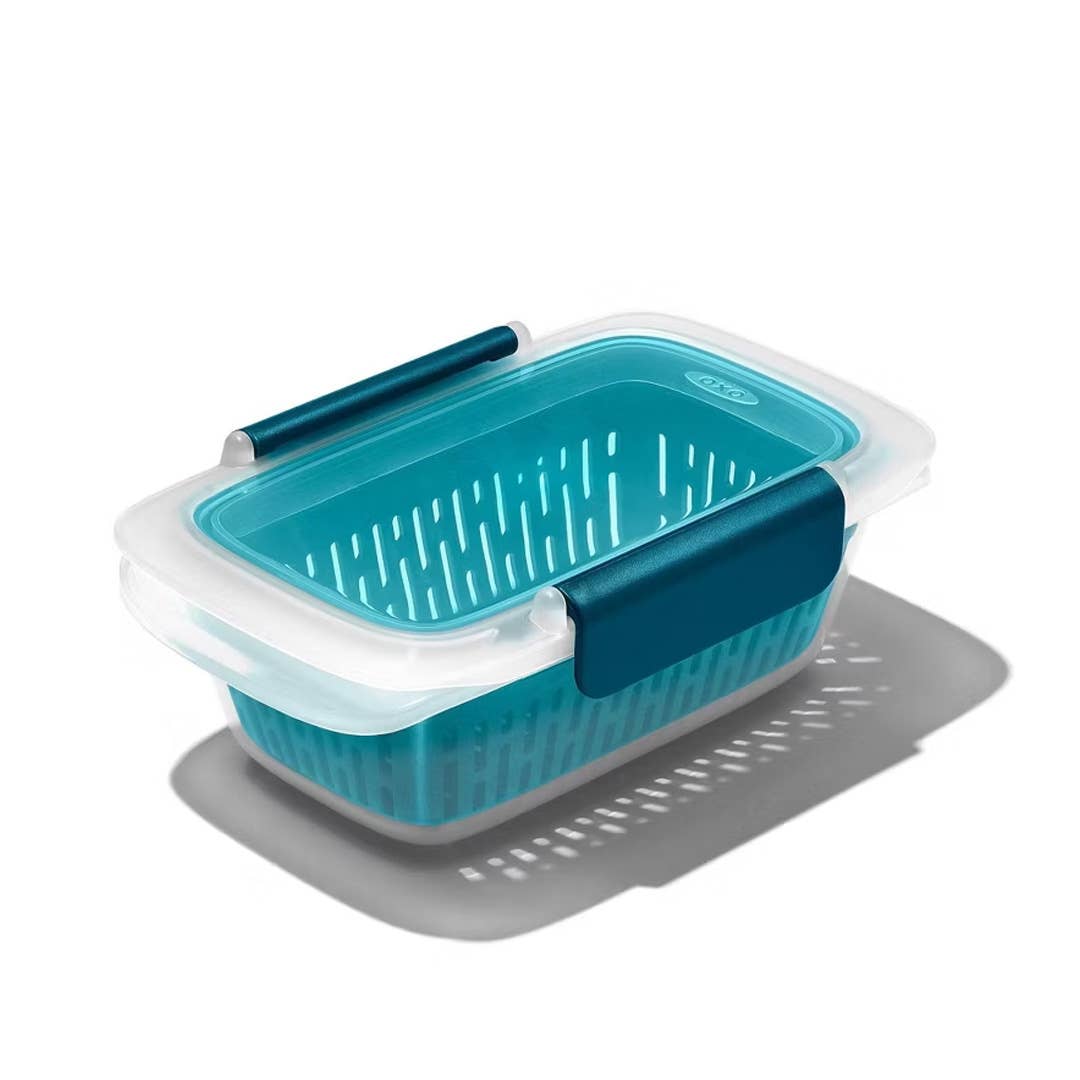
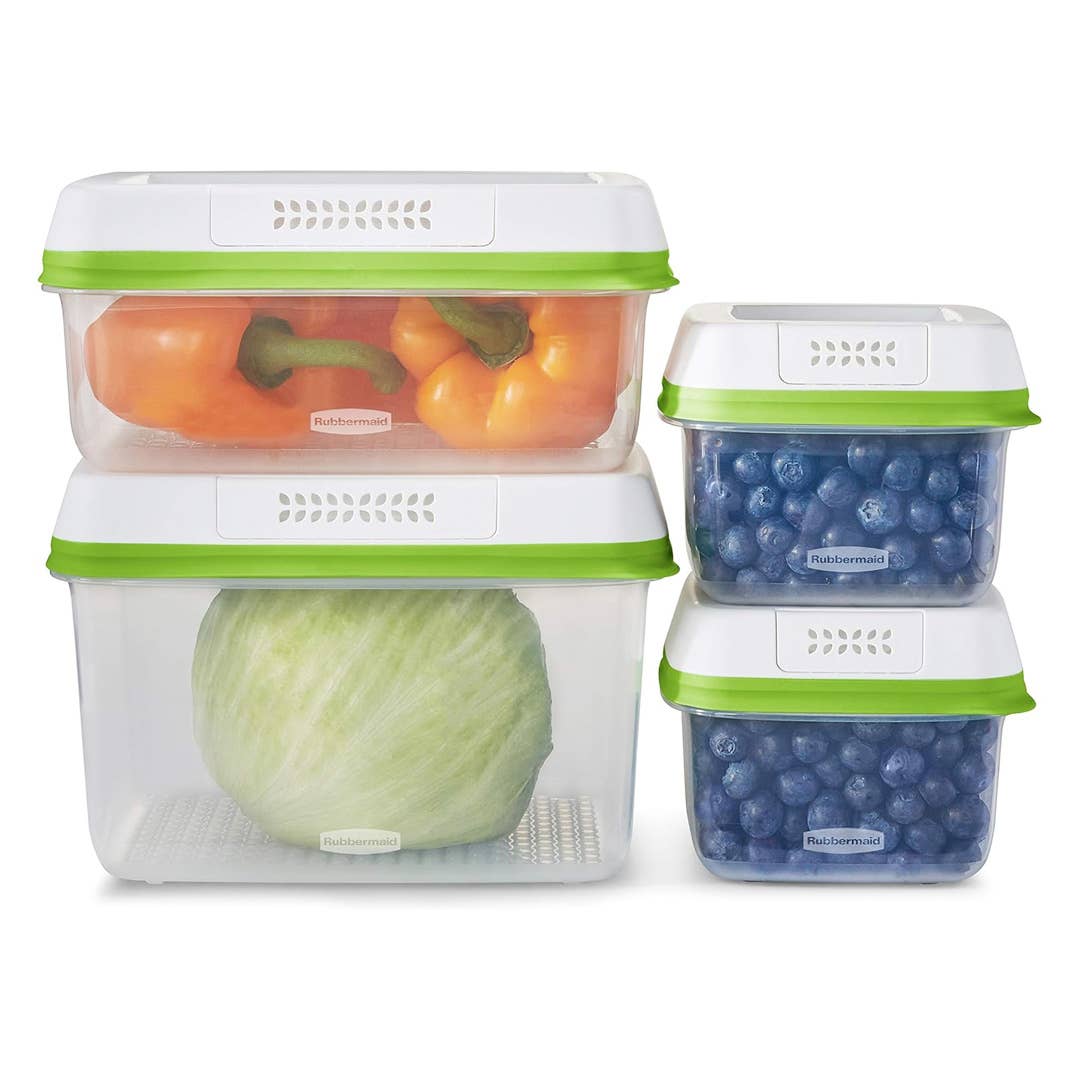
Some plastic containers have built-in drainage to keep moist items like produce, meat, and seafood fresh by separating the stored food from excess liquids. These can come in a few designs. Sometimes there is an elevated interior drain tray that separates the food from the liquid, whereas other times there are removable basket inserts. For some, the drainage system is even built into the lid and you keep the lid on as you dump out the excess liquid before removing the lid itself to access the food.
Best for fruits, washed leafy greens, chopped veggies, these built-in drainage mechanisms remove moisture, prevent early rotting, eliminate sogginess, and extend the shelf. They are also great for defrosting meat, poultry, and fish because they prevent the food from soaking in its own raw juices, minimizing bacterial growth. You can also use them for meal prep in draining excess water off pasta, beans, or blanched vegetables.
Winproper 5-Pack Fruit Storage Containers with Removable Colanders
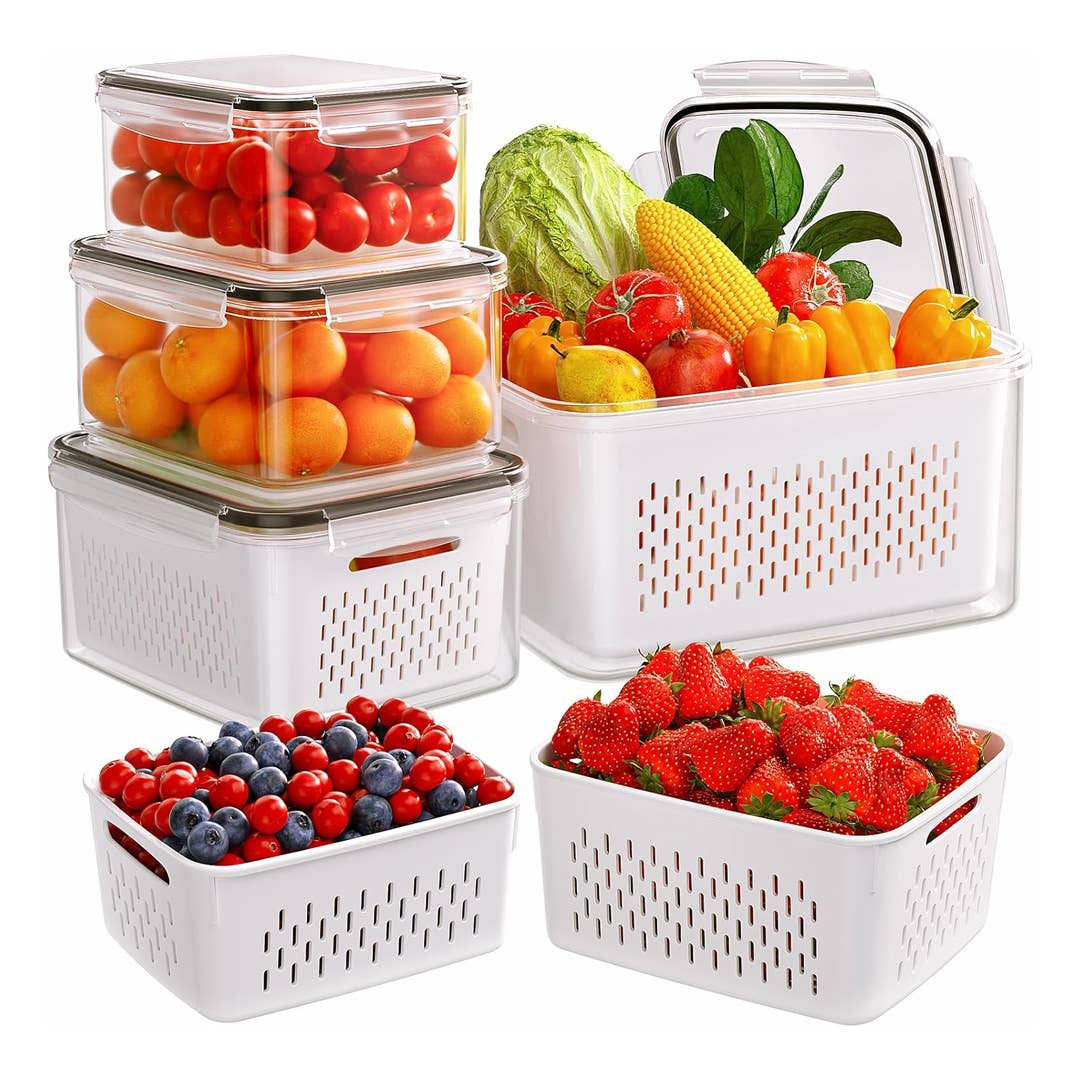
OXO Prep and Go Food Storage Container with Colander
Rubbermaid FreshWorks Produce Saver Storage Containers
Vacuum sealers
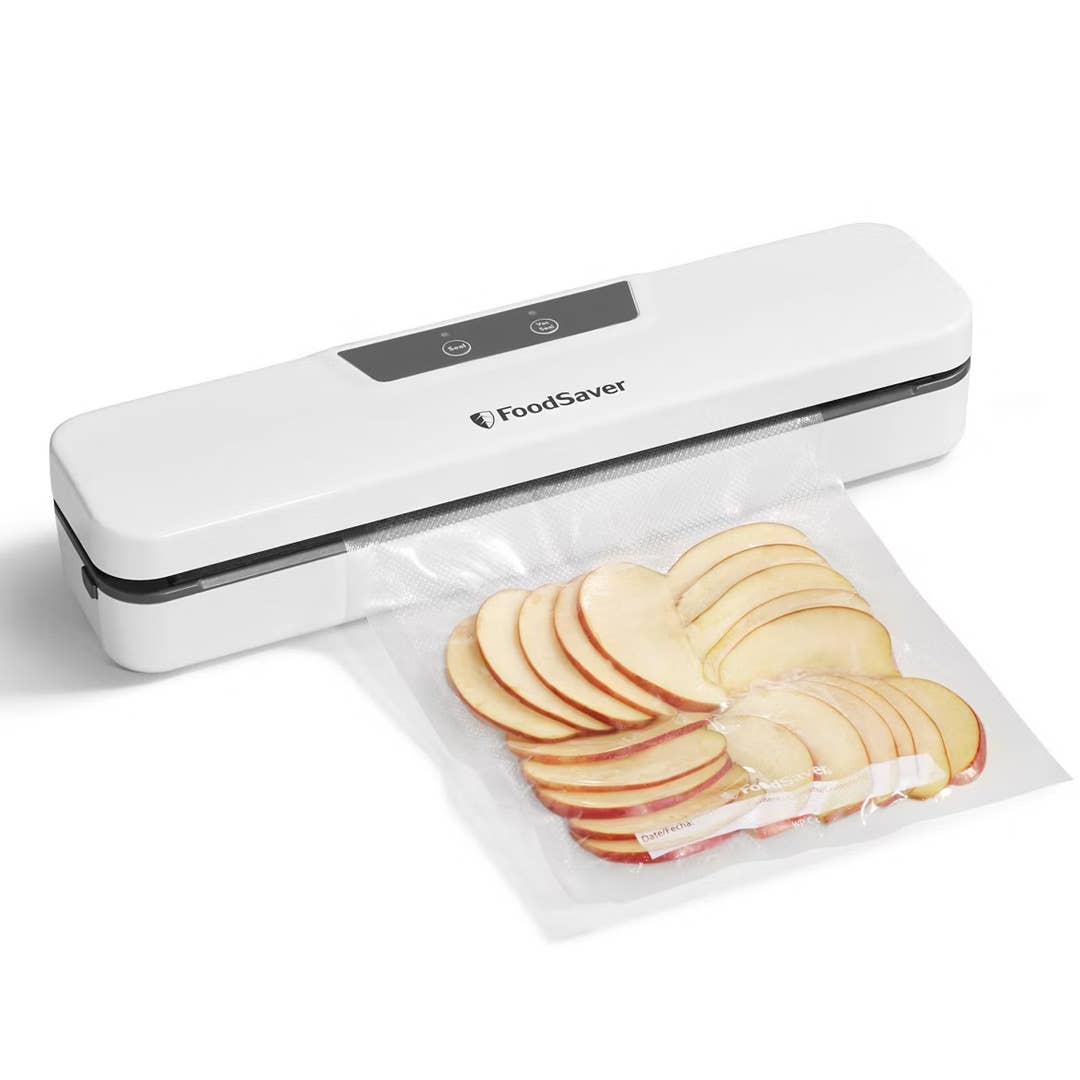
Food vacuum sealers can extend the shelf life of your food five times longer compared to traditional storage. Great for long-term storage, especially in a freezer, vacuum sealers help maximize your storage space by extracting oxygen from bags or containers to create an airtight seal in a neat, consolidated package. Although vacuum-sealed products aren’t just for the freezer, it’s where they shine because they prevent freezer burn and are perfect for meal prep. While a standard zip-lock freezer bag is usually too thin and will let in air over time, vacuum-sealed bags use textured, heavy-duty bags to better protect and store food. That said, they can be used in a freezer or even a pantry if you’re sealing a dry pantry product like rice or grains.
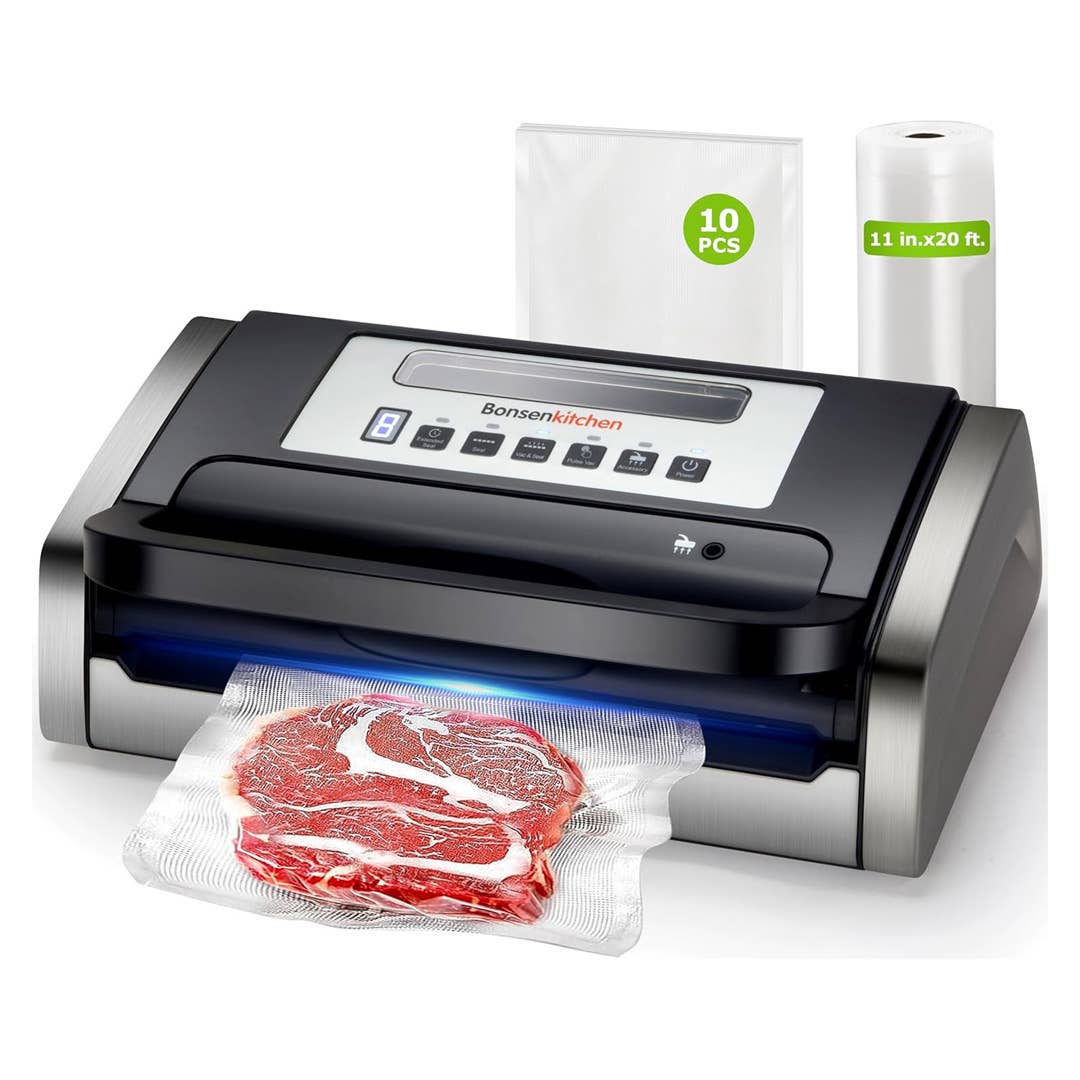
Most vacuum sealers work by using a built-in vacuum pump to suck the air out of the specialized bag and then, once the air is removed, a built-in heating element melts the open end of the bag, fusing the plastic and creating a permanent, airtight barrier. By eliminating the risk of air exposure, which is one of the biggest causes of food degradation, your food won’t suffer spoilage or nutrient loss. Raw meats, fish, hard cheese, blanched or dense vegetables, and dry goods—such as rice, beans, and pasta—are all great options for vacuum sealing. The one downside is that vacuum sealers typically require special single-use bags that can add up in costs with repurchasing, and they’re not quite as environmentally-friendly as reusable containers, but they preserve food for far longer so it depends what you care about more.
Bonsenkitchen Vacuum Sealer Machine
Ditto Precision 10-in-1 Vacuum Sealer
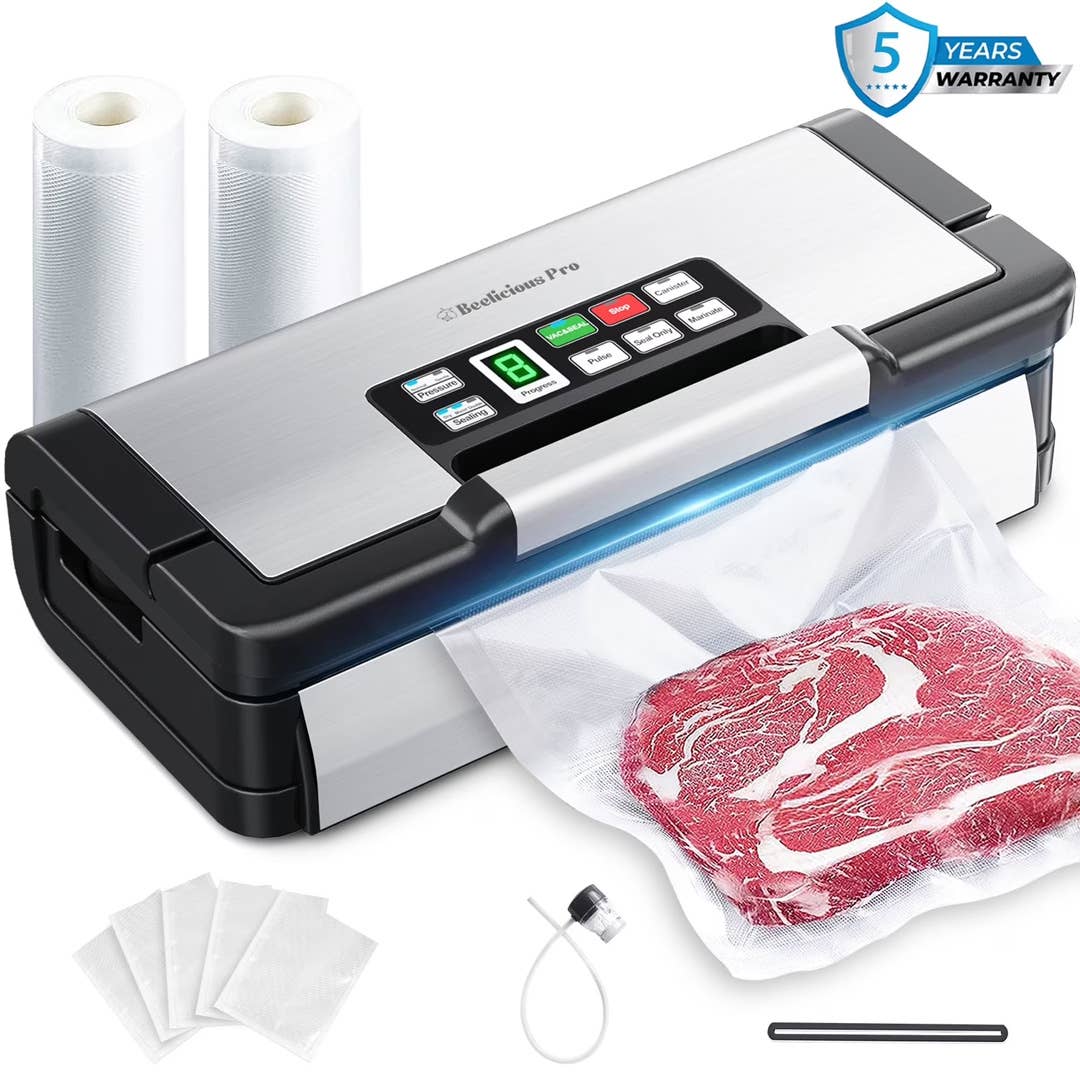
FoodSaver Everyday Vacuum Sealer with Precut Bags
Dehydrators
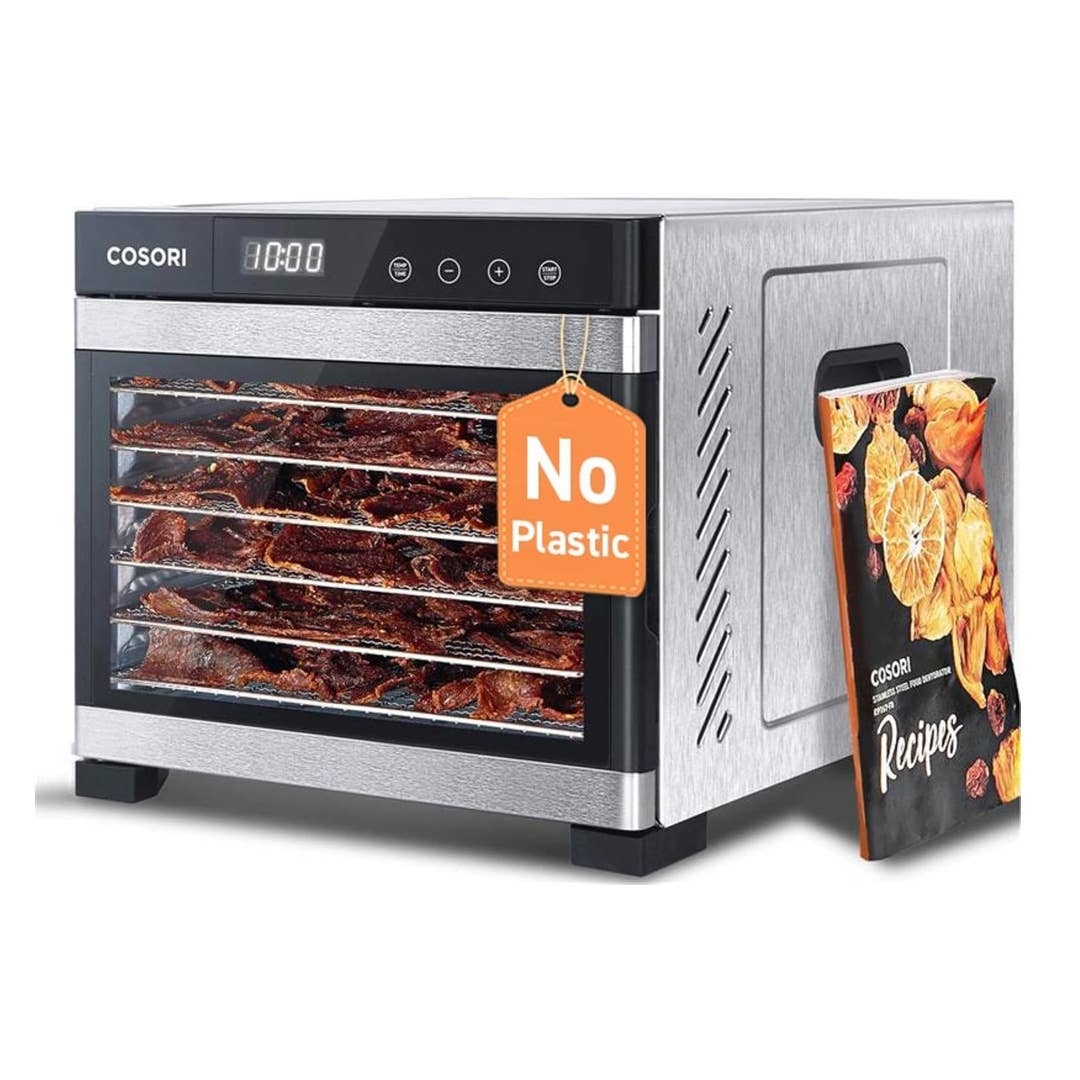
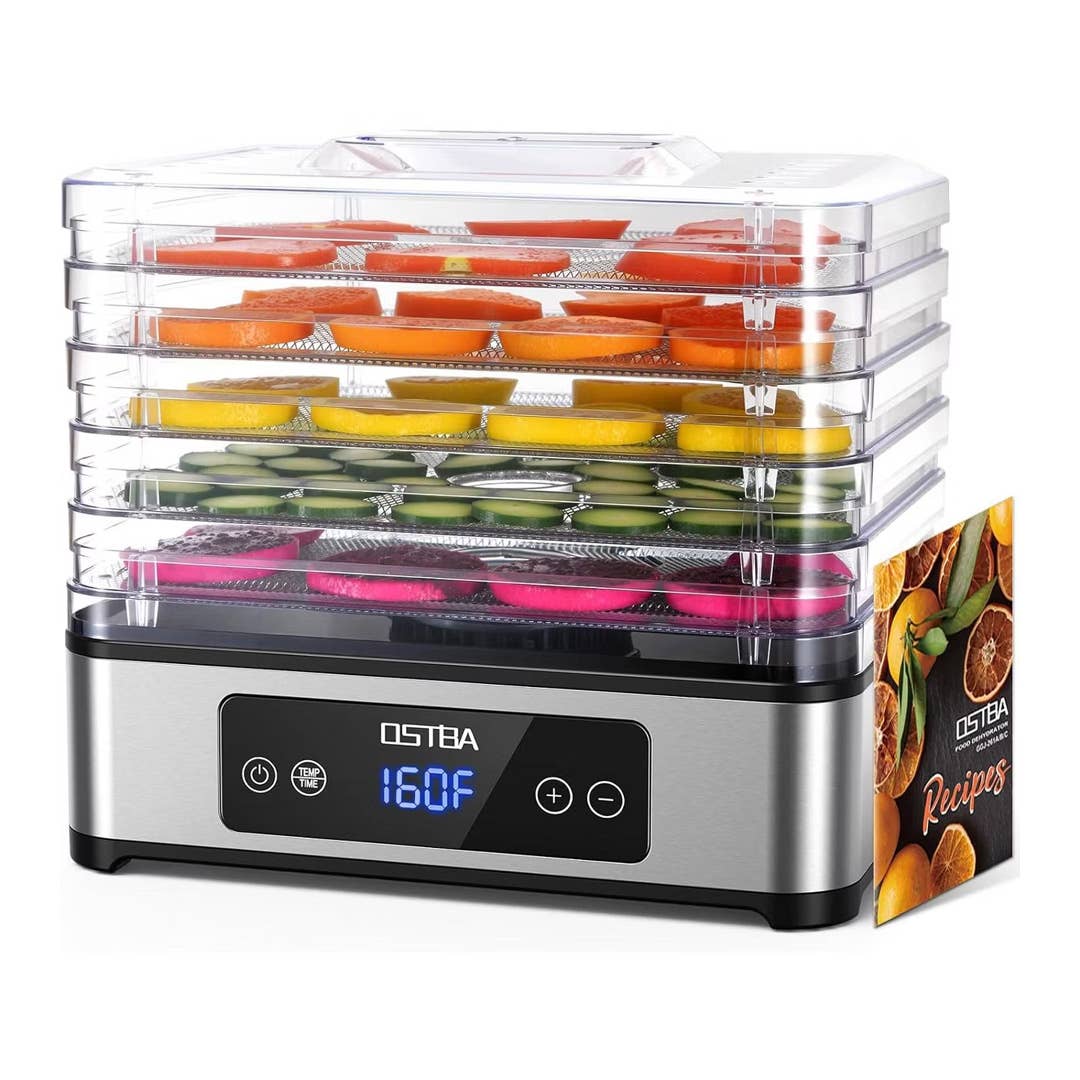
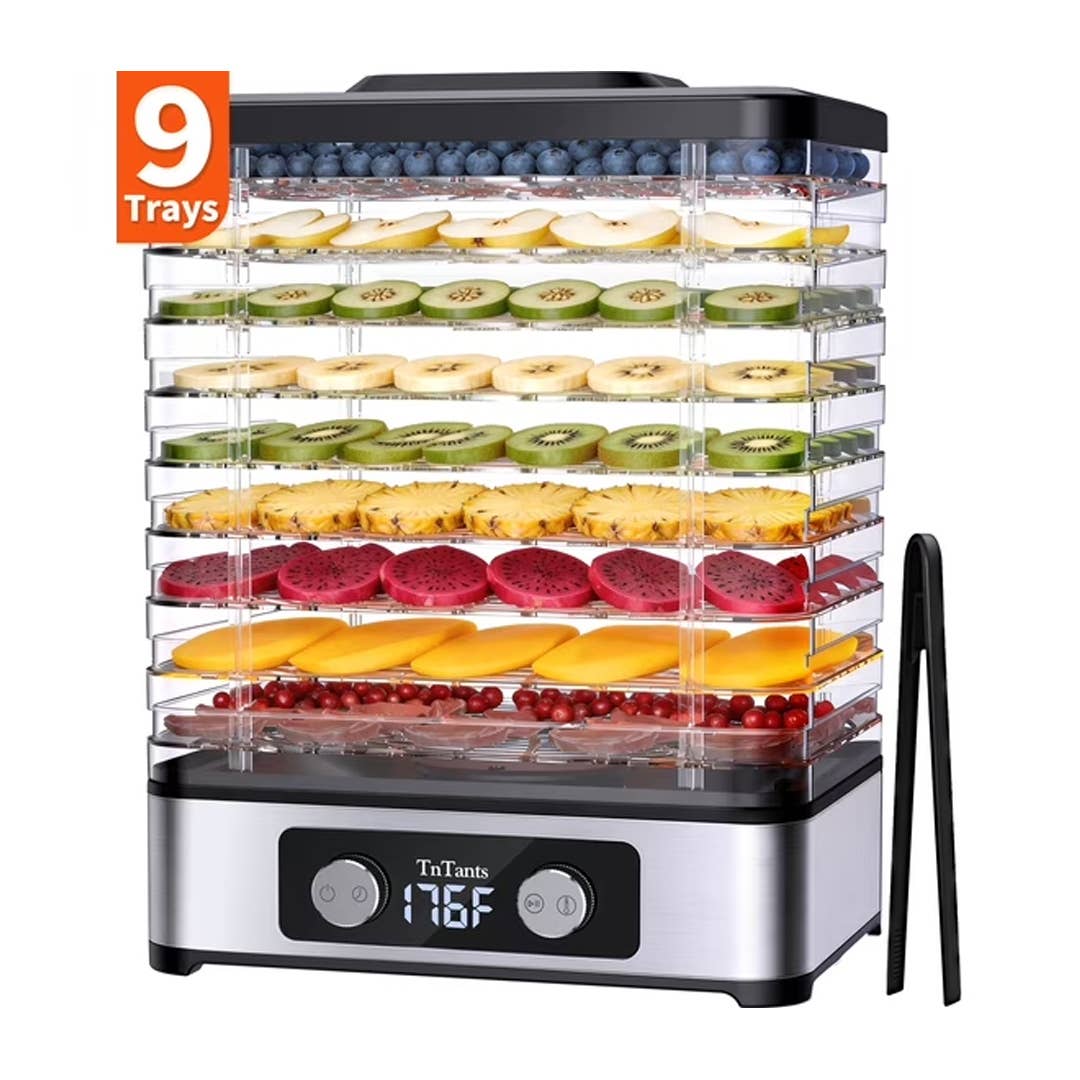
While vacuum sealers eliminate air, dehydrators remove moisture from food, and they’re used in a much different circumstance. Whereas vacuum sealing is ideal for long-term food storage—storing things you aren’t planning on eating anytime soon— dehydrators are great for preserving foods that you plan to eat within the next few weeks, sharp or brittle foods that would easily puncture vacuum-seal bags, or in situations where portability is important, like camping or vacations. Using a controlled heat source and a fan, food dehydrators remove moisture to prevent bacteria and mold from growing, which drastically extends the shelf life of the food while still preserving its flavor.
Dehydrators are great for making jerky with thinly sliced meats like beef or turkey as well as fruit leathers from purees or thinly sliced chunks of fruit. You can transform apples, bananas, sweet potatoes, and kale into chips, dry herbs, make chili, garlic, and onion powders, and even create pet treats out of simple ingredients. The best foods to use in a dehydrator are ones that are dense, evenly sliced, and naturally low in fat since fat does not dry out. Think of it as a quality but a more short-term solution for certain foods compared to vacuum sealing, since the two processes can create confusion when comparing.
Cosori Food Dehydrator
Ostba Food Dehydrator
Tntants 9-Tray Food Dehydrator
Does the right food storage really make a difference?
The answer is absolutely! Even from a non-economic standpoint, proper food storage can keep you safe from foodborne illness. Airtight containers, adequate temperatures, and quality materials that your foods are stored in can help prevent the growth of harmful bacteria, mold, and parasites. Although the risk of foodborne illness isn’t completely eliminated, by opting for proper food storage, you can actively make the choice to lessen the risk of getting sick or picking up something from food gone bad. And on top of that, it extends the shelf life of your food, saving you tons in the long run and lessening your contribution to the food waste problem that plagues our world.
TheStreet Shopping is your guide for shopping insights and advice. We look beyond the price tag to find the best value in home, tech, and wellness gear based on product features and real-world use.