
Being the CEO of a major corporation comes with a ton of perks, but it also comes with a ton of crap.
Take Ford CEO Jim Farley, for example.
Farley’s 2024 compensation totaled just under $25 million in 2024, according to Ford’s proxy statement. While that number was down about 6% year over year due to Ford’s stock performance, it’s still not a bad chunk of change.
Related: Ford takes bold shot at its biggest rivals
But to earn that check, Farley must navigate rough political waters that have shifted drastically over the past eight months.
On Wednesday, Ford reported its quarterly earnings results, and as expected, tariffs hurt the Blue Oval’s bottom line.
Ford says it contributed heavily to the $150 billion in tariffs the U.S. Treasury collected during the first half of the year.
For the full year, Ford expects to pay $2 billion in tariffs, despite the fact that it builds about 77% of its vehicles in the U.S.
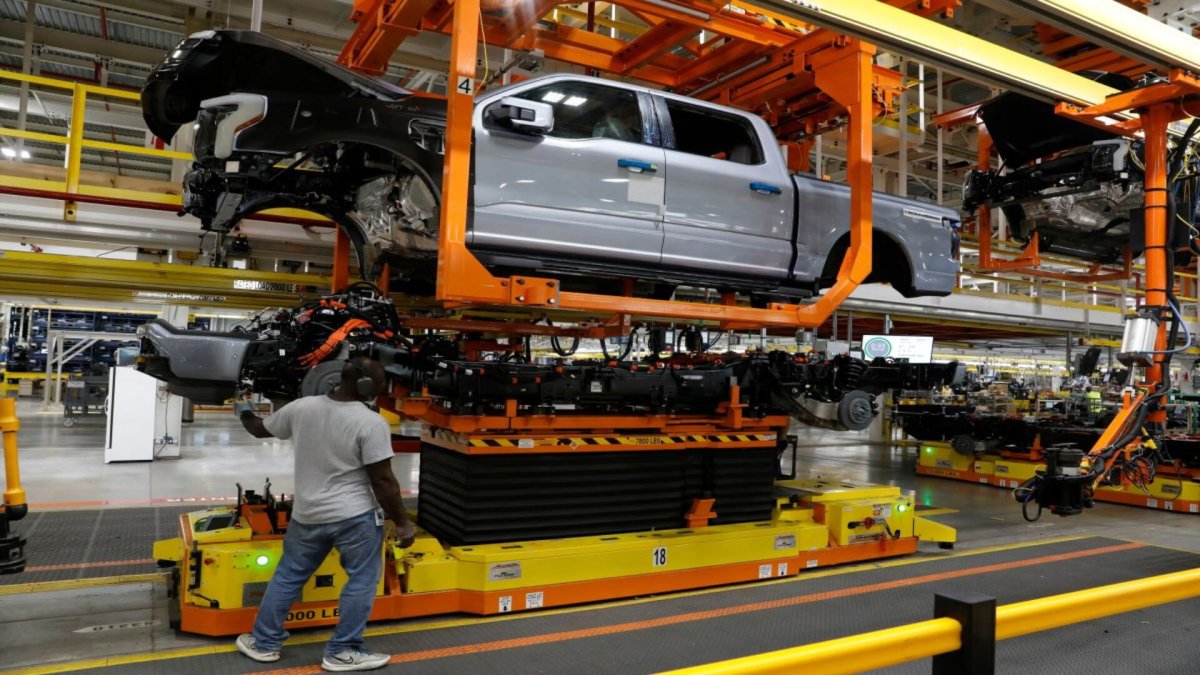 Despite building 77% of its vehicles in the U.S., Ford expects tariffs to cost it $2 billion this year.
Image source: Getty Images
Jim Farley backs tariffs, even though they will cost Ford $2 billion in 2025
Ford, and every original equipment manufacturer (OEM), relies on imported parts to complete their vehicles, so even with a large manufacturing footprint in the States, tariff costs still add up.
But being the veteran executive he is, CEO Jim Farley is taking care not to make the situation worse by complaining about the added $2 billion cost.
“And as America’s largest automotive producer and the best-selling brand in the U.S. in the first half of this year, we support a level playing field globally. We value our ongoing cooperation with the administration on trade policy,” said Farley.
Related: Ford debuts plan to increase sales that car buyers will love
Farley’s tone is a sharp contrast to fellow auto CEO Elon Musk, who has declared himself “an advocate for free trade and lower tariffs,” while also battling President Donald Trump on other, non-tariff related issues.
The balancing act is tough, however, as Farley must also advocate for his company to ensure that the harm doesn’t outweigh the benefits.
“We expect tariffs to be a net headwind of about $2,000,000,000 this year, and we’ll continue to monitor the developments closely and engage with policymakers to ensure U.S. auto workers and customers are not disadvantaged by policy change,” Farley said. “We’ve been working hard with the administration.”
Tariffs shaved $800 million off of Ford’s $2.1 billion Q2 EBIT.
But on the other hand, Ford’s U.S. sales rose 7 times faster than the rest of the auto industry in the second quarter.
Ford CEO navigates political headwinds from Joe Biden and President Trump
The executive branch making it tougher to do business is nothing new for Farley.
Ford also faced a major political and financial headwind during President Joe Biden’s term that cost his company billions.
Under the carbon emission tax credit scheme, companies could buy carbon tax credits to offset the CO2 emissions for which they’re responsible.
The system, much maligned by climate activists despite staunch support from the Biden White House, allowed big polluters like Ford to buy carbon offset credits from companies with lower emissions, like Tesla.
The giant spending bill Congress passed this summer removes nearly all renewable energy tax credits and incentives, a move that climate activists like Carbon Brief believe could add 4 billion tonnes of greenhouse gas emissions by the end of the decade.
But Farley is happy to get that billion-dollar annual expense off Ford’s balance sheet.
“We’re we’re already reducing our credit buys. We are changing our mix towards the fourth quarter this year, and we see a pretty big opportunity next year. As I said, a multibillion-dollar opportunity over the next couple of years,” Farley said.
Related: Ford’s $570 million mistake hits one of its most popular cars