
The smartest car you can buy is rarely the newest one on the lot. Somebody else has already absorbed the steepest drop in value, and if the car comes with a factory inspection and warranty, you get most of the peace of mind at a much lower price.
That is the whole pitch behind certified pre-owned, or CPO, programs. Automakers inspect late-model trade-ins and off-lease vehicles, fix what needs fixing, and back them with extended coverage that ordinary used cars don’t carry.
For years, the brand most shoppers trusted in that corner of the market was Toyota (TM).
Its reputation for reliability made a certified Camry or RAV4 the safe default for cautious buyers, and rival automakers mostly treated their own certified programs as a side business, a quiet way to recycle trade-ins and keep service customers coming back.
That pecking order just flipped, at least for one quarter. Ford Motor’s (F) Blue Advantage program was the No. 1 certified pre-owned brand in the third quarter, ahead of Toyota, after sales jumped 44%, according to Ford’s third-quarter sales release.
Now Ford wants the full-year crown. The automaker has set a goal of toppling Toyota in 2027, and its certified sales are on pace for a record 450,000 vehicles this year, Automotive News reported.
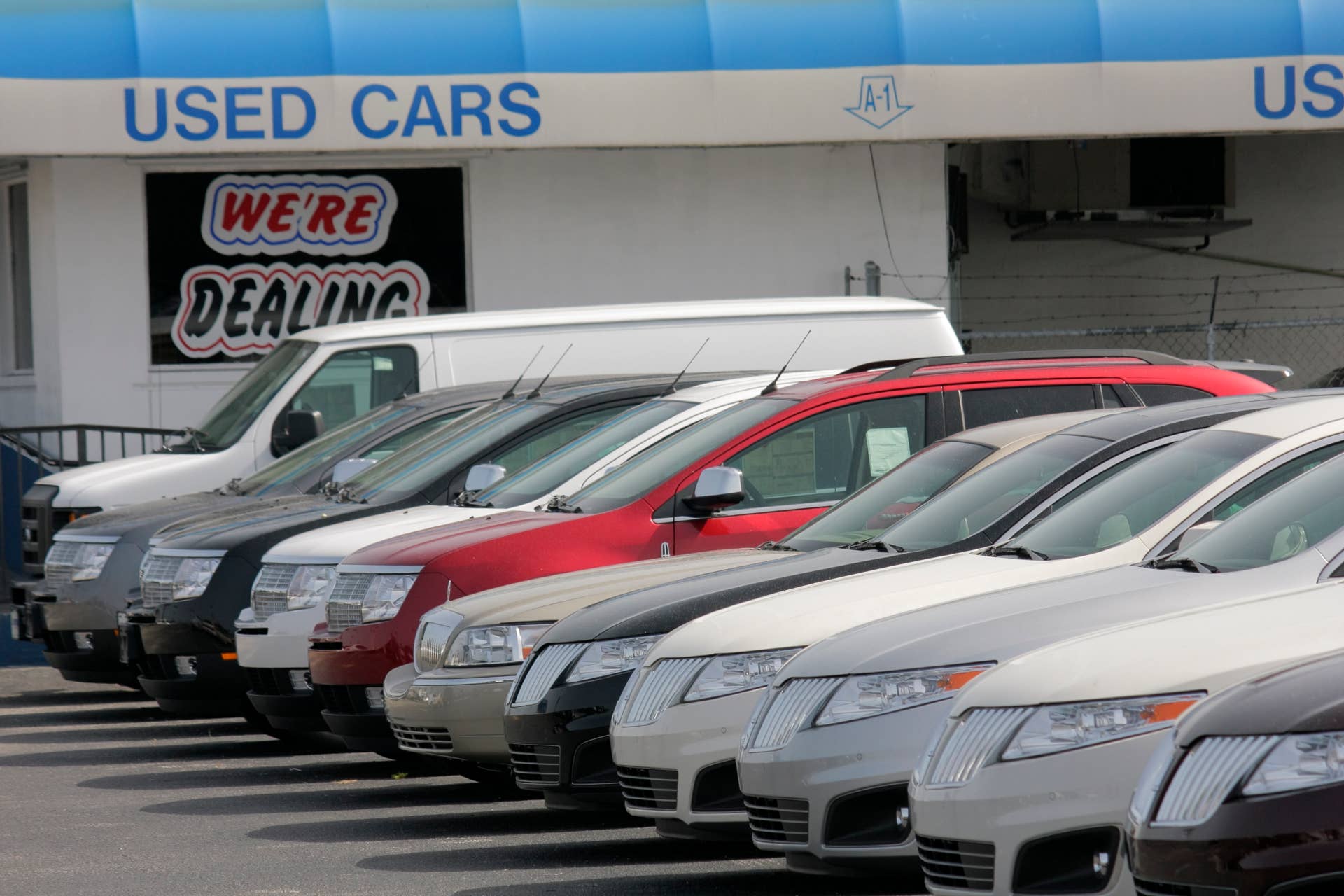 Ford’s certified sales jumped 44% last quarter, topping Toyota, and it now wants 2027’s crown.
How Blue Advantage grabbed the quarterly lead
Ford launched Blue Advantage in 2021, during the pandemic, when new vehicles were scarce and used prices were soaring. The program kept growing after the shortage ended.
Ford’s certified sales have climbed 96% since 2021, and they rose 23% to 173,441 units through July, according to Ford Authority.
The outlet also noted that total certified sales across the industry declined in 2026, which means Ford is winning a bigger slice of a shrinking pie.
Three moves did most of the work, in my analysis:
- Ford widened eligibility to vehicles up to ten years old with as many as 150,000 miles, up from five years and 80,000 miles, according to Ford Authority.
- About 300 more Ford dealers joined the program over the past year, lifting participation from the high 50% range to nearly 70%, Ford director of U.S. sales and dealer relations Rob Kaffl told The Detroit News.
- Ford added model-specific manufacturer rebates on select certified vehicles in August to push prices lower, Ford Authority reported.
Ford also lists certified vehicles on Amazon Autos in certain cities, starting with Los Angeles, Seattle and Dallas, according to Retail TouchPoints, citing CNBC. That puts a Ford-backed used truck in front of shoppers who may never set foot on a dealer lot.
Why affordability is driving shoppers to factory-backed cars
The simplest explanation for Ford’s surge is your budget. New cars have rarely been more expensive.
The average new vehicle sold for $50,562 in September, just $52 below the all-time record set in December 2025, according to Kelley Blue Book. A shift toward cheaper models is the main thing keeping that average in check, Cox Automotive executive analyst Erin Keating said.
More Automotive:
- Car owners delay repairs amid affordability challenges
- GM wants drivers to be able to text and drive
- Used car chain that closed 60 stores is living week to week
Financing is stretching households even further. The average new-car payment hit a record $787 a month in the third quarter, and 25.5% of new-car buyers signed loans of 84 months or longer, according to Edmunds.
“Stretching out a loan shouldn’t be a way to talk yourself into a vehicle that doesn’t make sense for your budget,” Edmunds director of insights Ivan Drury said.
Ford is openly treating certified cars as its answer to that squeeze. “We’ve talked about certified being our big affordability strategy as we transition to the end of the decade,” Kaffl told The Detroit News, according to Ford Authority.
What the inspection and warranty package covers
A certified badge only matters if you know what it actually buys you. Ford’s Blue Certified tier, the one that also accepts non-Ford brands, includes these perks, according to CarsDirect:
- A 139-point inspection by a dealer technician
- A three-month, 4,000-mile comprehensive limited warranty
- A 14-day, 1,000-mile money-back guarantee
- Complimentary 24/7 roadside assistance
Ford’s Gold Certified tier, limited to newer Fords, adds a longer inspection and stronger powertrain coverage. Terms can change by model year, so ask the dealer for the warranty paperwork in writing before you sign.
The trade-off is real, though. Certified cars cost more than comparable non-certified used cars, and a three-month comprehensive warranty is short, so you are paying a premium mainly for the inspection and the dealer’s accountability.
Running the numbers on a $205 monthly payment gap
When I lined up Edmunds’ third-quarter data, the gap between new and used was stark. The average used-car buyer financed $30,703 at 10.6% and paid $582 a month, compared with $44,664 financed and $787 a month for new.
That is $205 a month back in your pocket. Over a typical 70-month loan, it adds up to roughly $14,350, the kind of money that can build a real emergency fund or jump-start a retirement account.
The rate is where certified programs can tilt the math further. Lincoln, Ford’s luxury brand, is advertising 2.99% financing for 36 months on eligible certified vehicles through Jan. 4, 2027, according to a Kelley Blue Book roundup cited by ConsumerAffairs.
I ran that against the average used-car rate. On a $30,703 loan over 36 months, 10.6% costs about $5,274 in interest, while 2.99% costs about $1,436, a savings of roughly $3,800.
One caveat matters here. Edmunds’ used figures cover all used cars, and certified vehicles usually sell for more than the average, so your real savings versus new will likely be smaller than $205 a month.
Ford Pro takes the playbook to work trucks and vans
Ford is now copying the formula for business buyers. Its Ford Pro unit launched Ford Pro Advantage in October, a certified program for class 1 through class 7 commercial vehicles, according to Ford Authority.
“Every dollar matters to these customers,” Ford Pro president Alicia Boler Davis told Automotive News, pointing to rising fuel prices. Ford is sourcing two- and three-year-old trucks and vans coming off rental and fleet duty, and it should not see cannibalization of new sales, she said.
For a plumber or a landscaper, that could mean a warrantied Transit van for thousands less than a new one. For Ford, it means another stream of buyers who come back to its service bays.
Resale values give shareholders a reason to care
If you own Ford stock, the certified push isn’t just a used-car sideline. It props up what Ford’s vehicles are worth after they leave the showroom.
“We also continue to execute on our multi-year certified pre-owned enterprise strategy, which ultimately protects our residual values,” Ford CFO Sherry House said on the automaker’s second-quarter earnings call, according to Ford Authority.
Stronger residual values make Ford’s leases cheaper to write and its trade-ins more valuable, which can help sell the next new car. In my view, that is why Ford is chasing a title most investors never think about.
The timing is tricky, though. Cox Automotive’s Manheim index of wholesale used-car prices slipped 0.6% from a year earlier in September, according to ConsumerAffairs. “We are in the weakest season for wholesale valuations,” Cox Automotive chief economist Jeremy Robb said.
Toyota still holds the full-year crown for now
One strong quarter doesn’t make Ford the champion. Toyota remains the full-year leader Ford is chasing, and its loyal buyers won’t defect overnight.
Still, the trend lines favor shoppers. When two giant automakers compete for the same used-car buyer, you tend to see sharper financing deals, more rebates and more inventory to choose from.
Your next car doesn’t have to be new to be a smart buy. If you shop the certified lots of both brands side by side, you may find that the race for 2027 has already started paying off for you.
Related: Amazon’s new deal with Hertz taps into $1 trillion used car market
