
Samsung is firmly in a bold type of mindset. It’s raising prices on its mainstream flagships and making a greater push into privacy display and agentic AI features, a combination worth analyzing for Samsung Electronics, Qualcomm, Alphabet, and the U.S. carriers.
Samsung’s new Galaxy S26 lineup is a cleaner investor story, with the year’s focus on higher MSRPs (Manufacturer’s Suggested Retail Prices) in a contracting market where component costs (especially memory) are rising.
The Galaxy S26 ($899.99) and S26+ ($1,099.99) will debut at a higher price point this year versus the last, while the S26 Ultra ($1,299.99) will remain flat. Samsung is opening pre-orders with general availability starting March 11.
The timing matters, since IDC forecasts that worldwide smartphone sales will drop 12.9% in 2026 to 1.12 billion, with the average price jumping 14% to a record $523 as memory costs go up.
If that prediction comes true, Samsung’s move is basically a test of how much power it has over prices and whether it can keep its prices stable when carrier subsidies and trade-ins come in.
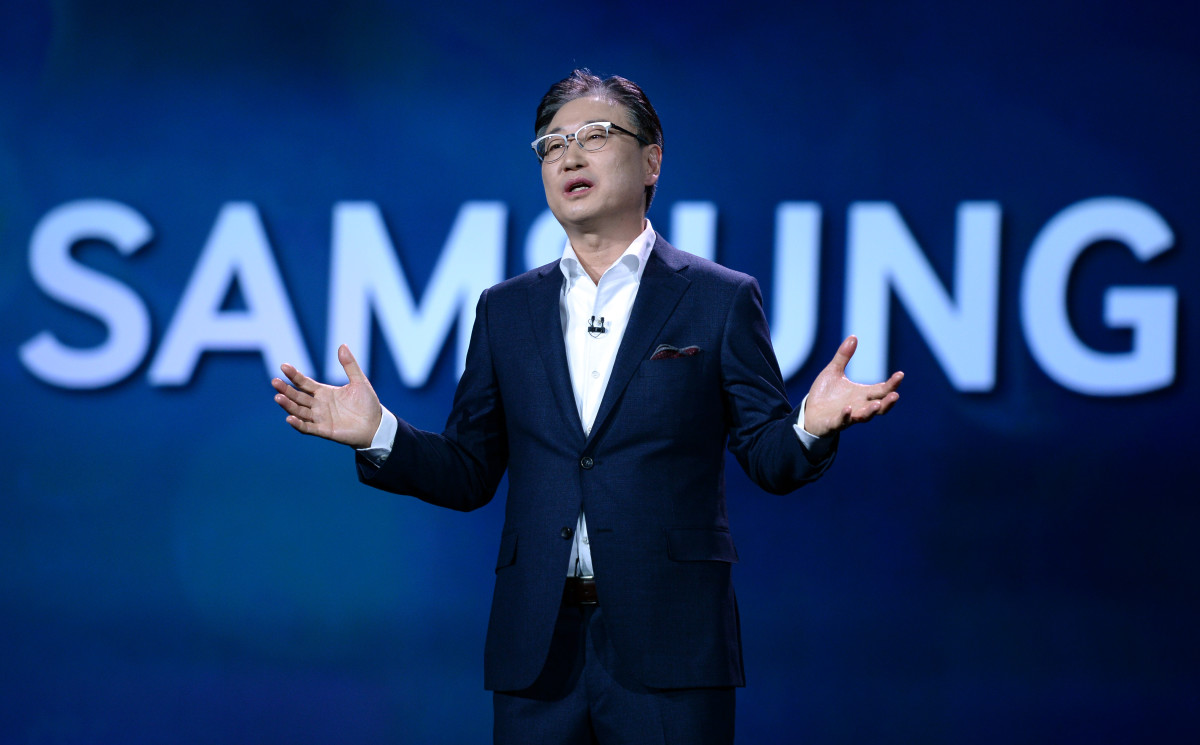 Samsung’s boldest S26 change isn’t the camera.
Photo by picture alliance on Getty Images
What Samsung just changed with the S26 lineup
Samsung’s U.S. release centers around three commercial facts.
- Pre-orders across major retailers and carriers
- The March 11, 2026, on-sale date
- MSRPs that build upon the base models
Key upgrades (the stuff investors should actually care about):
- Pricing: Costs are $899.99 (S26), $1,099.99 (S26+), and $1,299.99 (S26 Ultra).
- Storage floor: The S26 and S26+ start at 256GB (Samsung is also listing 512GB options).
- Ultra differentiation: The Ultra’s built-in Privacy Display is the “world’s first” built-in version for phones, according to Samsung.
- Silicon: Samsung’s global spec table displays a mixture of Snapdragon 8 Elite Gen 5 for Galaxy and Exynos 2600, stating the processor “may vary by device and market.”
- Trade-in posture: Samsung is running a promotion for users to “save up to $900” with eligible instant trade-in credit (terms vary).
Lastly, one consumer friction point could turn into a headline. Samsung still doesn’t include built-in magnets for native Qi2 alignment.
The S26 line remains “Qi2 Ready,” according to Wired, which translates to the requirement of a magnetic case.
Privacy Display + AI is the differentiation swing
Now, let’s take into account the perspective of the investor. The S26 pitch is trying to accomplish two tasks at once. On the one hand, it justifies a higher price and defends upgrade demand in a rough macroeconomic environment.
Privacy Display is the hook that is the easiest to explain. Samsung says it’s integrated into the Ultra (not a stick-on film). At the same time, it can be configured to activate when in certain situations, such as entering passwords or opening selected apps.
Related: Samsung Galaxy owners stunned by what appeared after a Google update
AI distribution is the main strategic move. Google says that Scam Detection powered by Gemini is built right into the Samsung Phone app on Galaxy S26 devices. It only works in English in the U.S.
That’s the kind of “sticky” utility feature that can help GOOGL: It keeps users inside Google services, even when Samsung gets the lion’s share of hardware sales.
The Samsung stock angle: margins, mix, and the memory shock
Samsung’s own earnings commentary is worth listening to. It gives an effective reason why the S26 pricing move matters.
In 4Q 2025, Samsung said its MX (Mobile eXperience) + Networks segment delivered KRW 29.3 trillion in revenue and KRW 1.9 trillion in operating profit.
Related: Apple just fired warning shot that could reshape 2026 iPhone cycle
Samsung also said that in Q1 2026 it is looking to better its AI smartphone leadership with the S26 launch. At the same time, Samsung seeks “sustained profitability” and “supply stability” amid cost pressures.
As the next step, we need to layer in the cost shock. TrendForce revised its forecast and now projects conventional DRAM contract prices increasing 90% to 95% QoQ in Q1 2026.
That’s excellent news, particularly for memory suppliers like Micron (MU). However, negatively, it pushes handset makers toward some combination of higher prices, more promotions, or lower margins.
For QCOM, the key question is whether premium Android volume holds up, particularly in markets where Snapdragon is in use. Another question is whether the silicon mix of higher-priced flagship phones remains favorable. Samsung’s own S26 spec table lists the Snapdragon 8 Elite Gen 5 for Galaxy as the processor for the Ultra.
For Apple (AAPL), the benchmark is simple and straightforward. Apple lists iPhone 17 Pro from $1,099 in the U.S.
That puts Samsung’s $1,099.99 S26+ right at the level where users begin doing a direct “Android flagship vs. iPhone Pro” comparison.
What’s priced in? Interestingly, the market is already pricing in higher device prices in 2026 if memory stays tight (IDC’s ASP forecast is explicit). If Samsung still has to “buy” demand back through unusually aggressive promotions that lower net prices, that would be a surprise.
Samsung carrier promos are the swing factor
This is where the trade gets real. We are looking at a higher MSRP (manufacturer’s suggested retail price), which helps only if Samsung can keep net pricing from collapsing under subsidies.
U.S. carrier offers to watch (promo terms vary)
- AT&T (T): Highlights “$0” offers with eligible trade-in; the carrier’s own materials show $1,299.99 retail pricing for S26 Ultra and reference credits applied over 36 months.
- Verizon (VZ): Says customers can get up to $1,300 in promotional credits over 36 months for the S26 Ultra, with trade-in possible on certain plans.
- T-Mobile (TMUS): Promotes “on us” style offers (up to $1,100 off in certain cases) tied to plan/line requirements.
It’s important to remember that these promotions don’t say exactly how they will affect Samsung’s actual prices. Bill credits mostly affect carrier economics, but they can still have an effect on OEM promo budgets, channel incentives, and mix.
Potential risks and friction points
- Demand elasticity: Will buyers want $899.99 as the new “base flagship” floor?
- Market contraction: IDC’s 12.9% 2026 shipment decline possibility is a real volume headwind.
- Promo compression: Heavy bill credits can keep units flowing but distort the “pricing power” story (net effect not disclosed).
- Qi2 narrative: Staying Qi2 Ready (case required) is a UX knock versus platforms with built-in magnet alignment.
Samsung investor watch items over the next 30-90 days
- How much do carriers push the Ultra (better mix) or base models to move volume?
- Early review verdict: Is Privacy Display a real “reason to upgrade,” or is it just a niche feature?
- Memory pricing trend: Does the DRAM spike go down after the first quarter, or does cost pressure sustain itself until the middle of the year?
- Samsung’s comments on profits: As the launch settles down, keep an ear out for any changes to the “sustained profitability” goal in MX.
Three actionable takeaways:
- Samsung: The key KPI is net pricing versus promo pressure, not the MSRP headline. This is because the net effect is not disclosed.
- Qualcomm (QCOM) + Alphabet (GOOGL): S26 is a distribution event, and if upgrades hold, both premium silicon and on-device Gemini features will get a massive advantage.
- Carriers (T), (VZ), and (TMUS): Promotions are the demand lever. If bill credits remain high, they support volumes but make it more difficult to interpret the “pricing power” read-through.