
The U.S. EV market has had a record-setting 2025.
But new information from General Motors GM shows just how precarious the industry’s perch is.
U.S. electric vehicle sales by year + market share of new vehicle sales (according to Cox Automotive)
- 2025 (through September): over 1 million units, 10.5% market share
- 2024: 1.3 million, 8.1% market share
- 2023: 1.2 million, 7.8% market share
- 2022: 800k 5.8%, market share
However, there are some concerns underneath all of that growth.
Consumers purchased 90 different EV models in the third quarter, but only nine sold more than 10,000 units.
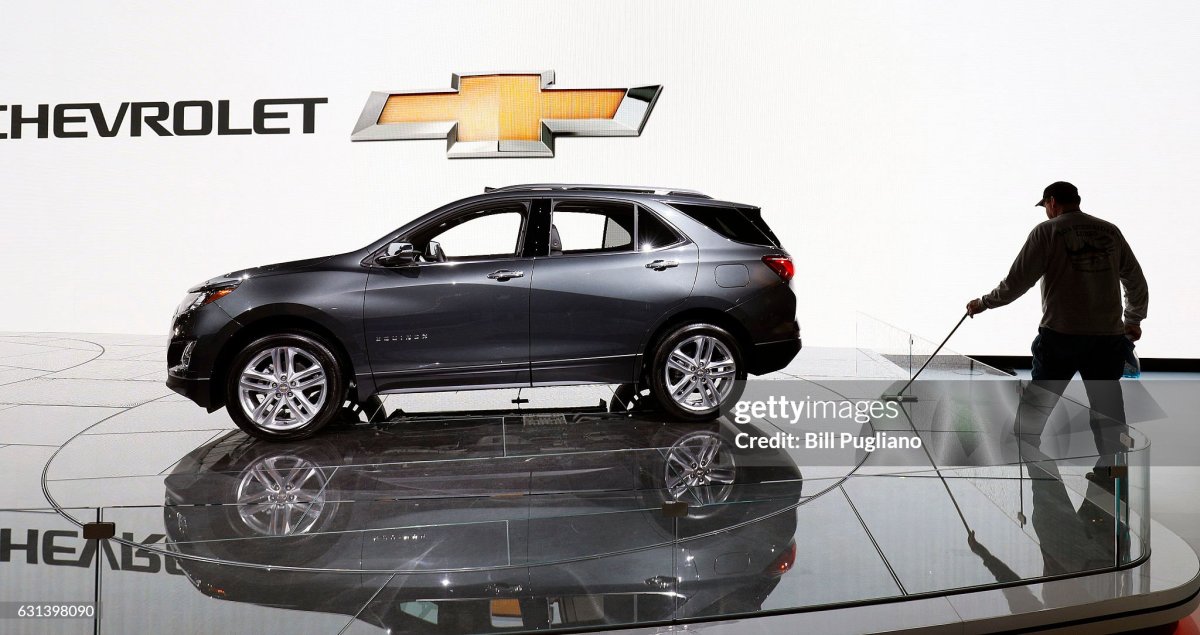
Tesla TSLA Model Y and Model 3 were outliers, selling more than 114,000 and 53,000, respectively, and the Chevy Equinox sold just under 25,000.
But those three models were outliers. According to Cox Automotive, “the vast majority of EVs sell at a rate of far less than 2,000 units a month, or 6,000 units a quarter. In the volume-driven business of automotive manufacturing, low volume is the enemy; EV profitability remains a distant dream for nearly every automaker.”
On Tuesday, General Motors dropped some information that proves just how accurate that sentiment is.
General Motors to lose $1.6 billion on U.S. government’s EV turnaround
U.S. electric vehicle sales have taken off in 2025 as car buyers flocked to dealers to take advantage of the $7,500 tax credit before it expired at the end of September.
But the U.S. is not just abandoning the tax incentive; under President Donald Trump, it is also loosening emissions standards and rescinding states’ rights to set their own rules.
Related: Analyst picks a winner in the EV race between Ford and GM
General Motors says OEMs like itself will lose billions of dollars in the money it invests in electric vehicles as a result.
“Following recent U.S. Government policy changes, including the termination of certain consumer tax incentives for EV purchases and the reduction in the stringency of emissions regulations, we expect the adoption rate of EVs to slow,” GM said in an 8-K filing Tuesday.
GM is ready to eat billions in charges to rightsize its EV production.
Last week, the company’s board of directors approved third-quarter charges of $1.6 billion in GM North America for a “planned strategic realignment of our EV capacity and manufacturing footprint” that will match consumer demand.
Again, consumer demand was record-setting in 2025, but GM expects it to fall off a cliff without government support.
GM details charges from EV rightsizing
General Motors shifted a non-cash impairment charge of $1.2 billion to the third quarter as it is in the process of changing its manufacturing capacity. The company took another $400 million in contract cancellations and commercial settlements fees.
However, that number could increase as GM says its reassessment of EV capacity, manufacturing footprint, and battery component manufacturing is ongoing, “and it is reasonably possible that we will recognize additional future material cash and non-cash charges.”
Related: Ford takes Tesla EV battle to the NFL
However, the company also says Tuesday’s announcement does not impact the current retail portfolio of Chevrolet, GMC and Cadillac EVs currently in production.
“We expect these models to remain available to consumers,” the company said.
The outlook for the U.S. EV market is bleak
GM isn’t the only company that will lose billions on electric vehicles this year.
Ford says it expects to lose more than $5 billion on Model e, its electric vehicle division, this year.
For the U.S., battery electric vehicle (BEV) sales are traveling in the right lane, while China and Europe are in the passing lane, and that’s despite a strong year for U.S. EV sales.
According to J.D. Power, electric vehicles are on pace to exceed 12% market share in the U.S. for the first time, following a 2.6% year-over-year increase.
However, the U.S. market is still much smaller than that of China and Europe.
Largest Regional BEV sales 2024 (according to IEA):
- China: 6.4 million
- Europe: 2.2 million
- U.S.: 1.2 million
- Rest of the world: 1 million
Related: EV car makers get a positive update from beleaguered supplier