
Conventional financial wisdom often suggests that borrowers with low-rate mortgages are better off investing excess cash in the stock market rather than making additional mortgage payments.
On paper, the argument appears compelling, particularly when long-term market returns have consistently outpaced a 2.9% mortgage interest rate.
Ramsey Show co-hosts George Kamel and Rachel Cruze recently heard that exact scenario from a caller and pushed back firmly on the advice.
The caller said her adviser recommended redirecting the money for extra mortgage payments into retirement accounts so her money could compound at higher expected rates of return.
Kamel and Cruze warned that following the caller’s adviser’s suggestion might leave her family exposed if jobs, health, or life plans shifted. Their pushback taps into a question that millions of homeowners who locked in rates below 4% during the pandemic—the so-called “golden handcuffs”—have been unable to settle.
Kamel and Cruze challenge a familiar adviser playbook
The adviser’s logic was straightforward: broad stock indexes have returned about 10% on average over long periods, far exceeding a 2.9% mortgage rate.
Kamel reframed the question on The Ramsey Show, asking what happens when life disrupts the plan before the investments compound.
Kamel and Cruze advised the caller to prioritize paying down the mortgage and getting peace of mind in doing that, before thinking about other investments.
Eliminating mortgage debt before leaving the workforce lowers a household’s fixed costs, John Chapman, a CFP® and partner at WorthPointe, told Kiplinger.
Eliminating debt, including your mortgage, lowers fixed costs and adds peace of mind
Kamel paid off his own home in 2021 alongside his wife, and went from negative net worth to millionaire.
That personal experience drives his view that eliminating housing debt fundamentally reshapes how people handle career risks and long-term investing decisions.
Ramsey’s behavioral framework fuels the mortgage debate
The Ramsey approach treats mortgage payoff as a behavioral decision, not a pure math problem, and both co-hosts applied that approach to the caller’s question.
“Personal finance is 80% behavior and 20% head knowledge,” Dave Ramsey said on X.
The core behavioral argument is that most people overestimate their discipline over a long investing timeline while simultaneously carrying mortgage debt.
More Retirement:
- Vanguard drops playbook on retirement income
- Vanguard warns workers losing thousands in 401(k)s
- Fidelity’s wake-up call on Social Security, IRAs, and 401(k)s
Kamel has noted that homeowners with ultra-low rates often convince themselves they will never pay off the loan, and that inertia becomes its own trap.
Borrowing cheaply and investing the surplus assumes a steady income, a long horizon, and the discipline to hold through market crashes without flinching.
When even one of those conditions breaks, the homeowner faces both a mortgage payment and a diminished portfolio at the same time.
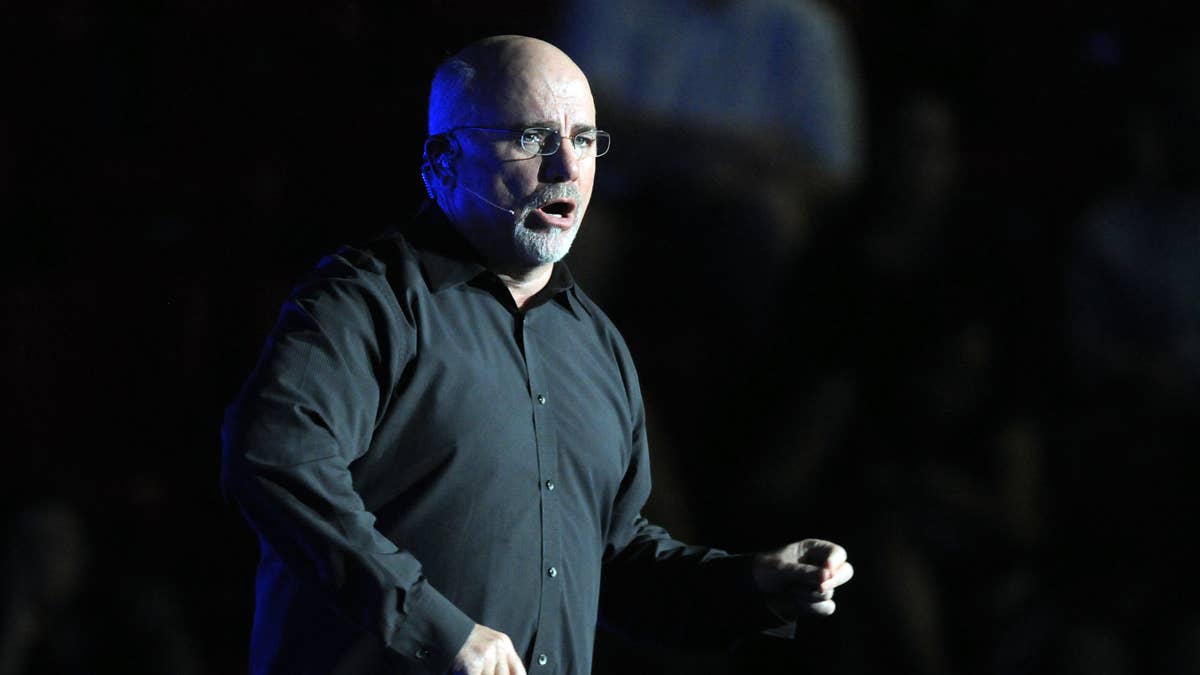 Dave Ramsey argues mortgage payoff is driven by behavior, warning investment discipline often breaks down when market downturns and debt collide.
Jackson Laizure / Getty Images
Where mortgage rates stand in the second half of 2026
The 30-year fixed mortgage rate averaged 6.66% for the week ending July 30, according to Freddie Mac’s Primary Mortgage Market Survey.
Freddie Mac’s data showed this was the highest weekly average since August 2025.
For borrowers holding rates above 6%, the guaranteed return from paying off principal is close to what a diversified portfolio might produce, and Monarch’s 2026 mortgage-payoff decision guide sets a 7% APR threshold as the tipping point at which payoff typically wins.
For the caller in this segment, however, her 2.9% rate creates a spread that most financial planners would find difficult to dismiss.
The right answer depends on more than your rate
The tension reflects two genuinely different definitions of risk that are difficult to reconcile with a single recommendation for every borrower.
Financial planners who favor investing are optimizing for the highest probable ending balance across a full timeline of market returns over decades.
On the segment, Kamel and Cruze focused on resilience, asking whether a household could absorb an unexpected shock without the entire plan unraveling.
Borrowers with stable dual incomes, full emergency reserves, and decades until retirement may find the adviser’s math compelling on its own merits.
Households closer to retirement, single-income families, or those for whom debt creates stress may value the certainty of a paid-off home more.
The open question low-rate homeowners still face
Kamel and Cruze did not argue that the caller’s adviser had the wrong math, because at 2.9% the numbers genuinely favor investing over time.
Their warning focused on what happens when that tidy plan collides with a life event that changes every assumption it rests on.
Financial planners quoted across the segment framed the decision as one that turns on rate, timeline, income stability, and household tolerance for uncertainty, with no single answer that fits every borrower.
Your personal comfort with debt is a legitimate factor in that equation, according to Monarch’s 2026 mortgage-payoff decision guide, which was reviewed by Rachel Lawrence, CFP®, Monarch’s head of advice and planning.
But Monarch advises building an emergency fund before putting extra cash toward mortgage principal, keeping enough in reserve to cover three to six months of expenses for self-employed workers, single-income households, or those with unstable income.
Related: The 4% retirement rule may leave retirees vulnerable