
General Motors (GM) shares tanked July 22 as investors digested just how badly tariffs are hurting the U.S. carmaker’s bottom line.
GM shares were down 7.7% at last check July 22, when the company reported a 35% decrease in second-quarter net income of $1.8 billion after reporting $2.9 billion a year ago.
💵💰 Don’t miss the move: Subscribe to TheStreet’s free daily newsletter 💵💰
The company said it only deployed a few of its tariff mitigation efforts in the quarter, leading to the big decline.
The company has said that President Donald Trump’s 25% auto tariffs would cost it $4 billion this year. Now the company says tariffs could cost between $4 billion and $5 billion between just the second quarter and the fourth.
At the president’s behest, GM and other carmakers have not passed the costs of the tariffs along to the customer. But GM is especially vulnerable, since the American car company imports more than half of its inventory from overseas.
Related: 1 in 5 new car shoppers are committing a big financial blunder
GM says it’s “positioning the business for a profitable long-term future” with its investments in new energy vehicles in China and EV investments domestically.
The company announced a $4 billion investment in U.S. manufacturing earlier this year that will add up to 300,000 units of annual capacity for high-margin light-duty pickups, full-size SUVs, and crossovers.
“This will help us satisfy unmet customer demand, greatly reduce our tariff exposure, and capture upside opportunities as we launch new models,” GM CEO Mary Barra said in a letter to shareholders.
But that extra capacity isn’t expected to come online for another 18 months, and considering this administration’s track record, the global economic picture could be completely different by then.
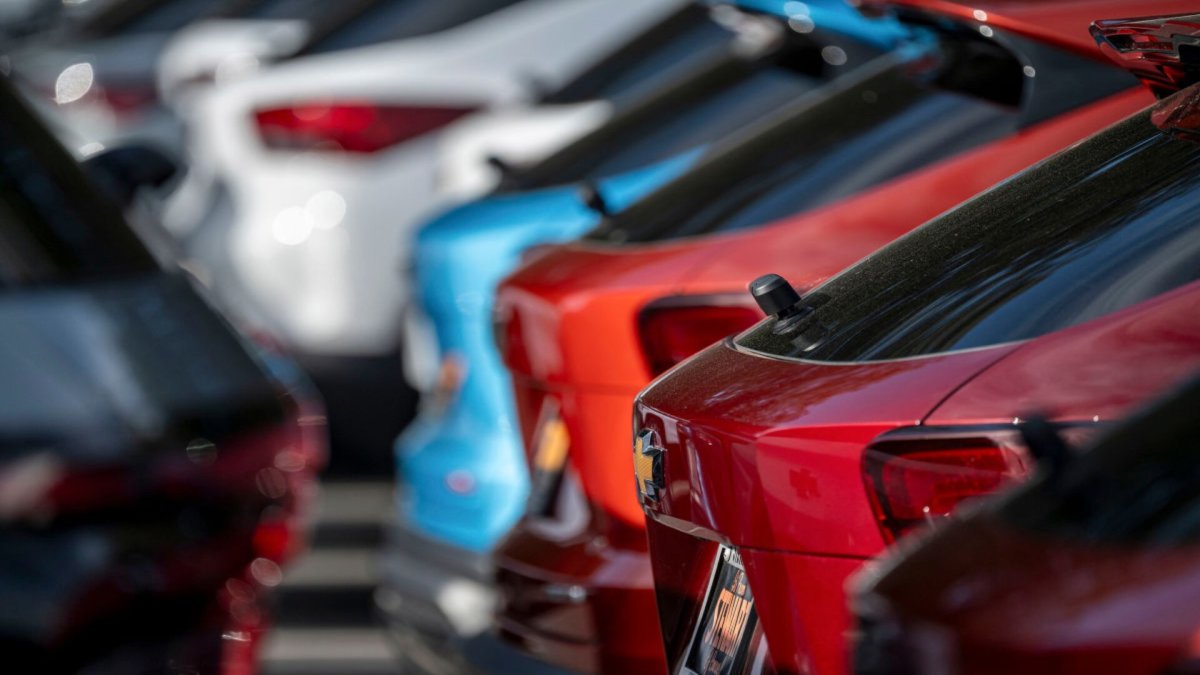 The Chevy Trax is made in Korea.
Image source: Morris/Bloomberg via Getty Images
Tariffs take a big bite out of General Motors
American car manufacturers have relied on incentive spending to entice consumers.
That strategy worked well, with the company reporting record revenue of $91 billion in the first half, but GM says it has seen signs of slowing demand, even though the company says it outperformed the market in total, fleet, and retail market share year over year.
But tariffs ate into that record revenue, as tariff payments caused adjusted automotive free cash flow to fall to $2.8 billion, a $2.5 billion year-over-year decline.
GM imports about half of its vehicles from Korea, Canada, and Mexico, and it has no plans to change its strategy much.
Related: Ford’s $570 million mistake hits one of its most popular cars
“We have continued to bring the vehicles in from Korea because they’re contribution margin positive, and they’re very much in demand. I mean, customers love those vehicles,” Barra said.
Of the $4 billion to $5 billion in tariff charges, about $2 billion comes from Korea.
The company previously said its biggest tariff heading would come in the second quarter, but now the company says the third quarter will be even worse.
While GM says it wants to build 2 million vehicles in the U.S. in 18 months, it is still proud of its Korea operations.
“We’ve had the operation in Korea for a very, very long time. It’s a very efficient operation that we’re very proud of. But we’ve got to evaluate, when we have some certainty with what the tariff will be. So I’m not gonna speculate,” Barra said.
GM is proud of its Korean manufacturing program
Despite its iconic status in North American auto lore, GM makes fewer than half of its vehicles in the U.S., making it more vulnerable to tariffs than its competitors.
So even though GM reported an industry-leading 12% increase in first-half-of-the-year sales, paying 25% tariffs on its imports shaved $350 million off its bottom line.
GM imports entry-level Chevy and Buick sedans from Korea that retail for under $30,000. But the small SUVs it makes in Asia, like the Chevy Trax, are still profitable, even with tariffs.
“The vehicles that we produce there, they’re in high demand….So I think we’re in the right place where we are right now until we get more certainty, and then we’ll have more to say about it,” Barra said.
Related: General Motors sued by US state over scary privacy invasion