
Updated at 10:04 AM EDT
The U.S. economy faces a sharply higher risk of recession over the next 12 months, Goldman Sachs analysts warned this weekend, as tariffs reduce growth, stoke inflation and deepen the market’s first quarter decline.
President Donald Trump’s focus on tariffs, the key plank of his economic agenda, has already dragged the S&P 500 into its worst first-quarter performance in five years, with more than $5 trillion in market value shredded in less than a month from the world’s biggest stock market.
And with levies on trading partners such as Canada and Mexico, alongside so-called reciprocal tariffs on all countries, according to comments from Trump last night, due later this week, analysts are overhauling their domestic-growth forecasts and reworking estimates for S&P 500 performance over the coming months.
Goldman analysts say those levies, as well as sector-specific duties on autos, steel and aluminum, will lift the average U.S. tariff to around 15%, a level that would boost core PCE inflation, the Federal Reserve’s preferred gauge, to around 3.5% by the end of the year.
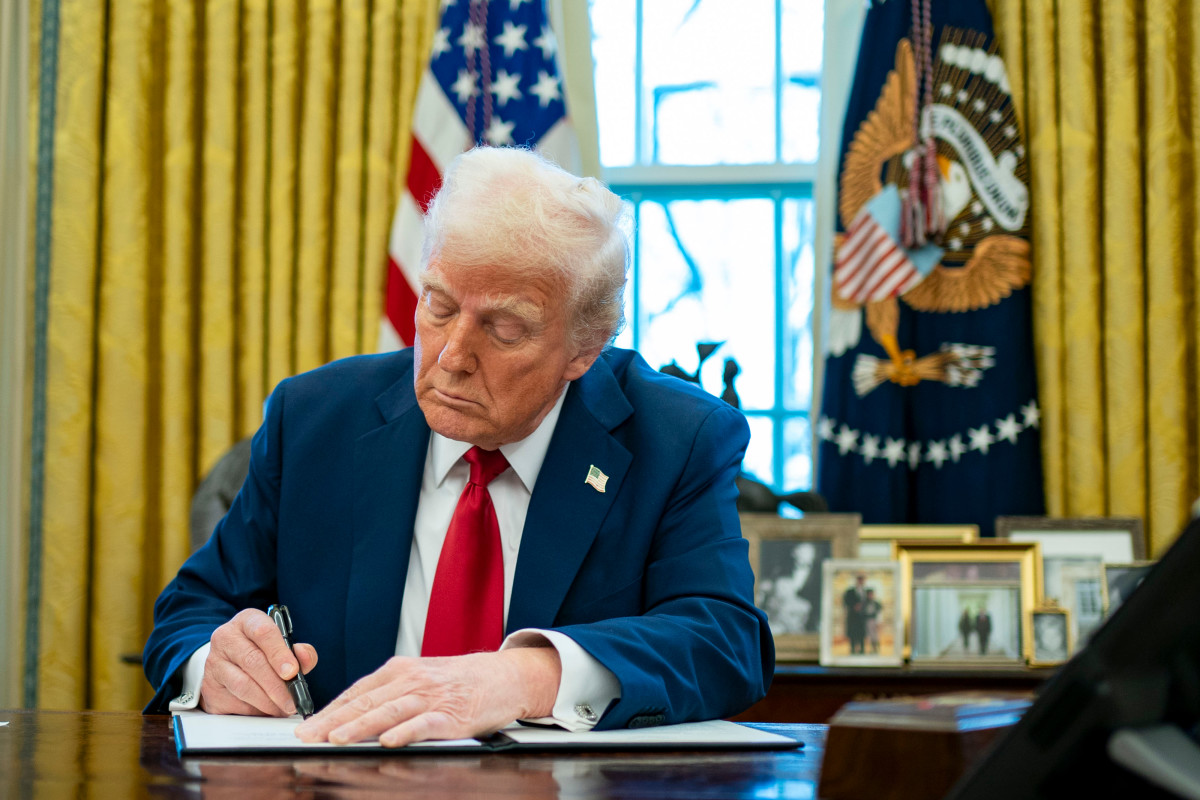 President Trump’s tariff focus has raised the odds of a U.S. recession, Goldman Sachs warned, leaving faster inflation and a slumping stock market in its wake.
“We now see a 12-month recession probability of 35%,” Goldman Sachs economists, lead by Ronnie Walker, said in a note published late Sunday.
“The upgrade from out previous 20% estimate reflects our lower growth baseline, the sharp recent deterioration in household and business confidence and statements from White House officials indicating greater willingness to tolerate near-term economic weakness in pursuit of their policies,” Walker said.
Stocks face another pullback from tariffs
Goldman also lowered its Q1 GDP growth forecast to just 0.2% from an estimate of 1.8% at the start of the year, and it trimmed its annual GDP forecast to 1.5% from 1.9%.
Stocks are likely to fare poorly as a result of the slow growth/ faster inflation mix, Goldman said, with the S&P 500 expected to fall another 5% over the next three months, a move that would take the benchmark to around 5,300 points, the lowest in more than a year.
Related: Stocks reclaim a chunk of March selloff, but next leg tied to earnings
However, support from the Federal Reserve, which will likely need to execute more rate cuts to defend a weakening labor market, will help the S&P 500 to a 6% gain over the next 12 months, taking the benchmark to around 5,900 points.
Chief strategist David Kostin, in fact, slashed his end-of-year price target for the S&P 500 by 500 points, to 5,700, a level that suggests a mere 2% gain from current levels.
“If the growth outlook and investor confidence deteriorate even further, valuations could decline much more than we forecast,” Kostin and his team said.
Earnings-growth rethink
The S&P 500, now on pace for its weakest first quarter performance in five years, has fallen more than 7% so far this month, and has taken out its closing low on March 13, when the benchmark slumped into correction territory following its all-time peak on February 19.
Earnings forecasts are starting to reflect the weaker growth prospects, tied to the tariff impact and the higher prices and disrupted supply chains they are likely to induce, with collective Q1 profits for the S&P 500 likely growing 8%, down from a 12.2% estimate at the start of the year.
More Economic Analysis:
- Gold’s price hit a speed bump; where does it go from here?
- 7 takeaways from Fed Chairman Jerome Powell’s remarks
- Retail sales add new complication to Fed rate cut forecasts
Goldman also lowered its full-year S&P 500 profit forecast, citing “higher tariffs, weaker economic growth [and] greater inflation than we previously assumed.”
The bank’s new end-of-year earnings target is pegged at $253 a share, down from its prior forecast of $269, which according to LSEG data is also the current Wall Street consensus.
Related: Veteran fund manager unveils eye-popping S&P 500 forecast