
Goldman Sachs and Apollo Global Management are taking SpaceX’s giant chip financing to a wider circle of investors. The two firms have begun talks to sell portions of the roughly $40 billion deal, and some investors are being asked to take slices of up to $500 million before the formal sale process even starts.
The story reaches well beyond one borrower. It shows how Elon Musk’s rocket and AI company plans to pay for a massive Nvidia order without piling the debt onto its own books, just as lenders grow choosier about AI. SpaceX has called the package the largest-ever committed GPU financing.
Goldman and Apollo line up buyers for SpaceX’s $40B chip deal
The outreach became public on November 4. Goldman and Apollo started approaching potential buyers for the multi-tranche financing, and formal syndication is expected to begin soon. Investors had already agreed to the package before it was priced. Both firms declined to comment, while SpaceX did not respond to a request for comment, according to Bloomberg.
Also read: Verizon CEO lays out one condition for a Starlink partnership
The package has two main parts. Goldman led an $8.3 billion senior secured loan that it will sell down to banks, while several bond tranches are going to asset managers. Apollo was the key bond investor, and Pacific Investment Management Co. also took part.
The timing is tricky. The deal will carry a fixed interest rate that will only be set at pricing. It came after a rough week for AI borrowers in debt markets, with investors demanding bigger premiums to fund AI spending, and that volatility shaped pricing talks for the SpaceX debt. Musk had promoted the deal, saying it would help fund purchases of Nvidia GPUs, Bloomberg reported.
Why the debt stays off SpaceX’s books
The structure is what makes this deal stand out. A special purpose vehicle managed by Apollo-backed Atlas SP will buy the Nvidia chips and issue the debt. SpaceX will then rent the chips under a five-year agreement with no residual value guarantee.
Lenders get strong protection in return. A presentation seen by Bloomberg says SpaceX owes rent no matter the condition of the equipment, and even in cases of casualty or force majeure. That stands in contrast to Oracle, which has cited force majeure to delay some data center obligations. Those terms carry extra weight now that investors have pulled back from the AI trade and lenders have cooled on neocloud rivals such as CoreWeave.
The leases will roll out in stages. Each tranche runs about five to five and a quarter years, starting as the equipment is delivered in the first half of 2027. Apollo said the money will help deliver Nvidia’s Vera Rubin chips for SpaceX’s “terrestrial compute buildout,” according to TechCrunch.
Not everyone is comfortable with this kind of setup. A Brookings paper warned that AI risk is “migrating from transparent on-balance-sheet financing by major corporations to opaque off-balance-sheet financing,” citing lease commitments and special-purpose vehicles as tools. Its author, Columbia University’s Stijn Van Nieuwerburgh, said it would be “premature” to call AI infrastructure a systemic risk yet, but warned that such structures “may make correlated exposures hard to observe before a downturn,” as reported by TheStreet.
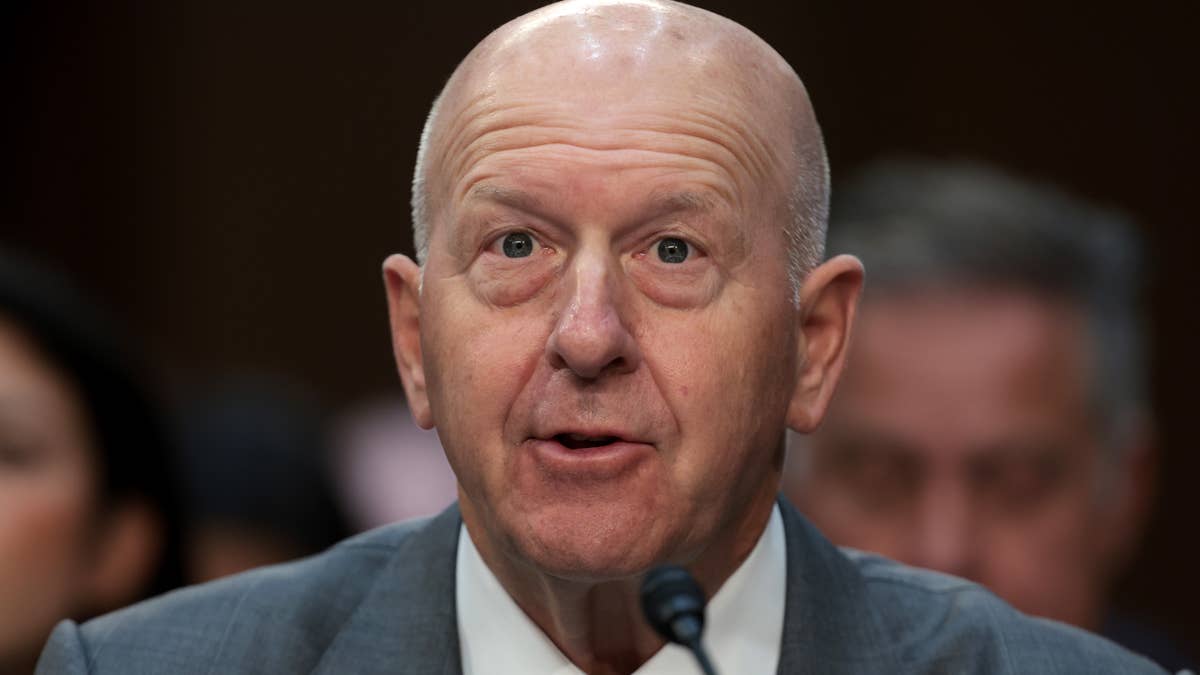 Goldman and Apollo started approaching potential buyers for the multi-tranche financing, and formal syndication is expected to begin soon.
Musk bets big on Nvidia chips
Musk was quick to talk up the deal. In an X post on October 25, he said SpaceX had closed $40 billion in debt to buy GPUs and added, “That means the 200+ neoclouds are going to see guppy-level death and consolidation.”
His point was about who can still borrow. Musk said debt markets have “almost entirely shut off access to money” for companies without substantial revenue outside AI data centers. He argued SpaceX qualified because it is investment-grade and earns money from Starlink and launches. He also said most of the new debt is callable and told Business Insider that SpaceX is “not buying any neoclouds,” as reported by TheStreet.
The deal looked different when talks first surfaced in early October. The Financial Times reported a preliminary split of bank loans and investment-grade bonds, with the chips themselves serving as collateral. SpaceX had earned a BBB credit rating after its June IPO, and Pimco was among the lenders in talks. Some lenders questioned whether advanced GPUs hold their value well enough, according to TheStreet.
More SpaceX:
- Goldman Sachs revamps SpaceX stock estimates before crucial earnings test
- Musk called Anthropic ‘evil’; SpaceX’s deal with it nearly doubled
- Morgan Stanley doubles down on SpaceX stock verdict for investors
Wall Street noticed what this means for Nvidia. Musk has said SpaceX will use Nvidia chips exclusively in its data centers, and Jim Cramer said on October 7 that SpaceX “could end up being Nvidia’s largest client at this pace.” The same day, Goldman Sachs raised its SpaceX price target to $230 from $220.
What investors will watch next
The AI business is now SpaceX’s largest revenue segment. Its AI segment accounted for $7.6 billion of the company’s $14.6 billion in third-quarter revenue, while capital spending totaled $19.6 billion. The unit posted its first operating profit, though its two anchor customers, Anthropic and Google, both have 90-day termination clauses.
Management says the spending pays off fast. Chief financial officer Bret Johnsen said SpaceX is seeing “less than one year payback periods” on its AI infrastructure and that the lease “diversifies our funding sources.” He added that it covers a notable share of the money needed for SpaceX’s growth plans.
The next test is delivery. Together with a $7 billion lease prepayment, the debt will fund about $47.3 billion of Nvidia Rubin chips due in the first half of 2027. SpaceX’s data centers are located in Memphis, Tennessee, and it is developing additional sites in Mississippi.
Related: Bank of America sends SpaceX stock investors strong signal
