
I like stories where a beaten‑up stock suddenly gets a serious vote of confidence, and that is exactly what just happened with Dutch Bros.
Goldman Sachs has turned bullish on Dutch Bros, upgrading the coffee chain from neutral to buy after the shares fell about 26% over the last six months and roughly 12% year to date. The bank kept its 12‑month price target at $75, which implies roughly 40% upside from where the stock was trading before the call, CNBC reported.
Dutch Bros has been one of those “cult favorite” tickers that I see popping up in retail investor chats, but the stock’s recent slide made it easy to write off as just another overhyped growth story. Goldman is, however, saying that view is wrong.
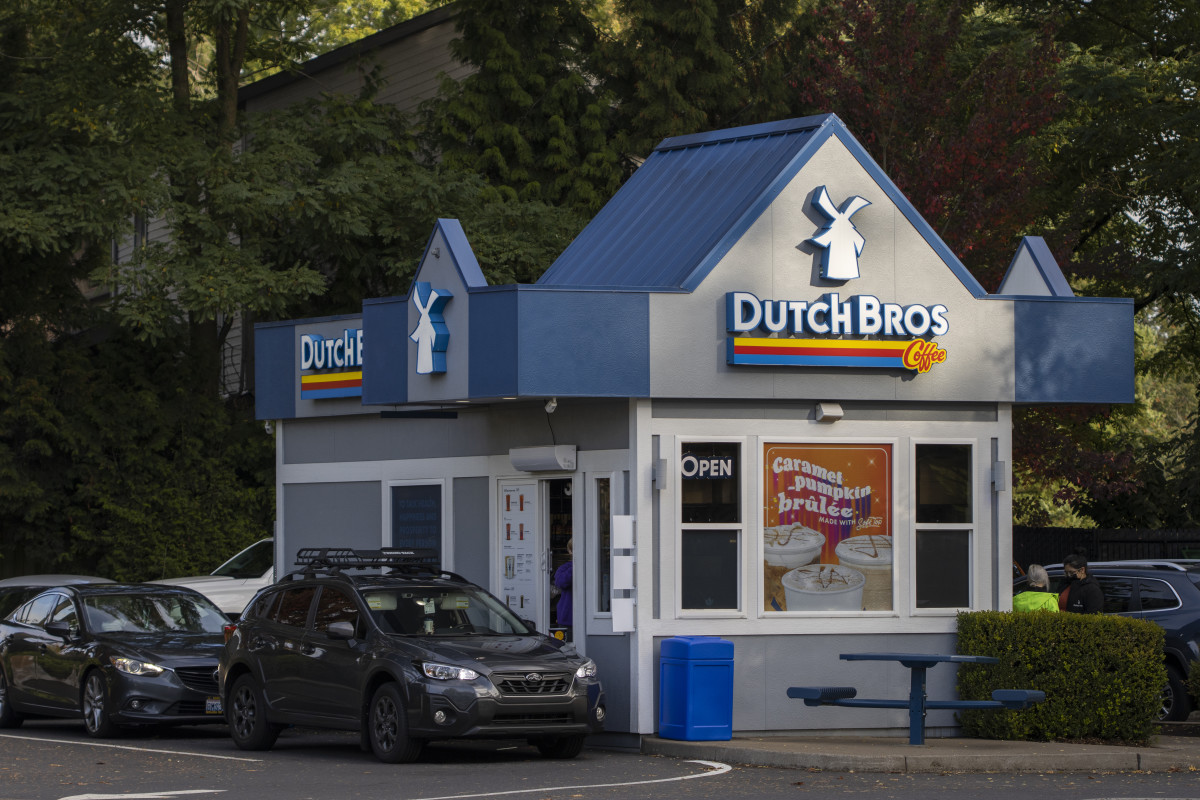 Goldman Sachs has turned bullish on Dutch Bros.
Photo by hapabapa on Getty Images
What Goldman sees in Dutch Bros that the market missed
When I dug into the details, the thing that jumped out at me was how much of Goldman’s argument is about the business model, not just the chart.
Related: Goldman Sachs resets Microsoft stock forecast
Goldman’s analysts highlighted Dutch Bros’ “robust competitive advantage and impressive same‑store sales growth” as core reasons for the upgrade, CNBC reported. Same‑store sales growth has been driven roughly two‑thirds by transaction increases rather than just price hikes, which analyst Christine Cho said shows genuine customer demand and strong unit economics.
In her note, Cho wrote that the firm sees Dutch Bros as “a top‑tier growth story in all of U.S. restaurant space,” and said the recent decline offers “a favorable opportunity to invest” in that story after the pullback, CNBC noted.
More Wall Street
- Top analyst bets these stocks will boost your portfolio in 2026
- Bank of America sends quiet warning to stock market investors
She also argued that the market is undervaluing Dutch Bros’ ability to defend and grow its share in an “intensifying coffee landscape,” saying its strengths are being underestimated.
From a personal finance angle, this is exactly the kind of setup I look for:
- A real operating engine, not just multiple expansion.
- A pullback that was more about sentiment than fundamentals.
- A large bank willing to put a concrete upside number on the table.
Dutch Bros checks those boxes right now in Goldman’s model.
The “secret sauce” Goldman says rivals cannot easily copy
As someone who has watched Dutch Bros build a near‑fanatic customer base, I was not surprised to see Goldman’s note spend so much time on what makes the chain feel different at the store level.
Cho told clients that Dutch Bros’ leadership in customized energy beverages is a big part of its moat, arguing that the brand’s position in energy drinks is “challenging for rivals to duplicate,” according to CNBC’s write‑up of the note. She said that this niche, combined with a focus on speed and friendly service, gives the company a “durable competitive advantage” as new competitors crowd into the broader coffee and beverage space.
Goldman also expects digital and food to quietly turbocharge that moat.
Cho wrote that “food and mobile ordering could enhance frequency opportunities,” and that rising use of mobile payments and the Dutch Rewards program, along with a bigger food menu, should lead to “more regular and habitual usage, particularly during morning hours,” according to CNBC.
Here is how I would boil down the mechanics Goldman is flagging:
- Drinks: Dutch Bros leans heavily into customizable energy drinks and sweet beverages that younger customers treat as a daily ritual, which Goldman says is hard for rivals to copy at scale.
- Digital: Higher penetration of mobile ordering and rewards can lift visit frequency and make the brand “stickier” in people’s routines.
- Food: Adding more food creates a chance to raise the average ticket and attract breakfast occasions, which Goldman expects to support same‑store sales.
That fits with what other analysts have been seeing.
TheStreet’s Dutch Bros coverage last year described the stock as having a “secret sauce” built on strong unit economics and room for margin expansion as it scales, noting that Wall Street price targets were clustering in the high‑70s and that Dutch Bros looked like one of the standout coffee names for long‑term returns.
When I put those pieces together, I see why Goldman believes the pullback is not the start of a fundamental collapse. It looks more like a reset in a story where the growth engines are still on.
How much room Goldman thinks Dutch Bros still has to grow
One of the sharpest parts of Cho’s note, in my view, is the way she connects the current store base to a much larger potential footprint.
Goldman’s team told clients that new Dutch Bros locations are showing strong productivity, and that a newer walk‑up window format in Los Angeles could expand the concept’s long‑term total addressable market, according to CNBC. Cho said Dutch Bros has “significant potential to grow in both new and existing markets,” and cited an internal estimate of roughly 7,000 potential locations based on drive‑thru alone.
That is a big number for a chain that, as of its latest filings, still has only a fraction of that store count.
Dutch Bros has been accelerating its unit growth and its same‑shop sales in the latest quarter grew faster than the overall restaurant category, giving the company “ample fodder” to keep its own 75 dollar target and a top rating on the stock, TheStreet’s recently reported.
Goldman is basically layering its own math on top of that footprint story.
If the chain can maintain mid‑teens percentage growth in its shop count while driving solid same‑store sales and improving margins over time, a $75 target and “best in class” label make more sense.
What this call means for your portfolio and your wallet
Whenever I see a big upgrade like this, I ask two questions: what does it mean for someone who already owns the stock, and what does it mean for someone who just likes coffee and is trying to grow their money over time.
Goldman’s call effectively says two things to existing Dutch Bros shareholders.
First, the recent pullback was an overreaction in the bank’s view, not the start of a structural decline. Second, the underlying growth story around traffic, store openings and digital engagement is strong enough that a $75 target is still in play.
For someone on the sidelines, here is how I would translate the report into practical takeaways:
- Dutch Bros now has a high‑profile sponsor on Wall Street calling it a “top‑tier growth story,” which can attract more institutional attention and potentially more liquidity.
- The upside is not just a hope for multiple expansion; it is tied to specific levers like unit growth, same‑store sales, mobile ordering and new formats that you can track quarter by quarter.
- The risk is that coffee is still a competitive space, and any stumble in execution, cost control or traffic could make that $75 number harder to reach.
You do not have to buy Dutch Bros to learn from it, but if you are trying to build wealth over time, it is the sort of setup – real growth, clear levers, and a misunderstood pullback – that I try to spot again and again across the market.
Related: Credo Technology (CRDO) soared, and Goldman sees more room to run