
Goldman Sachs just revamped its oil price target for the rest of 2026, raising alarms that the ongoing crisis could last much longer than previously expected.
In a fresh research note cited by Seeking Alpha, Goldman bumped its Q4 2026 forecasts to $71 for Brent and $67 for West Texas Intermediate, up from $66 and $62, respectively.
The big bank now foresees a more fleshed-out disruption to global oil supply, keeping prices elevated as it rip-roars through inflation, interest rates, and the broader economy.
Contrary to the claims swirling around, oil’s now trading on genuine physical disruption.
For instance, James West of Melius Research commented on the relative quiet in markets, according to Reuters.
The critical Strait of Hormuz remains halted for the most part, and consequently, Gulf producers have been compelled to cut output, Reuters reported.
Oil tankers have taken major hits, and the IEA says the current oil supply disruption is the largest in the history of the global market.
That said, here’s a clean snapshot of the oil market at the time of writing to better understand the situation on the ground.
- Brent crude:$98.45 a barrel, after briefly topping $100 earlier in the session
- WTI crude:$93.23 a barrel
- Since the conflict began on Feb. 28, 2026: Brent is up more than 36% and WTI about 39%. Source: Reuters
As we speak, the situation remains dire, pointing to escalation rather than a clear-cut resolution.
On Thursday, per Reuters, Iran turned up the heat on Gulf shipping and oil infrastructure, while Saudi Arabia is looking to reroute crude oil through the Red Sea (still incredibly short of replacing lost Hormuz flows).
Zooming out, Goldman Sachs’ analysis suggests the current turmoil is unlikely to fade quickly, and its impact will likely extend beyond energy markets.
As I covered recently, the bank argues that oil could become a major macro issue if sustained elevated prices push headline inflation higher and pressure growth.
As a result, the bank also makes the case that the Iran-led oil shock makes a June Fed cut hard to justify, given mounting inflation risks.
The bank now sees just a couple of rate cuts this year, according to Seeking Alpha, but that same shock will likely open the door for cuts in September as things cool off.
So clearly, the oil crisis has a far-reaching impact that investors need to consider.
Other banks and analysts that raised oil targets
- Citi Research: Bumped its Brent outlook to $75 per barrel for Q1 2026, $78 for Q2, and $68 for Q3, up from $73, $70, and $62, respectively.
- HSBC: Raised its average 2026 Brent forecast to $80 from $65, and its average 2026 WTI forecast to $76 from $61.
- ANZ: Raised its average Q1 2026 Brent forecast to $90 per barrel.
- UBS: Raised its Q1 2026 Brent average to $71 per barrel and its full-year 2026 Brent forecast to $72.
- Standard Chartered: Raised its Q1 2026 Brent forecast to $74 from $62, Q2 2026 to $67 from $63, and its 2026 average Brent forecast to $70 from $63.50.
- Barclays: Brent could test $120 per barrel if we see a fleshed-out conflict that persists another couple of weeks, with a higher-end scenario of $150 before the end of the month. Source: Reuters
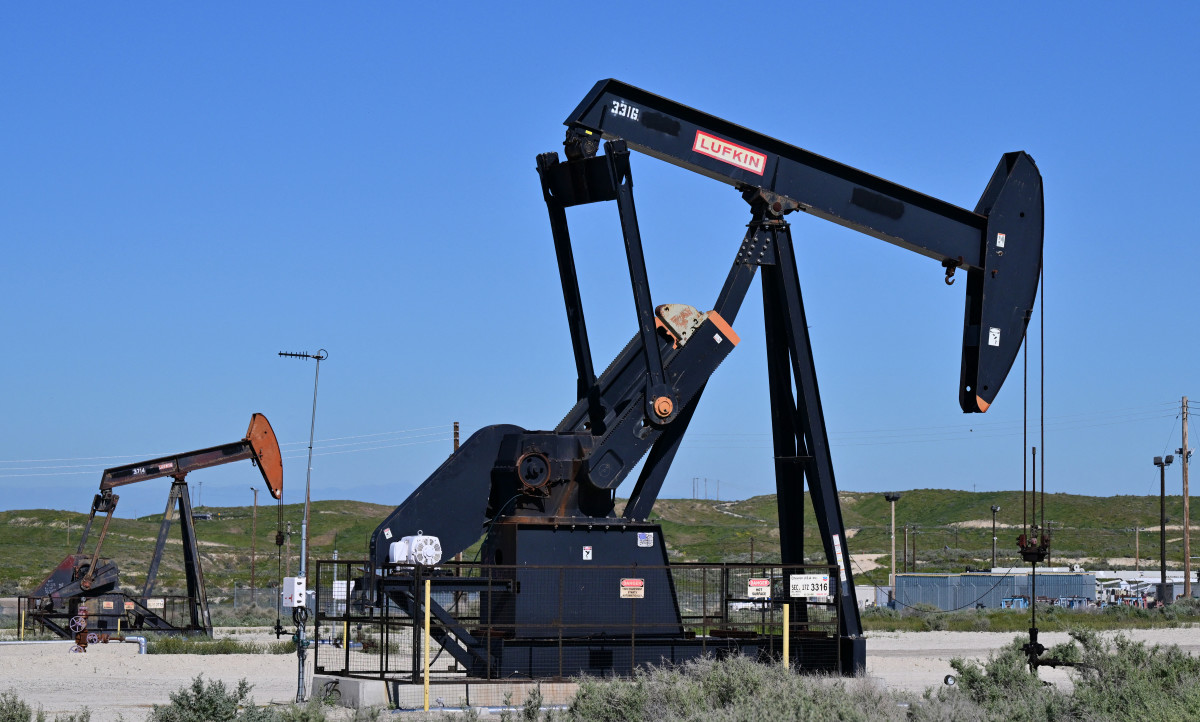 Goldman Sachs revised its oil price outlook for the remainder of 2026 as supply risks reshape forecasts.
Brown/AFP via Getty Images
Goldman Sachs says this is no longer a short-lived oil shock
The bank revised its oil price outlook primarily because its earlier framework assumed the crisis would be relatively short-lived.
Goldman’s now modeling something a lot more persistent, which is why it bumped its Q4 price target, as mentioned earlier.
Goldman analysts are now assuming 21 days of low Strait of Hormuz (SoH) oil flows at roughly 10% of normal levels, leading to a 30-day recovery, Reuters reported. Previously, they were forecasting just a 10-day disruption.
More Oil and Gas:
- Energy giant sends blunt $20 billion message on dividend growth
- 147-year-old oil giant just raised dividend 4% in 2026
- Top energy stocks to buy amid Venezuela chaos
So unlike the chatter we’re hearing about a brief interruption, Goldman Sachs points to a more prolonged bottleneck in one of the world’s most important oil arteries.
That development feeds into everything else, including elevated near-term prices, tighter inventories, and greater concerns about spare capacity.
Things could get even trickier as the bank argues that if daily oil prices could reach their 2008 peak, SoH flows remain depressed through March.
Energy giants post strong gains as oil rally lifts sector returns
- Chevron stock: 1-month: 6.43%, 3-month: 31.22%, 6-month: 26.37%, 9-month: 39.67%, YTD: 29.77%
- Exxon Mobil stock: 1-month: -0.56%, 3-month: 29.41%, 6-month: 39.15%, 9-month: 44.09%, YTD: 28.55%
- ConocoPhillips stock: 1-month: 3.35%, 3-month: 24.60%, 6-month: 29.20%, 9-month: 31.36%, YTD: 28.73%
- BP stock: 1-month: 10.47%, 3-month: 19.86%, 6-month: 25.26%, 9-month: 42.18%, YTD: 22.62%
- Shell stock: 1-month: 10.87%, 3-month: 22.09%, 6-month: 24.69%, 9-month: 27.70%, YTD: 21.06%
- Diamondback Energy stock: 1-month: 6.79%, 3-month: 14.93%, 6-month: 31.29%, 9-month: 22.91%, YTD: 20.06% Source: Seeking Alpha
Goldman flags oil inventories and emergency buffers as the real pressure point
Goldman Sachs also warns that global oil inventories could become remarkably fragile if the oil disruption drags on.
In its latest note, the bank argues that policymakers might need to step in with a hefty emergency response in preventing a deeper supply shock. It modeled a scenario where governments might need to release 254 million barrels from global strategic petroleum reserves, along with 31 million barrels of additional Russian crude supply.
That strategic move could potentially reduce the hit to global commercial inventories by roughly 50%.
However, the current issue is physical supply, not just market sentiment.
The conflict involving the U.S., Israel, and Iran has basically halted the bulk of the traffic that’s coming through the Strait of Hormuz, which has left tankers stranded while forcing some producers to slow down or suspend output.
That’s exactly what Goldman is flagging right now, warning that higher crude prices could lift energy stocks, raise transportation costs, and push inflation expectations higher across the economy.
Related: 5-star analyst revamps Micron stock price target before earnings