
We all know that rising oil prices are adding to new inflation pressures to our daily lives.
The price of gasoline in the United States is now at about $4.24 a gallon. That’s up about 42% since Feb. 27, the day before Israeli and U.S. forces launched their first attacks on Iran.
It doesn’t matter if you’re looking at AAA data or data from GasBuddy.
And the war isn’t over yet. No one knows when it will be done, and economists at investment bank Goldman Sachs are boosting their inflation projects as a result.
The news isn’t great.
Related: Exxon, Chevron, big oil send signals ahead of earnings
Goldman sees oil supplies slow to come back
A new Goldman Sachs report expects the recovery of flows of crude oil and related products through the Strait of Hormuz will be slower than originally expected. The impact on the U.S. and global economies will be modest if the war is over by June, the report says.
But the effects will be longer felt and worse the longer the war goes on and the Strait of Hormuz is closed to maritime traffic, the report says. That will cause more damage to the U.S. and global economies.
The strait is that narrow passage linking the Persian Gulf to the Indian Ocean and global markets. Before the war began, about 20% of the world’s oil passed through the strait every day. Now, it is nearly zero thanks to Iranian and U.S. blockades. Energy prices have soared as a result.
Goldman Sachs’ scenarios work with Brent crude, the global benchmark. Brent has been trading at about $110, about 10% higher than light sweet crude, the U.S. benchmark.
Goldman’s analysis sees the core U.S. Personal Consumption Expenditures index rising from 2.5% year-over-year to 2.6%. The headline PCE would rise to 3.4% (from the current estimate of 3.1%) and 3.7% and 4.3% under its worst-case scenarios.
The PCE, a measure watched closely by the Federal Reserve in its interest-rate decisions, has been rising lately at about a 2.8% annual clip. The index is compiled by the U.S. Bureau of Economic Analysis.
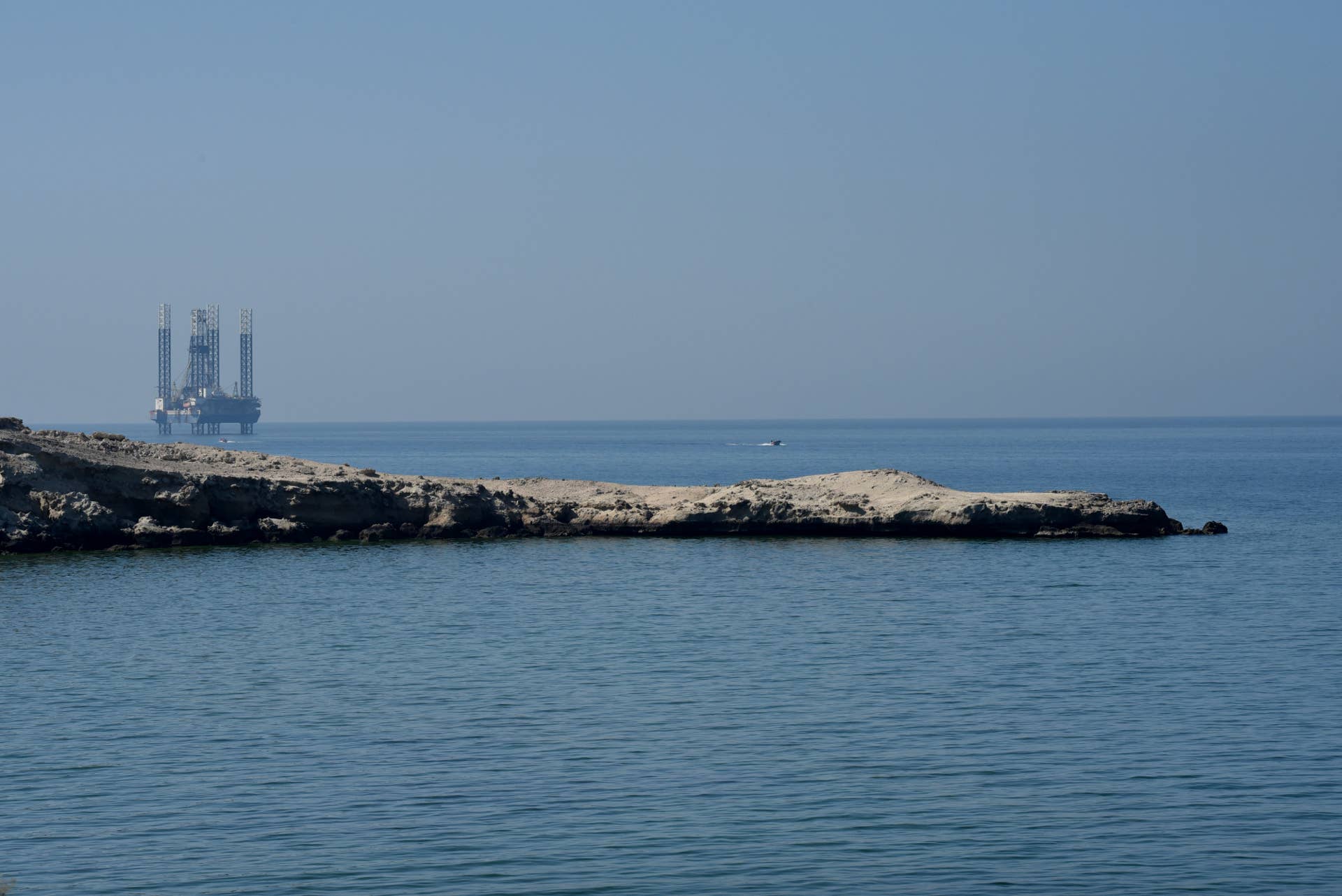 Oil rig in Iranian waters in the Persian Gulf. Getty Images
Kaveh Kazemi / Getty Images
Goldman’s scenarios described
Here’s how Goldman gets to its conclusions:
- Goldman Sachs’ baseline scenario assumes Brent will average $100 a barrel in April and May. If the strait is reopened soon, Brent could fall to $90 in the fourth quarter of 2026. (Brent was at $73 a barrel before the war erupted and $118 on April 29.)
- Brent could even fall to $80 a barrel in a benign environment. That assumes there’s no lasting damage to the energy-production infrastructure of countries along the Persian Gulf and mines dropped into the strait by Iranian naval forces are removed.
- Goldman offers up an adverse scenario, where Brent is $125 in July and falls to $100 by the fourth quarter.
- Its worst-case scenario sees Brent at $145 in May and $120 by the end of the year. That might push retail gas prices in the United States above $5 a gallon, a level last seen in June 2022.
It was bad in 2022, and it would be bad in 2026. But the United States is largely self-sufficient in supplies of oil and related products. But the worst-case scenarios almost certainly would affect prices of imported goods and services even more, the report says.
More Oil and Gas:
- GasBuddy flags worrisome gas price trend, sends message on what’s next
- Early Chevron stock investors now earn 12.1% dividend yield
- Chevron, Shell ink more surprising Venezuela deals
Global effects: Bigger than in U.S.
And it would be harder still for countries dependent on getting a substantial portion of their oil and natural gas products from OPEC producers in and around the Persian Gulf.
So far, the disruptions from the war have been felt most heavily by air freight, the report says. But if the war isn’t ended, things get dicier.
Most vulnerable are:
- Asia, especially countries already suffering from diesel shortages.
- Europe and the Southern Hemisphire. Their agriculture sectors depend on nitrogen fertilizers that come from the Middle East.
- Users of petroleum-derived chemicals and other intermediate products used globally.
The Fed voted Wednesday to leave its key interest rate unchanged at 3.5% to 3.75%. Stocks were struggling overall, though gains for technology stocks pushed the Nasdaq Composite and Nasdaq-100 indexes higher.