
Transportation Security Administration (TSA) procedures are constantly evolving. Just when we thought we had it all figured out, TSA drops a bomb: Shoes stay on!
The recent surprising TSA decision came after 23 years of shoe removal practice — one of passengers’ most hated requirements.
💵💰Don’t miss the move: Subscribe to TheStreet’s free daily newsletter 💰💵
Why is the TSA changing its practices and requirements?
According to its official website, “TSA adjusts processes and procedures to meet the evolving threat and to achieve the highest levels of transportation security.”
As technology progresses, it is only logical it will be implemented and used to help secure airports and air travel. For example, computer tomography (CT) systems allow airport security to inspect baggage from every angle.
Then there are X-ray imaging systems, explosive trace detection (ETD), and explosives detection systems (EDS) for hand-carried baggage screening, writes Airport Gurus.
While technology definitely helps airport and airline safety and speeds up the screening process, it also makes airports particularly vulnerable to cyberattacks.
Despite the risks, without modern automation and computers, the aviation industry wouldn’t be nearly as safe as it is today.
However, one relatively recently implemented AI-powered screening procedure has been scrutinized lately — facial recognition.
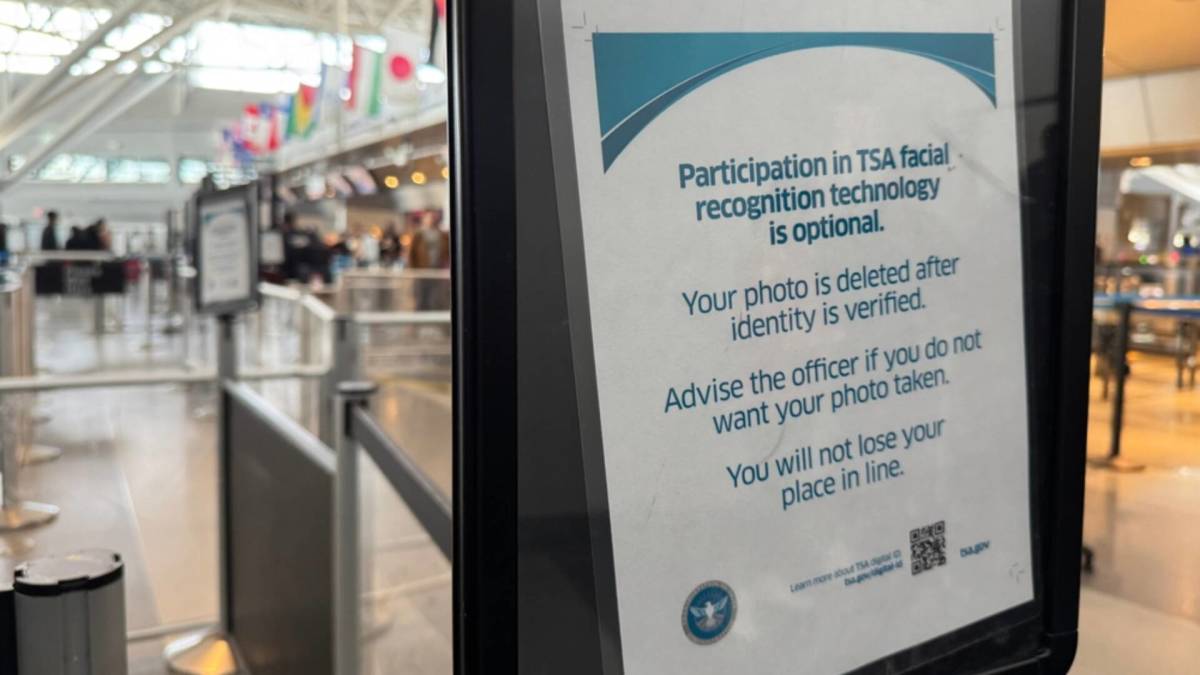 Many travelers fear opting out of facial recognition technology due to potential consequences, and lawmakers are trying to prevent those repercussions.
Image source: Shutterstock
Travelers have no idea they can refuse facial recognition, senators alarmed
Since 2017, the TSA has been assessing facial recognition technology (FRT) use for airport security. In 2023, the agency started stationing devices with FRT capabilities at security checkpoints.
Related: US travel industry faces huge setback from One Big Beautiful Bill Act
These devices, also known as Credential Authentication Technology-2 (CAT-2) devices, are currently used at over 250 airports nationwide, according to the report from The Privacy and Civil Liberties Oversight Board.
CAT-2 is used to confirm the identity of travelers before they are allowed to proceed through security and into the boarding areas, and according to the TSA, they significantly enhance security and improve traveler convenience.
Still, this screening procedure has caused a lot of turbulence among travelers, experts, and lawmakers.
A recent report by Algorithmic Justice League, an organization that raises alarms on the damaging impacts of AI, revealed that 47.7% of surveyed travelers did not know that opting out of facial recognition is an option. As much as 55.5% did not see signage about the right to opt out, and 48% confirmed having at least one concern about general privacy and/or data handling practices.
Moreover, the report shared testimonies from various travelers who had uncomfortable experiences when they refused to undergo facial recognition.
“I walked up to the TSA agent […] and didn’t get right in front of the camera. I was instructed to stand in front of it, and I told him “No thank you on thank you [sic]” his response was ‘Really? That’s ridiculous, you must be stupid,’” reads one quote from the report.
Many more quotes suggested that TSA agents were rude and unprepared to serve travelers who chose to opt out.
More on Travel:
- US government issues major travel advisory for an entire continent
- Government issues new travel advisory on popular beach destination
- Disney World brings back a popular attraction after 10 years
These concerns reached lawmakers, and some of them decided to take action.
Senators Jeff Merkley (D-Ore.) and John Kennedy (R-La.) introduced a bill to protect Americans’ ability to opt out of these TSA screenings — the Traveler Privacy Protection Act.
Senate Republicans remain steadfast, argue TSA lobbied “behind the scenes” against bill
Last week, the Senate Committee on Commerce, Science and Transportation suddenly decided to call off the Traveler Privacy Protection Act’s scheduled markup.
Related: TSA urgently warns parents of little-known travel rule for kids
Senate Commerce Chair Ted Cruz (R-Texas) had to cancel the bill’s consideration because strong lobbying from the travel industry might have impacted committee members’ opinions.
However, multiple Republican sources privately argue that the TSA, which had backing from politically appointed leadership, had a significant impact in lobbying, according to Politico.
The TSA “assumed a critical role in orchestrating the lobbying campaign that grew opposition and forced the legislation to be scrapped at the last minute from the markup docket,” writes the outlet.
The Traveler Privacy Protection Act proposes:
- Limiting TSA’s current authority to use biometric and facial recognition technology;
- Requiring TSA to allow passengers to opt out of identity verification using facial recognition;
- Prohibiting TSA from subjecting travelers who opt out to discriminatory treatment or less comfortable screening conditions.
On July 28, groups representing major U.S. airlines (such as American Airlines, Delta Air Lines, United Airlines, and Southwest Airlines), travel companies, and airports urged the Senate to reject this bill. The industry argues that the bill would cause huge operational challenges.
Republican lawmakers are now arguing that TSA has been working “behind the scenes” with airlines to build opposition.
When asked if the TSA has been raising concerns, Sen. John Kennedy (R-La.), a co-sponsor of the bill, said, “The short answer is yes; the long answer is hell yes. They’re working like an ugly stripper to kill this bill, which tells me we’re doing the right thing.”
The Security Industry Association and the International Biometrics and Identity Association sent a letter on the evening before the scheduled markup to Cruz and the top Commerce Committee Democrat, Sen. Maria Cantwell (D-Wash.).
In the letter, they argue that the legislation is “completely out of line with the Trump Administration’s stated priorities for federal agencies to increasingly incorporate advanced technologies and limit unnecessary personnel costs.”
Since President Trump began a second term, the government has been working on cutting budgets, reducing staff and implementing AI-powered technologies where suitable and possible.
After the bill’s consideration was postponed, Cruz and other panel members said they believe issues can be resolved to bring the bill at a subsequent meeting.
“I think the bill will get marked up,” said Cruz, “and it’s going to pass.”
Related: Largest RV dealer reports strong profit despite closing 16 stores