
After weeks of war with no end in sight, and gas prices rising faster than they have in decades, U.S. consumers are becoming more worried about the state of the economy than they have been in three months, according to the latest University of Michigan Survey of Consumers.
UM’s Consumer Sentiment Index fell to 53.3% for its final reading in March, down 5.8% from February and down 6.5% from where it was a year ago. Consumer sentiment fell to its lowest reading since December 2025.
Consumers are feeling even less optimistic about the future of the economy than they are about the present, and it doesn’t take a trusted survey that has been around for 80 years to understand why.
As the Iran war wraps up its fourth deadly week, the U.S is once again threatening to begin a ground campaign in Iran, according to Fox News, which would ostensibly extend the time horizon for this conflict’s resolution.
Iran has responded not only by closing the Strait of Hormuz, through which about 20% of the world’s oil travels, but also by threatening to close the Strait of Mandeb, The Hill reports. The latter connects the Red Sea to the Gulf of Aden and accounts for another 11% of oil travel.
“Escalating conflict in the Middle East is increasing risk across the global auto supply chain. Tensions around the Strait of Hormuz have heightened energy price volatility and raised concerns about shipping disruptions in oil and aluminum, among other upstream raw materials,” Morgan Stanley analyst Andrew Percoco said in a recent note.
According to Morgan Stanley, every $1-per-gallon increase in gas prices results in a $450-per-year increase in fuel costs for gas-powered vehicles, assuming 27 mpg and 12,000 miles driven per year.
So, as the war rages on and gas prices rise, consumer sentiment will inevitably keep falling. Still, the survey even admits that its reading this month may not truly capture just how anxious American consumers have become.
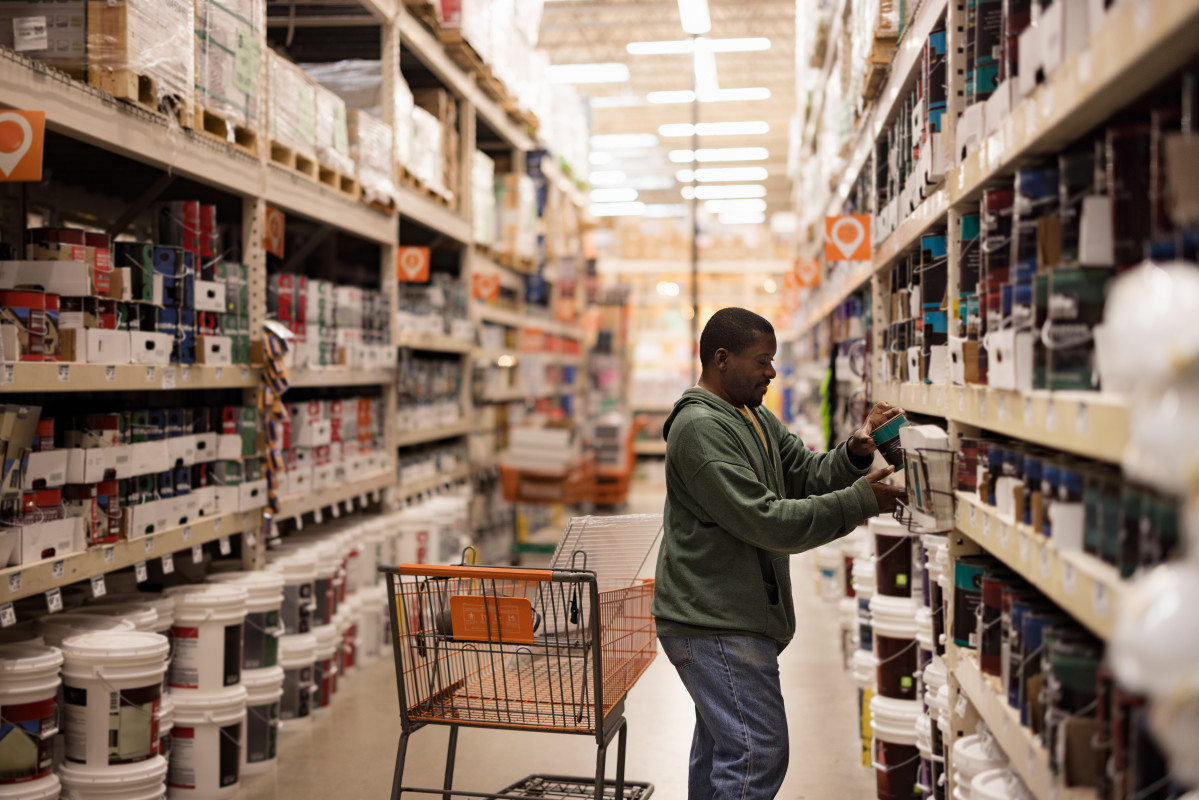
Photo by Ivan Pantic on Getty Images
Consumer sentiment drops on concerns about Iran war, rising gas prices
Consumer sentiment fell nearly 6% in March to its lowest level since December 2025. Perhaps underscoring just how unpopular this war is, the declines were seen across age and political party, noted Silver Bulletin.
Middle- and higher-income consumers, “buffeted by both escalating gas prices and volatile financial markets in the wake of the Iran conflict, exhibited particularly large drops in sentiment.”
Related: Chevron CEO sends worrisome Middle East oil message
The short-term economic outlook dropped 14%, and year-ahead expected personal finances sank 10%, though declines in long-term expectations were more subdued, according to the Index of Consumer Sentiment.
“These patterns suggest that, at this time, consumers may not expect recent negative developments to persist far into the future. These views are subject to change, however, if the Iran conflict becomes protracted or if higher energy prices pass through to overall inflation,” the survey researchers said.
Perhaps the most concerning part of the survey’s negative results is the interview date range for the March release: Feb. 17 to March 23. This means two-thirds of them were completed after the war started. If the other third had also responded after the war started, it’s reasonable to assume that the drop in sentiment would have been even more severe.
Year-ahead inflation expectations rose to 3.8% in March from 3.4%, the largest one-month increase since April 2025. The current reading is ahead of 2024 and well above pre-pandemic levels, which were consistently below 2.8%.
But the survey also says the responses it received after February 28, the first day of the war, showed much higher inflation expectations than the ones it received prior to that.
And while some investment firms are sounding the alarm, analysts at BNP Paribas are a bit more tempered.
The U.S. economy is well-positioned to withstand oil shock, says BNP Paribas
Brent crude oil hit an all-time high of $147 in 2008, rising from about $30 a barrel in 2003 to more than $100 by early 2008, reportedly spurred by increased demand from China, according to Trading Economics. But just as abruptly, Brent prices fell back down to earth, only breaking $100 per barrel again in 2022 during the Covid pandemic.
Though analysts at BNP Paribas say a prolonged shock with a moderate price rise would “probably” prompt minor adjustments to its growth outlook, the firm is still bullish on the U.S. economy.
“We see the U.S. economy as well-positioned to absorb the shock, as it is now the world’s largest producer of crude and a net energy exporter. The sensitivity of the economy to changes in oil prices has fallen, while monetary and fiscal policies, excluding tariffs, appear stimulative,” Husby said.
BNP has had an above-consensus view of the U.S. economy for some time, saying it takes a “glass-half-full” view of the job market and expects the unemployment rate to hold at current levels.
For the firm to change its outlook, it says oil prices would have to rise well above $150 per barrel.
Related: U.S. economy will show resilience, despite rising oil prices