
Just a few years ago, the United States was a major seller’s market, which meant home sellers had much more power than buyers. Now, you may have heard that the U.S. is becoming a buyer’s market.
This is useful information in general, but national data doesn’t always give us a realistic understanding of our local housing markets.
As a homebuyer or seller, it’s crucial to know the market trends in your region, state, and city before taking the leap of buying or listing a house. So, which part of the U.S. is actually a buyer’s market right now?
The winner is … the South.
The Realtor.com Q2 2026 Market Clock tool evaluated the 100 largest U.S. metros and broke them up into the four main regions: the South, Northeast, Midwest, and West.
Of those 100 areas, the South had the fewest seller’s markets — only two.
It also had the most true buyer’s markets. Of the 19 buyer’s markets in Q2, 18 were in the South.
“In spring 2022, all 42 southern markets (among the top 100 metros) were seller’s markets,” Jake Krimmel, senior economist for Realtor.com, told The Street.
“Two years later, 19 were sellers, and 14 were balanced but trending towards buyers,” he continued. “Now in 2026, just two are still seller’s markets, 22 are balanced, and 18 are outright buyer’s markets — most of which are located in Florida or the Gulf Coast.”
How the South became a buyer’s market
The southern metro areas that were strong buyer’s markets in Q2 were located in Florida, Georgia, Louisiana, Mississippi, South Carolina, Tennessee, and Texas.
Southern cities have been experiencing a new-home construction boom in recent years, especially in Florida, Tennessee, and Texas, according to Redfin.
Several factors have driven home construction in the South more than in other regions. People are moving to the South due to lower overall cost of living. Local regulations help construction projects move more quickly. And there is more space to build housing than cramped cities in other parts of the country.
Related: Redfin breaks down unexpected homebuyer advantages
“What we are seeing is the flip side of the pandemic-era boom in the South,” Krimmel told TheStreet. “This is just the other side of the housing cycle. Sunbelt markets like Nashville, Tampa, Orlando, Jacksonville, and a few in South Carolina all saw a surge of demand and in-migration from other states between 2020 and 2022. Builders met that demand with new construction.”
Increased supply is crucial for creating a buyer’s market. If demand wildly outpaces supply, then a housing shortage would drive competition between homebuyers. Then homes would become more expensive, and sellers would hold more power.
But because Southern metro areas have been building new homes to keep up with growing demand, these cities are in better positions to welcome homebuyers looking for a good deal.
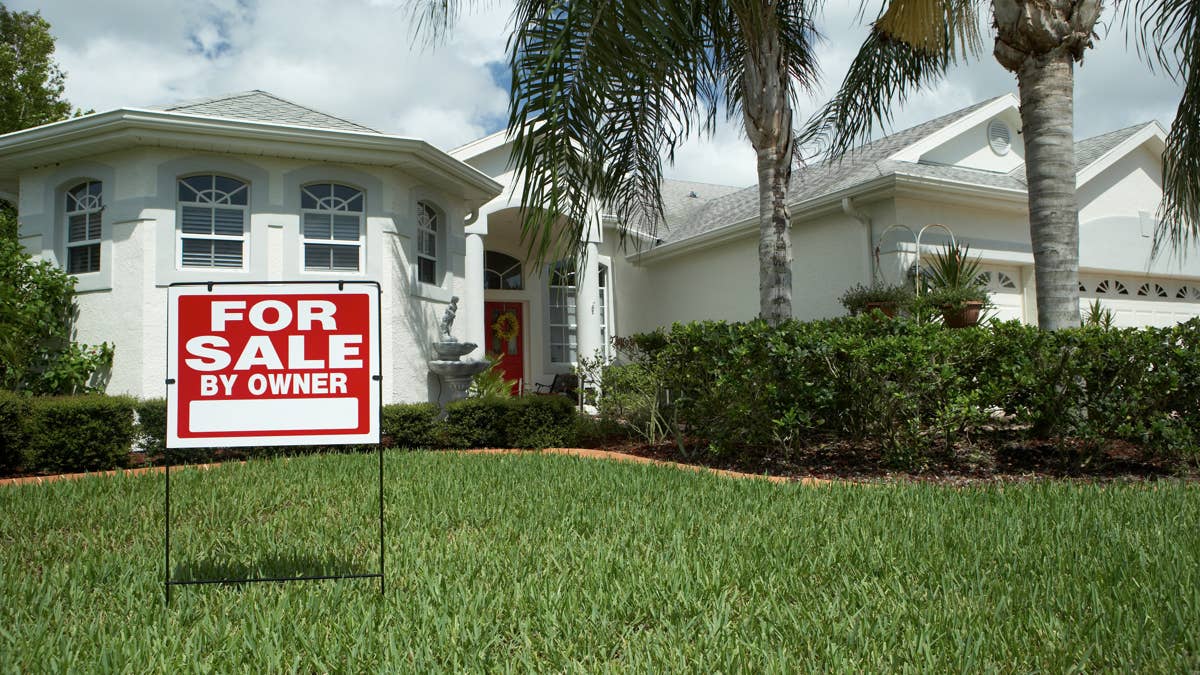 Florida is home to several buyer’s markets, including Jacksonville, Tampa, and Miami.
Realtor.com stacks the South up against other regions
The South (and the West, the second-strongest buyer’s market) is experiencing two primary pricing advantages.
The first is that the typical metro area’s price per square foot is dropping. The second is that fewer sellers are cutting their prices after listing, because they’re setting more realistic listing prices from the get-go.
The Realtor.com data shows that 57% of Southern metros benefited from both of these advantages in Q2. Sellers are also more willing to negotiate with buyers.
More Housing Market:
- Americans reject homebuilders despite price cuts
- New Redfin data shows housing market is changing fast
- Fewer foreign homebuyers won’t fix U.S. affordability
This is a sharp contrast from housing markets in the Midwest and Northeast, the regions with the most seller’s markets. Price per square foot is still increasing in these areas, and price cuts are stagnant.
These trends continued into July in each region, according to the Realtor.com July 2026 Monthly Housing Trends report.
But year-over-year inventory started to pick up in the Northeast (+8.3%) and Midwest (+9.3%) in July. So there may be some relief around the corner.
The best southern housing markets for buyers
You’re probably wondering exactly where in the South a buyer’s market is. Here are the strongest buyer’s markets from Q2:
- Florida: Cape Coral, Deltona, Jacksonville, Lakeland, Miami, North Port, Orlando, Palm Bay, Port St. Lucie, and Tampa
- Georgia: Augusta
- Louisiana: Baton Rouge and New Orleans
- Mississippi: Jackson
- South Carolina: Columbia and Greenville
- Tennessee: Nashville
- Texas: McAllen
Colorado Springs was the one city outside of the South that Realtor.com considered a true buyer’s market.
Realtor.com continued to divide its list into two types of balanced markets: balanced but tightening (moving toward seller’s markets) and balanced but loosening (moving toward buyer’s markets).
“Texas metros and Atlanta are not classified as outright buyer’s markets yet — instead they’re trending that way, so know that they probably have further to fall,” Krimmel explained.
The South also made up the largest share of metro areas that were balanced but loosening in Q2. Here are those cities:
- Alabama: Birmingham
- Arkansas: Little Rock
- Georgia: Atlanta
- Kentucky: Louisville
- Maryland: Baltimore
- North Carolina: Charlotte, Durham, Greensboro, Raleigh, and Winston-Salem
- Oklahoma: Oklahoma City and Tulsa
- South Carolina: Charleston
- Tennessee: Memphis, Chattanooga, and Knoxville
- Texas: Austin, El Paso, Dallas, Houston, and San Antonio
- Washington, D.C.
“At the same time, though, it’s more about using today’s leverage to your advantage than trying to forecast if and when list prices might hit their trough,” Krimmel said.