
Sometimes a Chapter 11 bankruptcy solves a brand’s underlying problems.
If a company runs profitably, but has legacy debt, leases that outpace the current market, or other past problems weighing on its current results, then a chance to reorganize its finances might be enough to build a new sustainable foundation.
In the case of Red Lobster, however, just shedding debt and unprofitable stores has not been enough to reverse the chain’s fortunes.
“Sales haven’t returned to prebankruptcy levels, and in many restaurants’ nautical-themed dining rooms, big upgrades are needed. Red Lobster ideally would be operating dozens fewer restaurants to concentrate on its best-performing ones, according to people familiar with the company’s discussions,” The Wall Street Journal reported, citing comments from CEO Damola Adamolekun.
The chain is no longer under bankruptcy protection, but it faces challenges that put its ongoing existence into question.
Red Lobster faces significant headwinds
American consumers have been cutting back their restaurant spending and, in some cases, trading down when it comes to their brand choices.
Over half of consumers (54%) have changed their consumption habits to save money, according to a YouGov survey that was shared with eMarketer.
“This shift has created a downward chain reaction in which higher- and middle-income consumers are trading down to less expensive restaurants, while many lower-income consumers have stopped dining out altogether,” eMarketer reported.
- Consumers have noticed: 82% say restaurant prices have “increased noticeably” in their area over the past year.
- More than a third of consumers (37%) are dining out less, a share that jumps to 44% among lower-income households.
- Among those cutting back, cost is the driving factor. The top reasons cited were “it’s more expensive to eat out” (69%), trying to save money (58%), and the higher overall cost of living (57%).
Restaurant chains have noticed that consumers have changed their dining patterns
“Within their basket at Cava, we’re not seeing significant changes,” CFO Tricia Tolivar told Investopedia, noting that consumers are ordering typical levels of premium proteins, drinks and pita chips. But there is “more of an overall general sense of being thoughtful about frequency” of dining out, she said.
Chipotle CEO Scott Boatwright has seen prices impact his chain as well.
“We did see some share loss in the April-May time frame as the low-income consumer pulled back,” he said during Chipotle’s second-quarter earnings call.
And, while the chain’s most-loyal customers have maintained their frequency, more casual customers have not.
“I think the low frequency user is the one that’s most at risk here,” he added.
Red Lobster faces a pricing challenge
Simply by selling seafood as its core protein presents a problem for Red Lobster.
The chain is not alone in facing that issue.
“With inflation in the past few years, the prices have already gone up, and lots of the shrimp you get in restaurants come from Ecuador. You see the impact from the tariffs on that has gone up a couple of dollars, and when you sell lots of shrimp, that adds up,” Today’s Crab Owner John Lee told DC News Now.
The current economy has also made Red Lobster’s comeback more challenging.
“Even in the best of times, turning around a chain like Red Lobster isn’t easy,” says David Henkes, senior principal at industry researcher Technomic told Bloomberg. “They could be doing everything right, but it’s still a tough time for casual dining.”
Bloomberg painted a dark picture for the chain.
- Onerous real estate arrangements mean roughly 100 chronically unprofitable restaurants are draining any profit the rest of the chain brings in.
- While monthly sales are up from the prior year, Red Lobster has lost money in four of the last five quarters and has struggled to turn a profit for years.
- It also has to contend with years of underinvestment in its restaurants, but with little capital for renovations or hiring, employees have been asked to spruce up aging dining rooms with little but brooms and mops.
The news outlet talked to a number of former Red Lobster executives, employees, investors and other people familiar with Red Lobster’s long decline and current strategy, all of whom asked for anonymity to discuss confidential details about the closely held company.
“Last year it posted a net loss, and sales were at least 20% below pre-bankruptcy levels. Unless the chain can reduce its rent or exit those unprofitable restaurants, many of the people say, the turnaround seems doomed to fail,” was their consensus opinion.
Representatives from Fortress, Blue Torch Capital LP and TCW Group Inc., Red Lobster’s financial backers, declined to comment for the Bloomberg article.
Red Lobster faces an uphill climb
“Market-research firm Datassential said Red Lobster still has work to do to improve food quality, service and experience, but customers are giving it better marks for value and starting to visit more regularly. Adamolekun said improving sentiment shows his turnaround plan is working,” The Wall Street Journal reported.
“I watch the guest scores and the traffic improvement, because that ultimately determines the fate of the business,” he said.
Red Lobster’s former owner sold much of the chain’s real estate back in 2014, tying to the chain to long-term leases. That’s preventing some of its unprofitable locations from closing.
“Some of those leases involve multiple restaurants, which Adamolekun said has made it difficult to close some poorly performing locations because their lease is linked with higher performing ones,” Fox 5 reported.
The chain may be on a short leash from its backers.
More Restaurants
- McDonald’s latest menu missteps could have a major domino effect
- 76-year-old comfort food chain closes most of its restaurants
- Fast food giant is coming for Starbucks with fan-approved launch
In September, TCW reduced the valuation of its stake in Red Lobster to $4 million, a 90% cut from a year earlier, according to regulatory filings.
“Fortress is trying to make this work, but they aren’t going to continue to throw good money after bad,” a person close to Red Lobster, who wasn’t authorized to speak publicly about the situation told Bloomberg. “If he can’t turn it around, there’s no way they’re going to allow Red Lobster to lose money forever.”
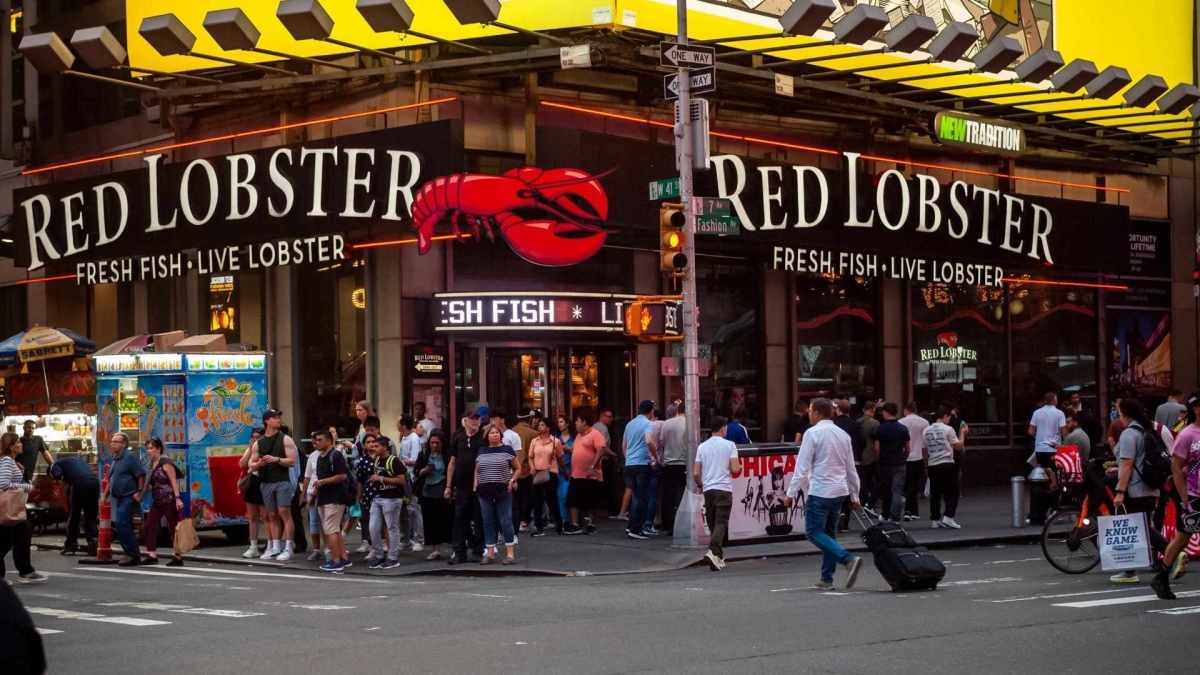 Red Lobster has closed select restaurants, but can’t close every unprofitable location.
Shutterstock
Red Lobster Chapter 11 bankruptcy at a glance
- Red Lobster Management LLC and affiliated entities filed voluntary Chapter 11 petitions in the U.S. Bankruptcy Court for the Middle District of Florida on May 19, 2024, beginning Chapter 11 proceedings as debtors‑in‑possession, according to documents filed on PacerMonitor.
- The filing came as the chain sought to simplify operations, renegotiate leases and pursue a sale while continuing to operate most of its restaurants during restructuring, according to the Associated Press.
- During the bankruptcy process, Red Lobster closed roughly 130 locations in 2024 as part of cost‑cutting and real estate rationalization, added the AP.
- After exiting Chapter 11 in September 2024, the brand was acquired by RL Investor Holdings, backed by Fortress Investment Group, and the chain emerged smaller but with new backing and leadership, according to Nation’s Restaurant News.
- New CEO Damola Adamolekun, formerly of P.F. Chang’s, was installed to lead the post‑bankruptcy turnaround and invest in revitalizing the brand, Nation’s Restaurant News.
- Despite some sales improvement (about a 10% increase year‑over‑year), overall traffic and performance have not returned to pre‑bankruptcy levels, according to CEO comments on ongoing challenges, FOX 5 New York reported.
- Red Lobster’s struggle to rebound has continued with ongoing closures in 2026, including shuttered locations in Michigan and Texas, as the chain right‑sizes its footprint, according to USA Today.
Red Lobster follows a difficult path
If its financial backers stop funding losses, Red Lobster could face further restructuring or liquidation.
Traditionally a Chapter 11 bankruptcy allows a company to shed unprofitable leases.
“One critical component of Chapter 11 bankruptcy cases is the debtor’s ability to assume or reject certain executory contracts, including leases of nonresidential real property,” attorney Nelson Mullins shared is his Bankruptcy 101 series.
It’s possible, although not confirmed by the company, that the leases agreed to when Red Lobster sold its real estate in 2014, prevented the company from dropping them.
Some analysts, however, think the chain has a future.
“It feels less like a reinvention than a cleanup,” Mike Perry, founder of the creative agency Tavern told Business Insider (BI). He predicts the strategy will keep the chain afloat, for now, but adds: “It’s not going to make you an icon.”
Adamolekun, who has become the face of the brand’s commercials, says he’s playing a long game.
“You don’t go bankrupt overnight,” he told BI. “You don’t fix everything that caused the bankruptcy overnight, either.”
Related: Large Applebee’s franchisee files Chapter 11 bankruptcy