Intel just got some breathing room in Europe, and investors have a new reason to look more closely at who is in charge.
The EU’s General Court upheld Brussels’ antitrust ruling but lowered Intel’s fine to 237 million euros, Reuters reported. Days later, CEO Lip-Bu Tan is getting a lot of criticism for making deals that could help his own business while he runs the chipmaker’s AI reboot.
“You don’t want to preclude making good investments because your CEO is well connected,” Wharton professor Daniel Taylor said. Still, those same ties “raise red flags” when the company is cutting checks to his portfolio companies, according to Reuters.
Intel strongly opposes the notion that Tan’s network of investments is a bad thing, Reuters reported. In fact, a company spokesperson told the news service of Intel’s “unwavering commitment to the highest standards of corporate governance, integrity, and accountability.”
Intel also touted Tan’s “extensive relationships across the global semiconductor ecosystem,” describing them as “invaluable as Intel positions itself to capitalize on a rapidly evolving industry landscape.”
Now, shareholders want to know whether that network will be Intel’s best advantage in AI or its worst danger, on top of the fact that Europe still remembers Intel’s antitrust past.
 Europe eased the pressure, but Intel’s next test may come from within.
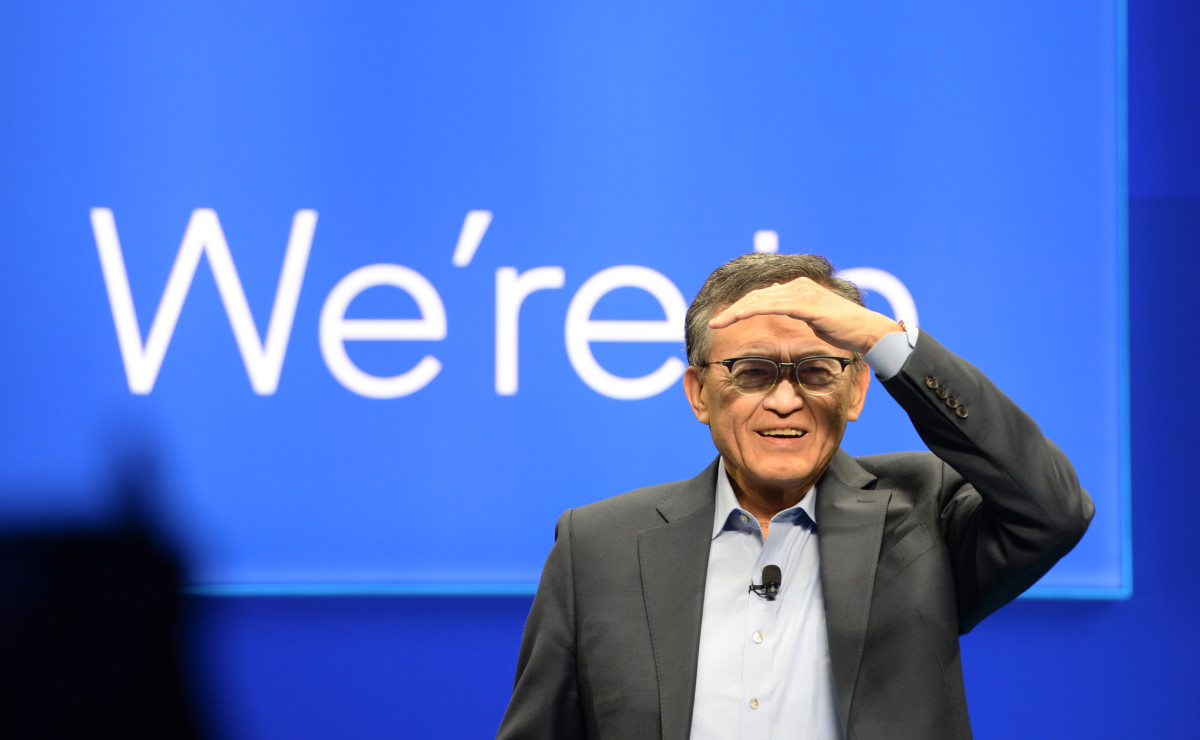
Photo by picture alliance on Getty Images
Intel CEO Lip-Bu Tan’s AI deals blur the line between strategy and self-interest
Intel didn’t employ Lip-Bu Tan to improve things quietly.
The board hired him in March because he is a longtime venture investor and operates at the core of Silicon Valley’s semiconductor and AI ecosystem.
That network is already working. Intel has secured a $5 billion investment from Nvidia and a $2 billion commitment from SoftBank to help pay for its foundry and AI plans since Tan took over. The investment is critical funding for a business that lost $19 billion last year and is racing to remain competitive in the AI server boom.
More Tech Stocks:
- Investors hope good news from Nvidia gives the rally more life
- Palantir CEO Karp just settled major debate
- Spotify just solved a major problem for listeners
- Amazon lawsuit could be a warning to other employers
However, a closer examination of the same network of connections is now underway.
- Tan chairs the AI chip startup Rivos and owns shares in it via his company, Walden Catalyst.
- He tried to persuade Intel’s board to purchase Rivos last summer, even though he was in charge of the startup’s board. Directors fought back, pointing out a clear contradiction and doubting Intel’s AI plan.
- After an Intel officer wrote a new AI strategy, the corporation began working with Rivos again. At the same time, Meta Platforms also started bidding.
- People who knew about the negotiations said a mini-bidding war broke out, bringing the overall package to around $4 billion, which is almost double what Rivos had sought earlier in the year.
In the end, Meta said in September that it would purchase Rivos. Tan’s investment company openly praised the “successful outcome” for its investors. This triumph occurred after Intel’s involvement helped raise the startup’s prominence and price.
There are additional overlaps beyond Rivos. At least three times, sources said, Intel considered purchasing firms connected to Tan or investing in them via Intel Capital, the company’s investment arm, where he also has control.
Related: Microsoft sends harsh message to millions of Microsoft 365 customers
Important flashpoints:
Tan’s Walden International helped lead an investment round for SambaNova Systems that valued the AI computing firm at roughly $5 billion.
- Tan became executive chairman of SambaNova while it was experiencing difficulties and subsequently encouraged Intel to explore a transaction. The two parties have signed a term sheet that isn’t legally binding, and negotiations are still ongoing.
- Intel Capital increased its interest in proteanTecs in a late-stage transaction. Tan also held investments through A&E Investment and Celesta Capital.
Intel has set clear rules for when employees should step down to address issues. Tan can’t attend or vote in board or Intel Capital investment committee meetings if he has a personal interest. In such cases, Chief Financial Officer David Zinsner, who answers to Tan, is in charge.
Related: Box office is booming in 2025 but Netflix’s $82.7 billion surprise raises alarms
The business maintains it is following the rules and that Tan’s connections are “invaluable” as Intel strives to get back into the AI discourse. On the other hand, reports suggest that Tan believes his dual roles enable him to negotiate deals that benefit all parties involved.
That’s the deal for shareholders:
- A hyper-connected CEO who can get money, people, and technology to Intel quicker than a regular operator is a good thing.
- Risk: A governance system where the person who makes Intel’s strategy also makes money by being on the opposite side of the table.
Politics further raise the stakes.
Tan has previously come under fire in Washington for his funds’ hundreds of investments in Chinese enterprises, some of which have ties to the military. President Donald Trump publicly criticized him, calling him “highly CONFLICTED,” but the two worked things out in the Oval Office.
The Trump administration has now agreed to put $8.9 billion into Intel, which would be the government’s largest ownership holding in the company. This would make U.S. citizens stockholders and the chipmaker a key national asset.
That gamble looks great if Intel does well under Tan. If his portfolio causes issues with enforcement or transparency in the future, the political impact will be huge.
EU court trims Intel’s antitrust bill: what it means for the stock
People are talking about Tan’s deal-making, but Intel’s prior actions are being reexamined in Brussels.
The European Commission’s 2023 decision that Intel bribed PC manufacturers to damage AMD between 2002 and 2006 was maintained by Europe’s General Court. However, the court said the 376 million-euro punishment was too punitive and decreased it to 237 million euros.
Related: US Navy bets $448M on Palantir AI to speed shipbuilding
The issue goes back to a 1.06 billion-euro fine in 2009 for payments and rebates that left AMD out. After years of appeals, much of it was thrown out, and regulators focused on “naked restrictions,” which are payments to HP, Acer, and Lenovo to delay, cancel, or limit AMD-based systems.
The court agreed that Intel infringed EU competition regulations, but it noted that the lesser punishment better represents the tiny number of devices that were impacted and the long periods of time between breaches.
Intel makes tens of billions of euros a year, so a 237 million-euro payment isn’t going to hurt it too much, particularly since it is spending a lot of money on AI and manufacturing.
The greater problem is with the company’s reputation. The verdict strengthens a trend of aggressive methods, just as CEO Lip-Bu Tan is under fire due to possible conflicts of interest with AI alliances and venture-backed initiatives.
Investors now have to think about both legal remedy and the danger of bad governance. The modest fine gets rid of a long-term problem and makes things a little more predictable.
But with a CEO whose personal investments are linked to Intel’s deal flow and global regulators keeping a close eye on AI competition and corporate behavior, any mistake or surprise in related-party disclosures tied to Tan’s first full year could quickly change how the market values Intel’s turnaround story.
Related: Micron sends signal Wall Street hasn’t seen in years