
Tax refunds are running bigger than usual this year, and millions of Americans are about to receive checks that are several hundred dollars heavier than last year’s.
The question is not whether the money is coming. The question is what to do with it when it arrives.
As of March 13, the average refund stood at $3,623, up roughly 10.8% from $3,271 at the same point in 2025, according to IRS filing data. About 69.7 million returns have been received so far, out of roughly 164 million expected by the April 15 deadline.
For the many Americans still waiting on their refund, understanding what drove the increase and making a deliberate plan for the money can make a real difference.
Why tax refunds are bigger this year
The increase traces directly to the One Big Beautiful Bill Act, signed in 2025. The legislation made several major changes to the tax code that took effect for the 2025 tax year, which is what you are filing on now.
The most widely discussed changes are four new above-the-line deductions, meaning they are available whether you itemize or take the standard deduction. They include a deduction of up to $25,000 for tip income, up to $12,500 for overtime pay, up to $10,000 for interest paid on a new auto loan originated after December 2024 on a U.S.-assembled vehicle, and an additional $6,000 deduction for filers age 65 and older.
Each has income phase-out limits that reduce or eliminate the benefit at higher income levels.
More Personal Finance:
- Why selling a home to your child for a dollar can backfire
- Elon Musk says ‘universal high income’ is coming
- FTC, 21 states sue Uber over ‘shady’ subscription billing
The law also permanently raised the standard deduction, which now stands at $15,750 for single filers and $31,500 for married couples filing jointly. As of March 8, nearly 45% of filers had already claimed at least one of the new deductions on the new Schedule 1-A form.
One important caveat: The refund increase has been meaningful but smaller than the White House’s early projection of $1,000 or more per filer.
Tax professionals report that most clients are seeing a few hundred dollars of difference, and the actual benefit depends heavily on which new deductions apply to your situation and how your withholdings were set up in 2025.
The smartest uses for your tax refund
A tax refund is not a bonus. It is money you overpaid throughout the year that is now being returned to you. That framing matters, because the best use of the money depends on your current financial situation, not on how it feels to receive a larger check than expected.
Where financial advisors say to start
- High-interest debt first. If you are carrying credit card balances at 20% or higher, paying those down is the highest guaranteed return you can get on any dollar. A $3,600 refund applied to a credit card balance eliminates months of compounding interest.
- Emergency fund if yours is thin. Most financial planners recommend three to six months of expenses in accessible savings. If your emergency fund falls short, a refund is a straightforward way to close that gap without affecting your monthly budget.
- Retirement contributions. You have until April 15 to make IRA contributions that count toward the 2025 tax year. The contribution limit is $7,000 for most filers, or $8,000 if you are 50 or older. Applying part of your refund here gives you a tax benefit on top of the long-term growth potential.
- High-yield savings or short-term goals. For money earmarked for a specific purpose within the next one to three years, a high-yield savings account or short-term certificate of deposit is a sensible home. Rates remain well above 4% at many online banks.
- Home repairs or deferred maintenance. If you own a home, repairs that protect or improve your property’s value are a reasonable use of windfall money, particularly if deferred maintenance is accumulating.
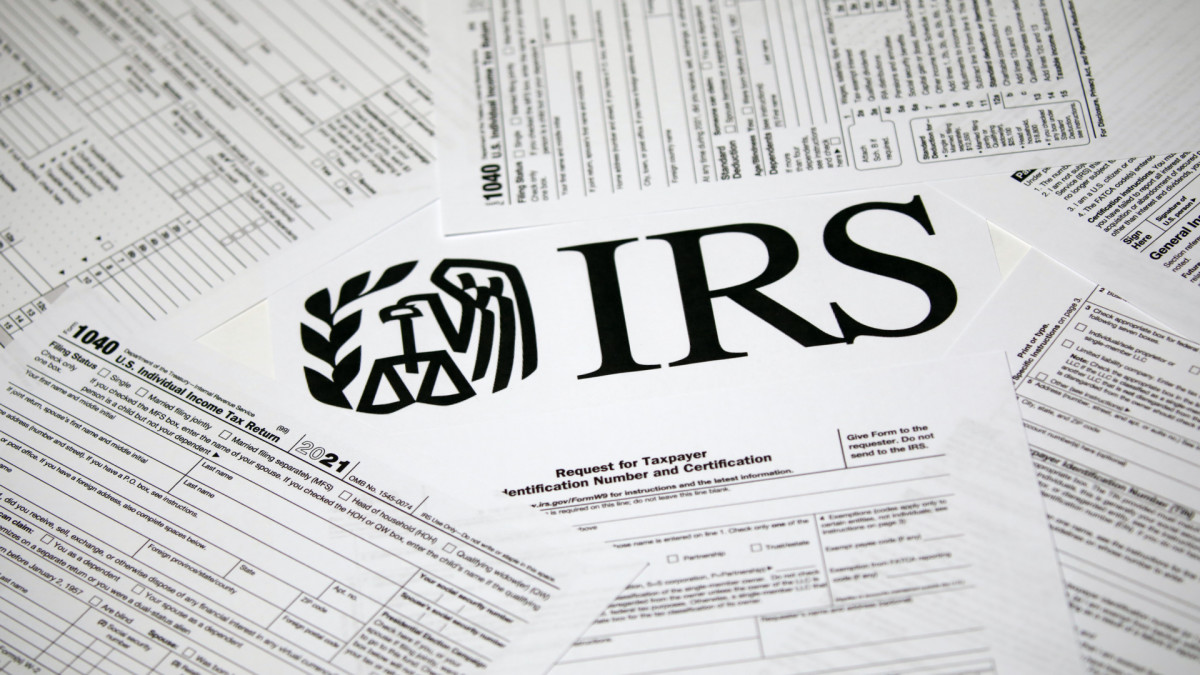 Your 2026 tax refund may be a little larger, but don’t expect next year’s to be the same.
Sharrett/Bloomberg via Getty Images
Tax-refund spending traps to avoid
The impulse to treat a refund as found money is understandable, but spending it on discretionary purchases before addressing debt or savings leaves you in the same financial position, just with something new to show for it.
Financial planners also caution against assuming this year’s larger refund will repeat. The new deductions for tips, overtime, auto loan interest, and seniors are set to expire after 2028. Your withholding may also normalize as employers update W-4 guidance, meaning next year’s refund could be considerably smaller.
One move worth making now, regardless of your tax refund
Because the IRS did not automatically update paycheck withholdings when the new law passed in July 2025, many workers overpaid taxes for the second half of last year. That overpayment is part of why refunds are larger.
But if your financial situation has not changed, you could reduce your withholding now using the IRS tool and give yourself a monthly raise instead of waiting for next year’s refund. A smaller refund is not a bad outcome. It means you had access to your money all year, rather than extending an interest-free loan to the government.
The April 15 deadline is less than a month away. If you have not filed yet, the IRS Free File program is available for filers with adjusted gross income under $79,000.
For most households, this is one of the few times each year when a meaningful lump sum lands in a bank account. A simple plan for it is almost always worth making.